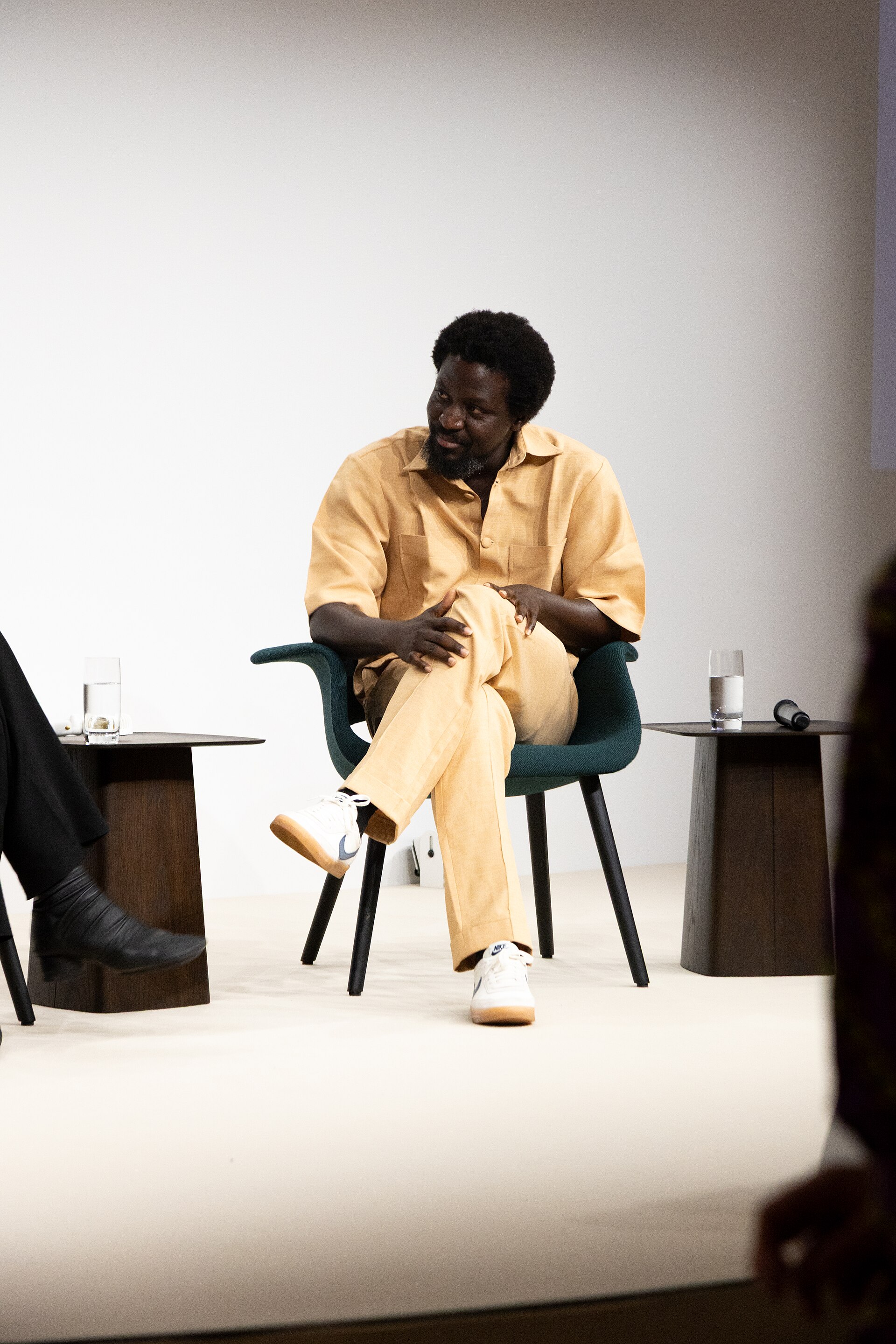
Gopalen Parthiben Chellapermal discusses Nous sommes tous des migrants in a FESPACO conversation published by Africultures. The Mauritian filmmaker describes building the documentary from family photographs, his father’s travel diary and encounters with Mauritian families in Britain. His account considers how personal archives and independent filmmaking can open questions about identity, migration and belonging.
ArtThrob asked artists, curators and other practitioners what they were reading in winter 2026. Contributions from Olga Speakes, Jo Stella-Sawicka, George Mahashe, Nisha Merit and Lerato Shadi ranged across fiction, photography, textiles and critical theory. Recommendations included a Carrie Mae Weems publication, Matter Mattering Matters and writing by African women, offering a view into the intellectual interests surrounding contemporary artistic practice.
William Ousmane Mbaye’s Ndar, Saga Waalo brings residents’ voices, historical images and contemporary streets into a portrait of Saint-Louis. In his Africultures review, Olivier Barlet considers how the film and Laurence Attali’s editing resist a single account of the city, making its colonial histories, contested memories and present-day uncertainties part of a shared visual conversation.
Olivier Barlet reviews Valdiodio, Amina N’Diaye Leclerc’s fiction film about her father, the Senegalese independence-era politician Valdiodio N’Diaye. Following two earlier documentaries, the filmmaker approaches political history through family experience. The review examines her shift towards biographical drama and the role of a daughter’s viewpoint in reconstructing an inherited story on screen.
Africultures·
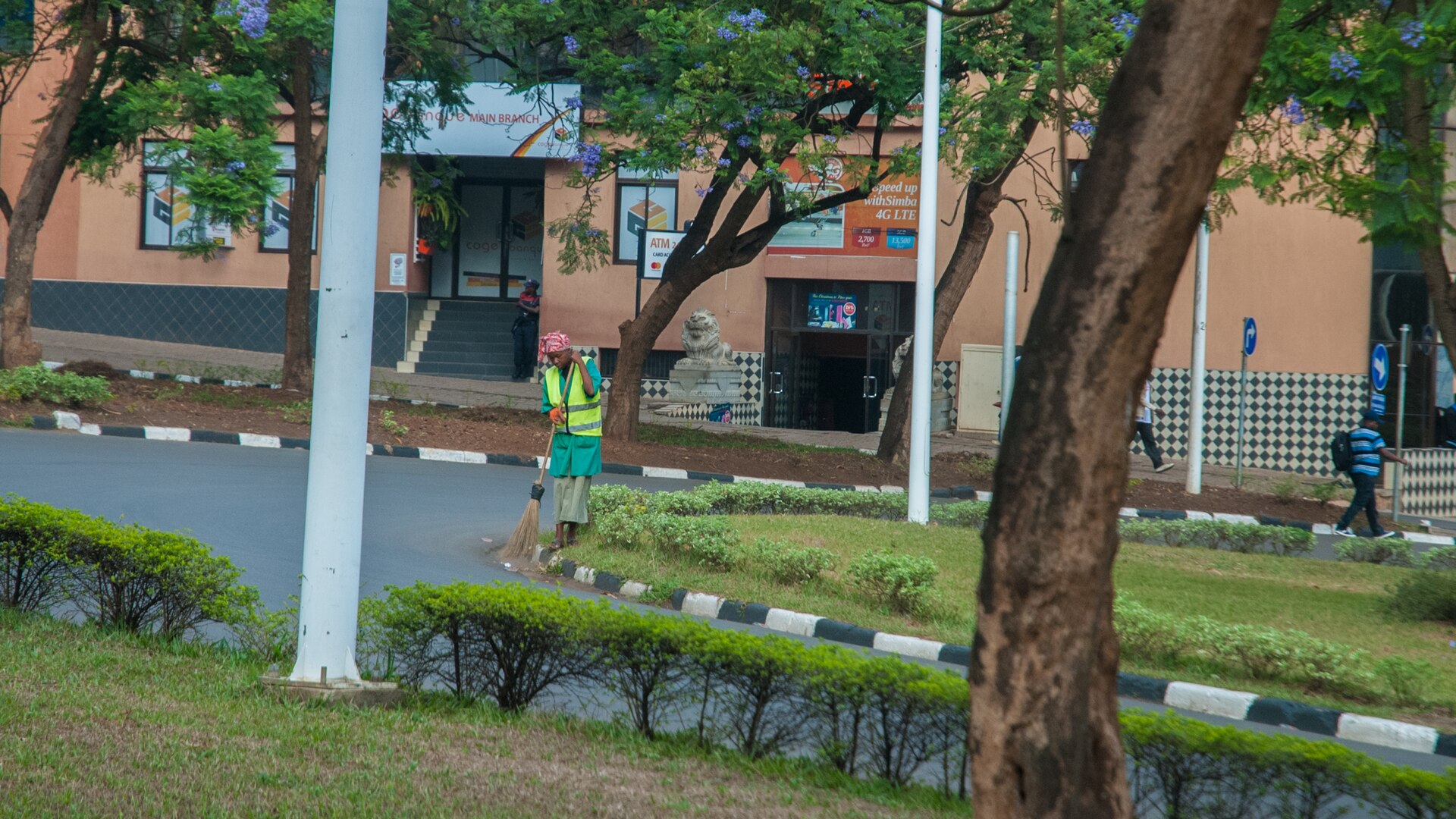
Cleaning Lady, a photograph by Mutiganda wa Nkunda made in Kigali in 2017. Context from his photographic practice, not a still from Phiona. Full image, unaltered.Mutiganda wa Nkunda · CC BY-SA 4.0
Rwandan filmmaker Mutiganda wa Nkunda explains the conversational structure and largely fixed-camera approach of Phiona, la fille de Madrid in an Africultures interview. He describes drawing on everyday exchanges and domestic space to shape the film, while reflecting on women’s stories, the possibilities of non-linear narration and the difficulties of sustaining an independent production.
C& presents a digital archive documenting the S+T+ARTS Afropean Intelligence programme across five African countries. Curated by Céline Delatte, its nine-chapter reader brings artistic projects into conversation with research, podcasts and shared reflections. The resource extends work on memory, ecological justice and technological narratives beyond the residencies that generated it.
In Gaborone, the Artist Residency Centre supports contemporary practice through studio space, mentorship, exhibitions and a public resource collection. Sibongile O.K. Msimango speaks with its founders and team about collaboration and the difficulty of sustaining a grassroots institution, showing how the centre complements Botswana’s existing art organisations while helping artists develop their ideas.
Simnikiwe Buhlungu received the MTN x UJ New Contemporaries Award and its R100,000 prize at the National Arts Festival in Makhanda on 26 June 2026, ArtThrob reported. Her sound installation explored gospel, diasporic memory and collective listening. Curated by Amogelang Maledu, the associated exhibition also included Zara Julius, thato makatu and Unathi Mkonto, bringing together practices concerned with knowledge, survival and contemporary experience.
ArtThrob’s review of Thembinkosi Hlatshwayo’s Song 1: To be left behind considers how the Cape Town exhibition approaches the artist’s memories of his late father. Fragmented photographs, repeated self-portraits and experiments with printing surfaces connect family history with the physical construction of images. The critic reads these incomplete and sometimes unsettling forms as a meditation on grief, inheritance and photography’s capacity to hold uncertain memories.
ArtThrob·
Ibrahim Mahama at Art Basel in 2025. This contextual portrait is not a photograph of his 2026 installation.Bea Phi · CC BY-SA 4.0
Africans Column surveys African and diasporic artists across Art Basel’s 2026 gallery booths, installations and public programme. The overview moves from Ibrahim Mahama’s work in Münsterplatz to presentations involving El Anatsui, Tunisian artists and historical figures, describing a range of practices rather than a single regional style or market category.
Africans Column·
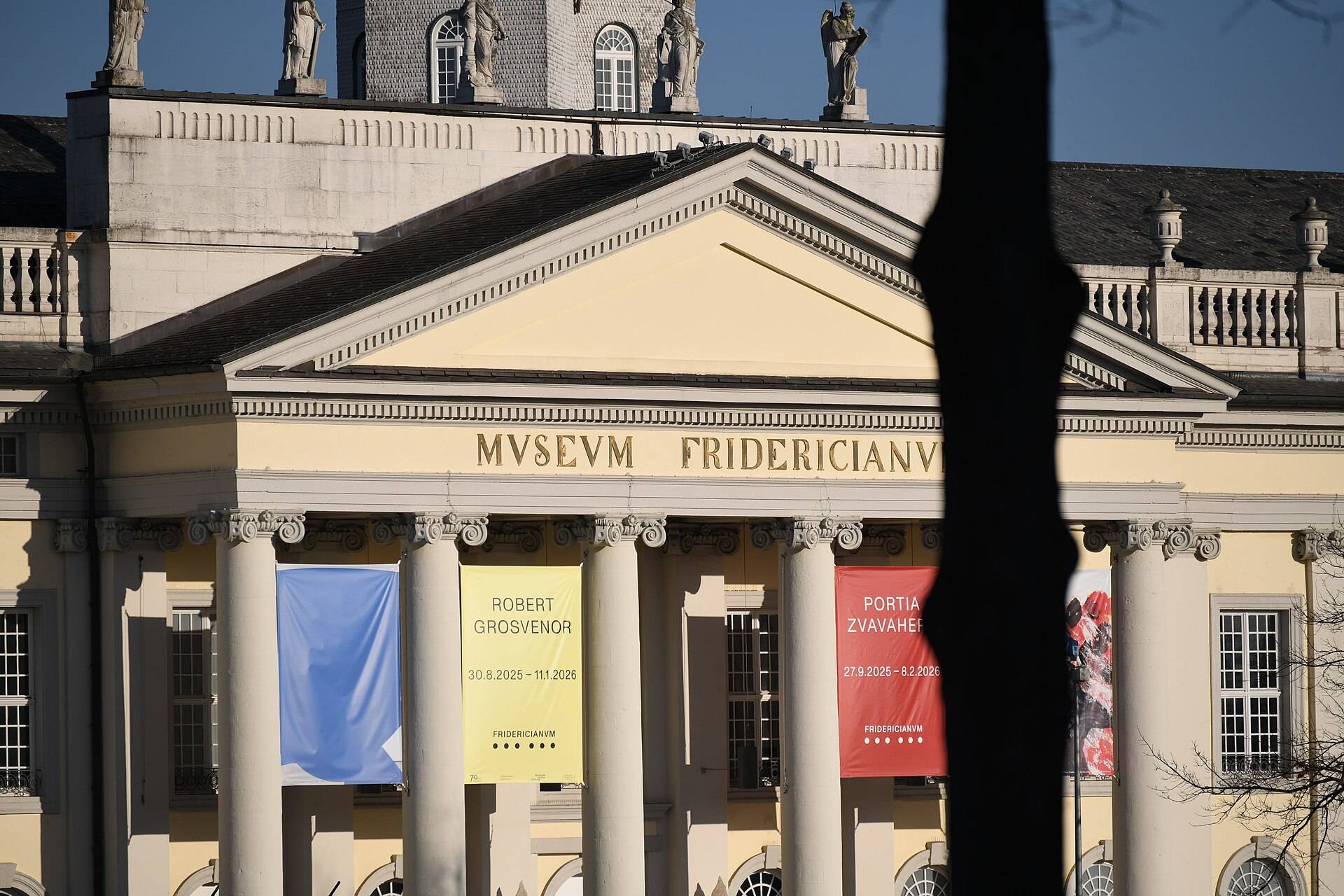
Contextual photograph: exterior of the Fridericianum in Kassel on 20 January 2026, during Portia Zvavahera’s exhibition. This is not an installation view. Photo: Paul Broeker (Paul Bröker), Wikimedia Commons, CC BY-SA 4.0. Full image, no crop.Paul Broeker · CC BY-SA 4.0
Eric Otieno Sumba revisits Portia Zvavahera’s exhibition at the Fridericianum in Kassel, examining how dreams, faith and painted surfaces shape her work. His review praises the expansive installation of House of Praise while questioning more conventional displays, then considers how editorial and institutional pressures affect the timely publication of art criticism.
Amira Bongho Nouarra examines Carrie Mae Weems’s FOMU retrospective through a conversation with the artist and close readings of photographs, video and installation. Moving between family intimacy, cultural institutions and spiritual expression, the review asks how a museum shapes visibility while Weems continually reworks the relationships between images, viewers and power.
Zeitz MOCAA announced Jessica Nowitzki’s appointment to its board of trustees in June 2026. The museum described the US-based collector and arts advocate as a longstanding supporter of African American and diaspora artists and a member of its Global Council. Her appointment adds to the governing body responsible for strategic and financial oversight as the Cape Town institution prepares for its tenth anniversary in 2027.
In Mozambique, creative reuse connects art with everyday environmental challenges. Global Voices profiles Vânia Gonçalo, who transforms discarded tyres into furniture and decorative objects, and Mudungaze, whose masks and other works draw on scrap metal and African cultural references. Rapper Osvaldo Iko MC adds music and digital campaigning to the picture. Together, these accounts explore how creativity, environmental education and income-making can intersect amid unequal access to waste services and cultural spaces.
Original article by Tirso Sitoe·Global Voices·Translated from Portuguese by Liam Anderson·
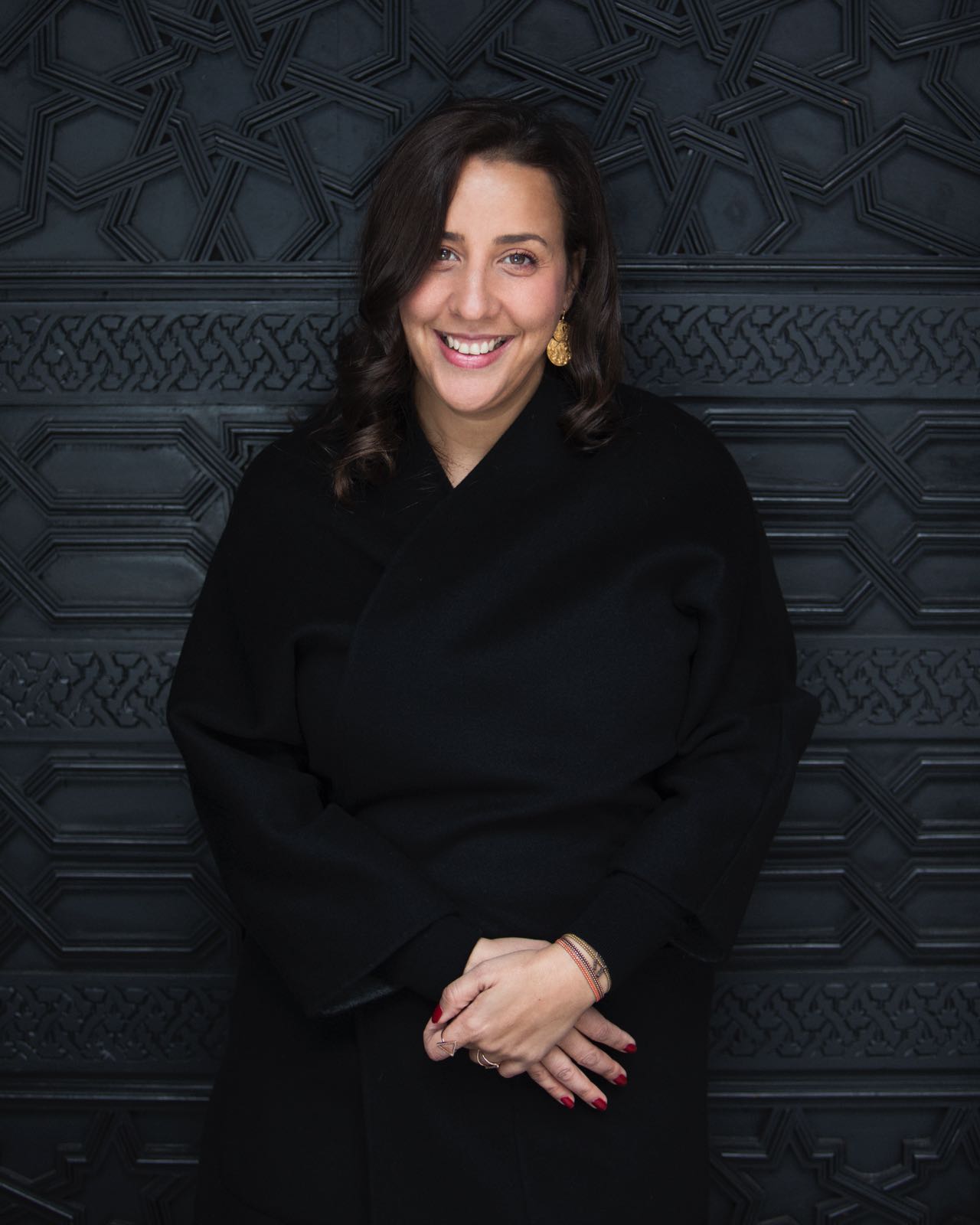
Touria El Glaoui, founder of 1-54, on 1 October 2021. Contextual portrait, not a photograph of the 2026 New York fair. Photo: Editvipcontent / Wikimedia Commons / CC BY-SA 4.0.Editvipcontent · CC BY-SA 4.0
Africans Column considers 1-54 New York as an ecosystem linking galleries, artists, collectors and institutions rather than a market alone. Its review of the 2026 edition emphasises diaspora connections, sustained scholarship and the partnerships surrounding the fair, asking how international attention can develop into lasting support for African and diasporic practices.
In May 2026, Zeitz MOCAA announced a season connecting artist-led publishing with African and diasporic moving-image practices. IMPRINT was planned as a residency for Cape Town publishing collectives, while Turning Towards the Sun would present six commissioned films developed through the African Film and Media Arts Collective. The announcement linked both projects to collective production, public engagement and experimentation across the continent and its diaspora.
Africans Column uses Frieze New York to examine the different ways cultural recognition and market value develop. Contrasting El Anatsui’s institutional history with Southern Guild’s expanding presence, the analysis argues that galleries, museums, archives and criticism sustain careers over time. It cautions against treating a single sale price as a measure of artistic achievement.
Zeitz MOCAA announced that Lidija Khachatourian and Suzanne McFayden Smith had joined its Global Council, while founding member Michèle Sandoz became senior strategic advisor for global patronage. The museum described the council as a non-voting network whose members advocate internationally and support programmes financially. The appointments formed part of its preparations for its tenth anniversary in 2027 and efforts to strengthen long-term institutional support.