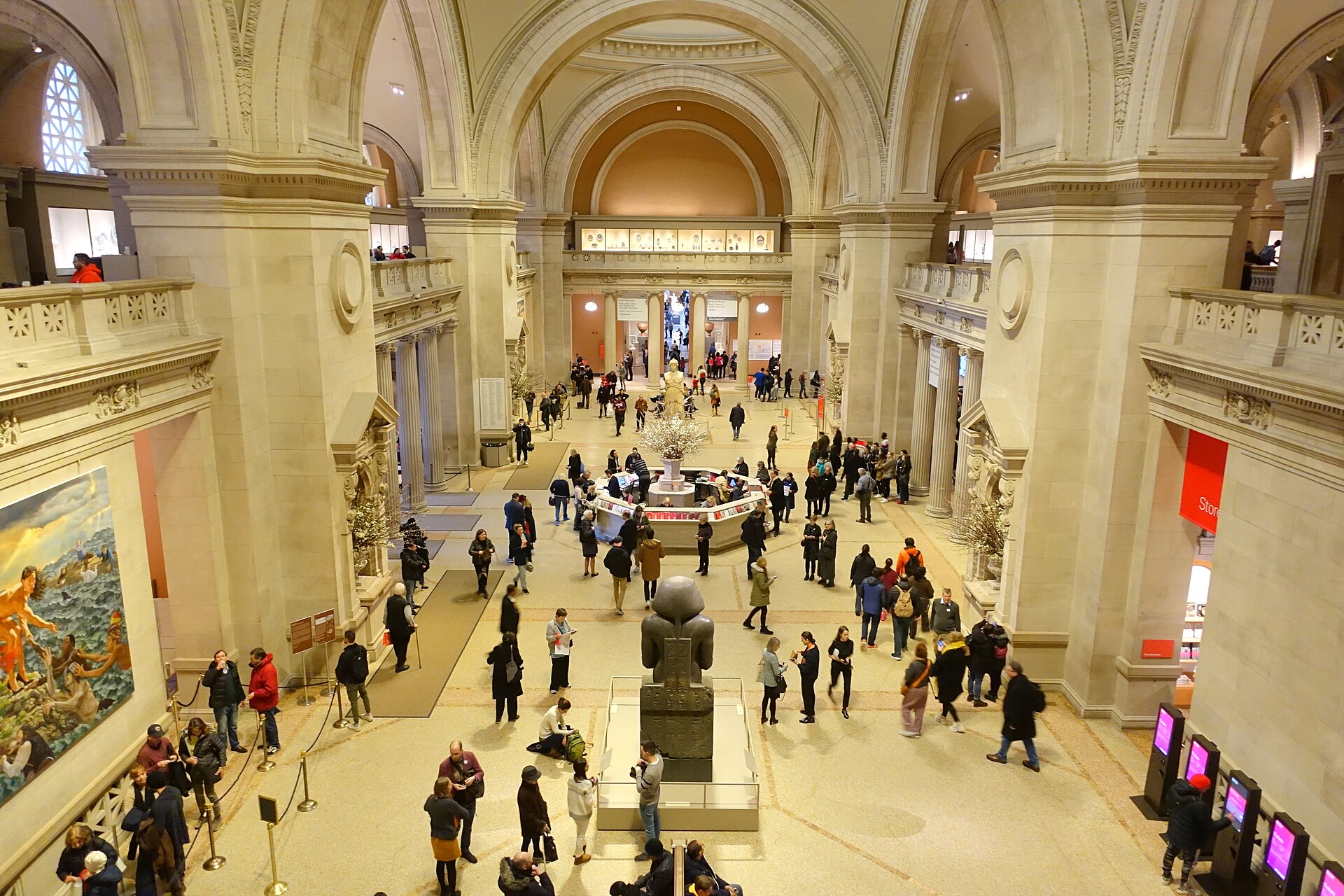
Hyperallergic examines the Metropolitan Museum of Art’s Afrofuturist period room, which combines historical objects with contemporary work by Black artists and designers. The installation imagines descendants of Seneca Village’s displaced residents, bringing different eras into one domestic setting while reconsidering whose histories traditional museum rooms represent.
Zeitz MOCAA’s 2021 announcement introduced Only Sun in the Sky Knows How I Feel, a survey of Johannes Phokela’s painting spanning three decades. Alongside earlier work, the exhibition included new large canvases and archival material illuminating his process. The museum framed his engagement with European pictorial traditions as a means of questioning power and inherited value systems. Koyo Kouoh and Storm Janse van Rensburg co-curated the presentation.
Anya Brilus’s ArtThrob review examines how Georgina Gratrix’s exhibition The Reunion at Norval Foundation expands portraiture beyond physical likeness. The Durban-raised artist’s layered paintings of her parents are set against Nine Weeks, a sequence of daily watercolour self-portraits made during South Africa’s 2020 lockdown. Brilus interprets the contrasting materials and repeated faces as records of relationships, memory and changing emotional experience.
Zeitz MOCAA announced Thania Petersen’s KASSARAM as an open-studio residency running from 27 May to 17 October 2021. Centred on her film of the same name, the project examined how representations of culture can create divisions and obscure community histories. The Cape Town artist planned to develop the film’s imagined setting within the museum, giving visitors access to research and making connected to her heritage and identity.
Writing for ArtThrob, Francia Pratt considers how a pairing at Zeitz MOCAA connects memory with domestic life and material form. Her review brings Njideka Akunyili Crosby’s mixed-media painting Sunday Morning into conversation with Joël Andrianomearisoa’s fabric work. Pratt reads the photographic fragments and textile surfaces as different ways of holding personal histories, absence and bodily experience, showing how the exhibition’s paired presentation creates connections across distinct artistic practices.