ACP (ND) reports that Henry Bundjoko has called for scientific testing of traditional Congolese materials used in conserving cultural objects. Speaking at Kinshasa’s Académie des beaux-arts, the professor described a catalogue of thirteen local plants and materials and proposed fieldwork with artisans. He stressed that laboratory research must establish toxicity, compatibility and reversibility before wider use. His proposal connects conservation training with local knowledge, rather than treating traditional recipes as proven restoration methods.
ACP (S. A.) reports that Eddy Ekete is bringing recycled materials into digital art at Kinshasa’s Institut français. Matisa Numérique: KINiarof, announced for 5–7 November at the Petite Halle, combines electronics and performance with interactive games, including screen-linked hopscotch. Ekete describes a collaborative workshop process involving local artists and participants from France. The project extends his practice of transforming discarded objects into artistic material.
Congolese painter JP Mika discusses human–animal coexistence through Baninga ya ba Bonobo in an ACP studio report from Kinshasa. He describes the painting’s gestures, figures, fruit and vegetation as an invitation to respect other species and protect the Democratic Republic of Congo’s natural heritage. Rather than depicting destruction alone, Mika presents a joyful shared environment, using the composition to encourage awareness of forest conservation and the protection of bonobos.
A workshop at Kinshasa’s Centre culturel congolais Le Zoo brought visual artists together with musicians, performers, writers and fashion practitioners to discuss declaring and protecting their work, ACP reports. Opened on October 29, the initiative was organized by ACOM and Le Zoo with FASAEC and FOSCA. According to the account supplied to ACP, discussions covered practical and legal tools for responding to unauthorized copying and digital distribution.
Congolese photojournalist Jonathan Kamunga received the Chrysostome-Kyungu prize at the third Best View Awards in Lubumbashi on October 31, ACP reports, citing the recipient. The award recognizes his photography career and honors a figure associated with documenting successive governors of Grand Katanga. Kamunga dedicated the recognition to fellow Congolese photojournalists and acknowledged mentors who supported his development.
Alain Kyembe is planning a portrait-led tribute to overlooked community figures in Lubumbashi, according to ACP. The artist, who works as Alain Art, will use commemorative pictures to remember people who have died and give the works to their families. The Tufurahi ceremony is scheduled for 27 November at Pullman Grand Karavia, bringing his drawing practice into a wider initiative honouring local contributions.
Congolese curator Henry Bundjoko Banyata has argued that the Institut des musées nationaux du Congo should play a stronger role in civic dialogue and cultural memory, ACP reports. In an interview in Kinshasa, he called for heritage to receive greater political attention and for museums to connect communities with their shared histories. His remarks present a vision for the institution’s public role, rather than an announcement of a new programme.
ACP reports that La Croisade Créative, a practical graphic-design workshop, is planned in Kinshasa on 7, 14 and 21 November. Sessions will cover Photoshop, image-making and generative AI, with Congolese textiles, sculpture and Kuba motifs presented as resources for contemporary visual identities. Organisers also encourage documentation and dialogue with craftspeople and custodians of cultural knowledge. The report does not specify a venue, fees or booking arrangements.
Organisers of the seventh Prix Lokumu in Kinshasa plan to connect Kuba textiles and motifs with contemporary fashion, design and visual art. Coordinator Onassis Mutombo told ACP that the programme would also provide technical, entrepreneurial and digital training for 50 young Congolese women. The awards evening is planned for 5 December at CCAPAC, with further programme and access details expected from 5 November.
ACP reported that Kinshasa art student Joseph Jessy Dunga received the international Art Humanité prize for La force des fragiles. Made with coffee as a painting material, the work brings together overlapping figures to explore vulnerability, solidarity and mutual support. Dunga linked its development to personal experience and research into the Ngbaka community. The award was presented at the Académie des Beaux-Arts in Kinshasa.
ACP reports that performer Maguy Kalomba has welcomed Nadège Mitshindu Bope’s leadership of DR Congo’s national commission for protecting Kuba textiles and motifs. Kalomba called for wider transmission and visibility of this material heritage. The educator’s appointment was made by ministerial order on 1 September 2026; ACP’s 24 October report records a subsequent response, rather than a new appointment or the enactment of new legal protections.
A new book brings together more than 170 Cameroonian artists in a survey spanning a century of modern and contemporary art. Shalom Esene reports for Art Report Africa that Ozong Agborsangaya-Fiteu’s Ô Cameroon! combines artworks with essays and conversations to strengthen the documentation of the country’s artistic history. Its London launch took place at Somerset House during 1-54 on 17 October. Further launches are planned, but their dates have not been established.
A Tanga BD gathering at Planète J Socimat in Kinshasa is scheduled for 25 October, ACP reports. Organisers plan comics reading, drawing and activities around traditional objects to encourage young audiences to explore art and heritage. Barly Baruti describes the initiative as an accessible route into reading, with Hallain Paluku and Rodriguez Muladika expected to guide participants’ first steps in comics.
Agence Congolaise de Presse·
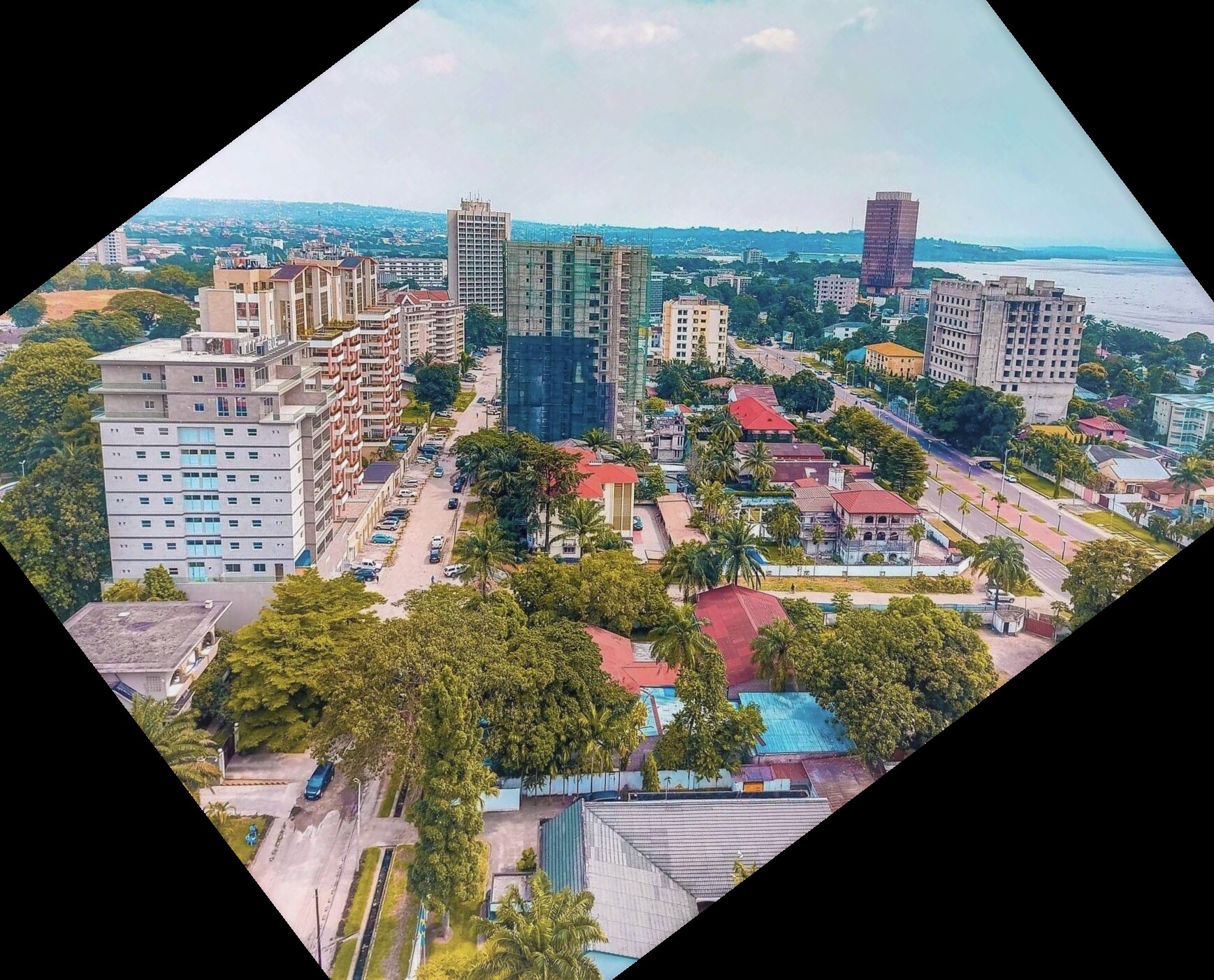
Contextual aerial view of Kinshasa, not a competition entry. Photograph by EdwinAlden.1995; existing rotation by Respublik.EdwinAlden.1995 · CC BY-SA 4.0
Kinshasa’s Best Talent Visuel competition will use drawing, photography, graphic design and video to explore the capital under the theme “Kin la Belle”. Organiser Platini Ndaka told ACP that the November 2 edition aims to foreground cultural heritage, local talent and everyday initiatives, encouraging artists to tell more varied stories about the city.
Two bronze sculptures by Alfred Liyolo at the Congolese press agency’s Kinshasa headquarters are receiving renewed attention after a visit by his daughter, Myoto Liyolo. ACP’s account recalls their installation in 1975 and considers their place in the agency’s history, connecting the sculptor’s monumental practice with the preservation of institutional cultural heritage.
The Democratic Republic of Congo’s visual artists’ union and Belgium’s Stanley’s Auctions have announced talks towards a strategic partnership. According to a communiqué reported by ACP, discussions will address artwork traceability, authentication, contracts and artists’ rights. The proposed framework also seeks to protect artists’ market standing and strengthen safeguards for Congolese cultural heritage.
In an October 17 interview with ACP, Congolese visual artist Raphaëlla Anakasala outlined Fleuve coloré, a women’s art workshop planned in Kinshasa for October 30. She intended it to welcome participants without painting or drawing experience. The river would offer inspiration rather than a compulsory subject, allowing each participant to explore her own understanding of womanhood through an individual artwork.
Culture Congo reported on the ninth Lubumbashi Biennale, whose theme Manger la terre connects resource extraction with memory, territory and cultural knowledge. Curator Sorana Munsya outlined the exhibition’s concerns, while participating artists described projects addressing transformed landscapes, extractive promises and medicinal plants. Organised around Picha and partner venues across the city, the biennale was scheduled from 15 October to 15 November 2026.
Jérémie Mbuyi of Art et Élégance pour le Développement described new paid roles for street painters and sapeurs in Kinshasa. Speaking to ACP, he pointed to advertising-mural commissions and collaborations with local designers on image and colour. He argued that these practices could develop into small businesses and give local visual culture a stronger economic role.
Congolese painter Meshack Kadima says the public’s continuing engagement with his work matters more to him than trophies. In an ACP interview following his recognition at the Mwinda Awards, he credited supporters who share his paintings and follow his practice. Kadima also described everyday concerns as central to his work, explaining that he wants his paintings to connect with the lives of his audience.