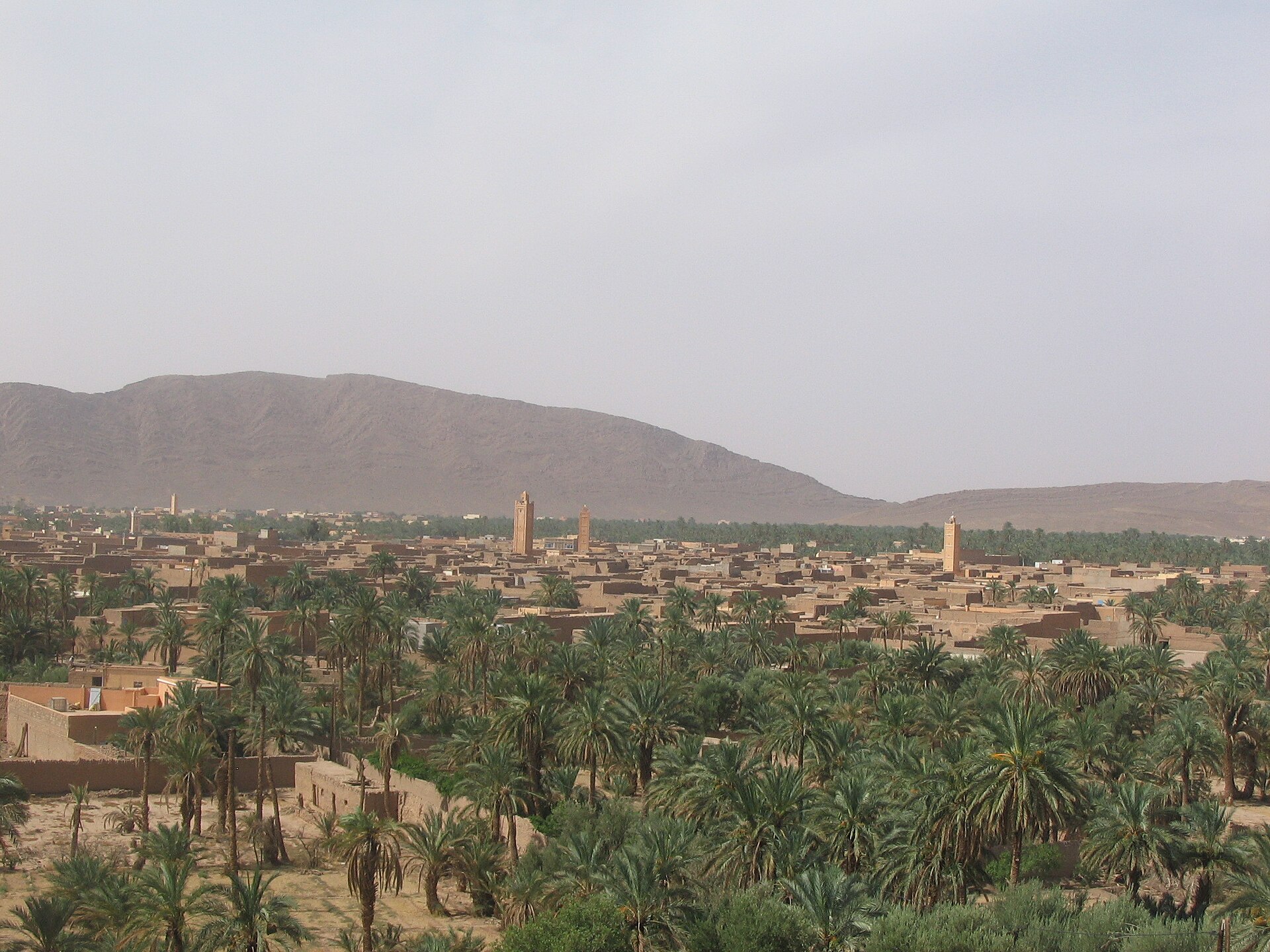
Figuig oasis, Morocco, 20 July 2006. Archival contextual location image, not a photograph of the 2026 festival. Photo: Inkey / Wikimedia Commons, CC BY-SA 3.0.Inkey · CC BY-SA 3.0
Visual-art and traditional-craft exhibitions will feature in the nineteenth Oasis Cultures Festival in Figuig, Morocco, from 5 to 7 November, according to a MAP report published by Madar21. Organised by the culture ministry, the programme draws on work from Figuig and neighbouring oases, alongside youth workshops and discussions of architectural and environmental heritage. The announcement does not provide individual exhibition venues or visiting hours.
Public voting has opened for the Jidar Grand Prix in Rabat, Madar21 reports from an organizers’ statement. Audiences can choose among fourteen murals created by fifteen artists during the 2026 street-art festival, with voting running through November 30. The winning artist will receive a Rabat residency and exhibition. The previous winner, Yankamanta, is due to begin a residency this month.
Designer Bouchra El Bouhsini presented Moroccan caftans during Morocco Week in Jakarta, Madar21 reports through MAP. The collection highlighted detailed embroidery, ornament and coordinated color, combining contemporary cuts with traditional craft practices. In the report, El Bouhsini describes the garment as an expression of cultural memory and identity, and discusses how new designs can evolve while maintaining their connection to Moroccan artisanship.
Amina Agueznay and curator Meriem Berrada discuss Asǝṭṭa, Morocco’s Venice Biennale pavilion, in an ART AFRICA interview with Suzette Bell-Roberts. The installation brings wool, raffia and embroidered threads into an architectural environment developed with 166 craftspeople. Their conversation considers weaving as living knowledge, the visibility of collaborators and the threshold as a space of encounter. Both resist treating craft as a fixed inheritance separate from contemporary artistic thought.
Writing for ArtReview’s partnership with Salzburger Kunstverein, Cairo-based researcher Hana Elhaddad addresses Ryan Gander in an open letter about his exhibition One Hundred Things Twice. She recounts navigating its objects, entrance and accompanying publication, asking how viewers find meaning when an artwork’s purpose is uncertain. Her essay considers the gap between seeing an object and understanding it, bringing a Cairo-based critical voice into an international conversation about exhibition-making.
Egyptian artist Rafik Greiss’s The City and the City at Berlin’s KW Institute for Contemporary Art combines a newly commissioned film with black-and-white photographs. ART AFRICA describes figures waiting in desert landscapes, accompanied by a score from musician 7038634357. Curated by Emma Enderby and Liberty Adrien, the exhibition considers anticipation, perception and the instability of memory through images that resist a fixed historical or geographical reading.
ART AFRICA·
Behbeit el-Hagar, photographed in 2008. The newly reported Ramses II fragments are not pictured.Roland Unger · CC BY-SA 3.0 · Cropped
Hyperallergic reports that Egyptian antiquities officials recovered parts of two monumental statues of Ramses II at Behbeit Al-Hagar in the Nile Delta. Excavation followed a resident’s discovery of an inscribed stone. The find includes a large carved head and part of an inscribed back pillar.
ArtReview reports that Rubaiya Qatar’s first edition in Doha will bring together more than 120 artists through three exhibitions and public installations. African participants listed include Meriem Bennani, Mohamed Bourouissa, Jean Katambayi Mukendi, Wael Shawky and Lydia Ourahmane. The programme also names Basim Magdy and Joseph Ntensibe, while Ibrahim Mahama is among the artists commissioned for public works. The main exhibition, Unruly Waters, is scheduled to open on 21 November.
MAP reporting published by Madar21 described Mohamed El Jamaati’s solo exhibition À travers la fenêtre at Kent Gallery in Tangier. Watercolours and acrylic paintings draw on Tétouan’s buildings, balconies and windows, bringing new works together with paintings from the 1980s and 1990s. El Jamaati discussed making charcoal lines, canvas structure and colour transitions visible as part of his continuing experimentation. The exhibition was scheduled to run until 9 November.
Madar 21 reports that Asilah’s autumn cultural season will include printmaking, oil painting and lithography alongside its wider programme. Exhibitions feature Moroccan artists Mohamed El Mourabiti and Younes Kharraz, photographs by the late Mohamed Benaïssa and children’s work. A tribute symposium will examine art historian Toni Maraini’s relationship with Morocco’s visual arts scene.
Madar21 publishes MAP’s account of the fourteenth Morocco Visual Arts Salon in Fès. Organised around the transition from sketchbook to finished work, the programme combines an emerging-artists exhibition and competition with painting, sculpture, ceramics, calligraphy and installation. Guest artist Iryna Grytsenko highlights the productive encounter between preliminary studies and completed works.
Madar21 carries MAP’s report on ten Moroccan exhibitors participating in Bijorhca Paris through a Maison de l’Artisan pavilion. The presentation foregrounds the diversity of regional jewellery-making traditions and contemporary craft skills. Organisers describe the initiative as a way to connect makers with buyers while strengthening international recognition of Moroccan craftsmanship.
Tunisian filmmaker Ridha Tlili discusses how documentary lets him work alongside communities often absent from mainstream images. Speaking to Africultures at Lussas, where three of his films were screened, he connects filmmaking with graffiti, performance and everyday acts of resistance. The interview explores a practice shaped by observation, experimentation and each new encounter.
Africultures·
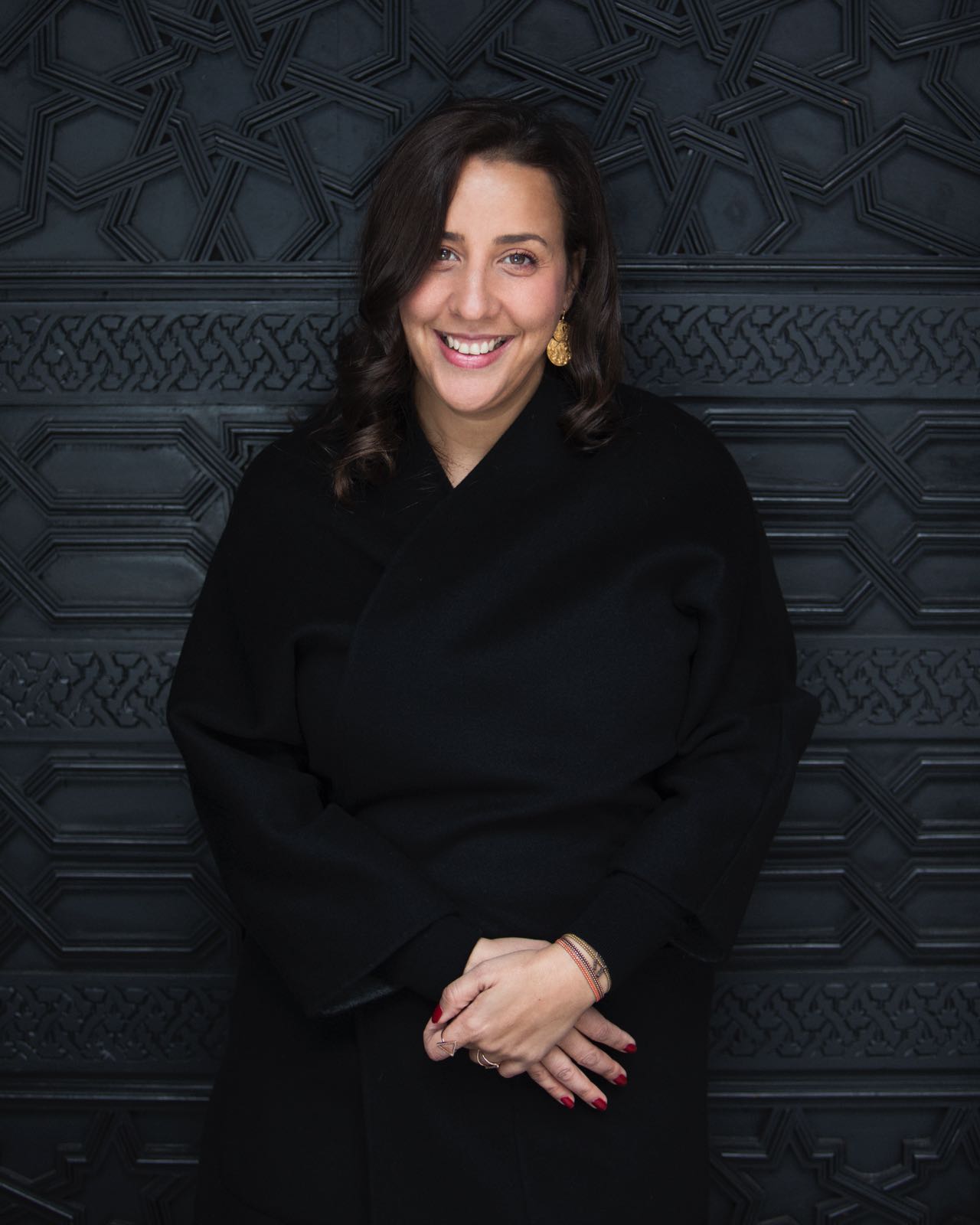
Touria El Glaoui, founder of 1-54, on 1 October 2021. Contextual portrait, not a photograph of the 2026 Marrakech fair. Photo: Editvipcontent / Wikimedia Commons / CC BY-SA 4.0.Editvipcontent · CC BY-SA 4.0
Harriet Nyarko Agyiri previews 1-54 Marrakech’s 2026 edition through its Moroccan galleries, international exhibitors and wider city programme. Alongside booths at La Mamounia, the article highlights projects involving installation, textiles and sculpture, as well as talks on archives and artistic mobility. It offers an overview of how the fair connects with Marrakech’s cultural institutions.
Hiba Baddou discussed Paraboles, A Hertzian Odyssey with ART AFRICA during its 2025 run at MACAAL in Marrakech. Through film, photography, calligraphy and installation, the Moroccan artist explored how communications technology intersects with memory and domestic life. Her work Kesskass transformed a couscoussier into an antenna. Baddou described this meeting of familiar objects and imagined technologies as a way to connect cultural inheritance with possible futures.
Writing for C& in July 2025, Imen Zarrouk explored Bao Books, the Tunis bookstore, design studio and publishing project founded by Moez Akkari. The feature described its Moving Forward collaboration with Egypt’s Esmat publishing house, intended to improve regional book circulation through hubs in Tunis and Cairo. Zarrouk connected that infrastructure to artists’ publications by Farah Khelil, Abdullah al Saadi and Yasmine El Meleegy.
Nancy Dantas’s ArtThrob feature traced the Casablanca Art School’s challenge to colonial hierarchies through an exhibition in Sharjah. Historical publications, ceramics, murals and archival research connected classroom experimentation with public interventions in Morocco. Dantas emphasised how African, Amazigh, Islamic and Mediterranean inheritances informed a collective modernism, placing the school’s educational ambitions within wider African and Arab cultural networks rather than a narrowly national art history.
ART AFRICA reported on the Metropolitan Museum’s Africa & Byzantium, a nearly 200-work exhibition tracing artistic exchange across northern and eastern Africa. Nubian wall paintings, Coptic manuscripts and Ethiopian icons challenged the treatment of Africa and Byzantium as separate histories. Contemporary works by Tsedaye Makonnen and Theo Eshetu extended the inquiry into memory and historical interpretation, connecting medieval objects with present-day African artistic thinking.
Elaine Velie’s Hyperallergic report explored Lauren Halsey’s roof commission at the Metropolitan Museum. Egyptian architectural forms carried portraits of people close to the artist and inscriptions drawn from South Central Los Angeles. Built from hundreds of tiles, the installation connected Afrofuturist imagination with the preservation of a neighbourhood’s everyday language, asking whose culture museums make permanent while communities face the pressures of gentrification.
In a feature published online by ART AFRICA in March 2020, Zahra Abba Omar examined Prête-moi ton rêve, an African-led touring exhibition intended to bring celebrated artists’ work to audiences across the continent. Through the account of foundation director Fihr Kettani, the article explored collaboration, institutional networks and ambitions for a more autonomous art market. Its value lies in those stated aims, not in confirming the proposed itinerary was completed.