ArtThrob and Krone announced a three-week residency at Twee Jonge Gezellen in Tulbagh for 5–25 July 2027, developed with Sue Williamson. Three artists will share facilities and participate in exchanges across disciplines. The call lists accommodation, a food allowance, studio access and travel within South Africa; international participants must cover travel to the country. Applications close on 6 November 2026, with individual and group submissions accepted.
Art Report Africa surveyed September 2026 exhibitions across Lagos, Paris and Stockholm through the themes of memory, belonging and material history. The writers considered CCA Lagos’s treatment of grief, the craft-led Mémoire Matérielle, Emma Prempeh’s layered paintings and Ndidi Dike’s installations about extraction and value. Their account distinguishes firsthand viewing from a reading of official installation photographs.
A Lussas documentary seminar brought together films exploring resistance, colonial memory and the politics of representation. Olivier Barlet’s account follows a programme curated by Raquel Schefer, including work connected to Mozambique and Guinea-Bissau. It considers how archives, experimental forms and collective filmmaking can challenge established ways of seeing rather than simply illustrate political arguments.
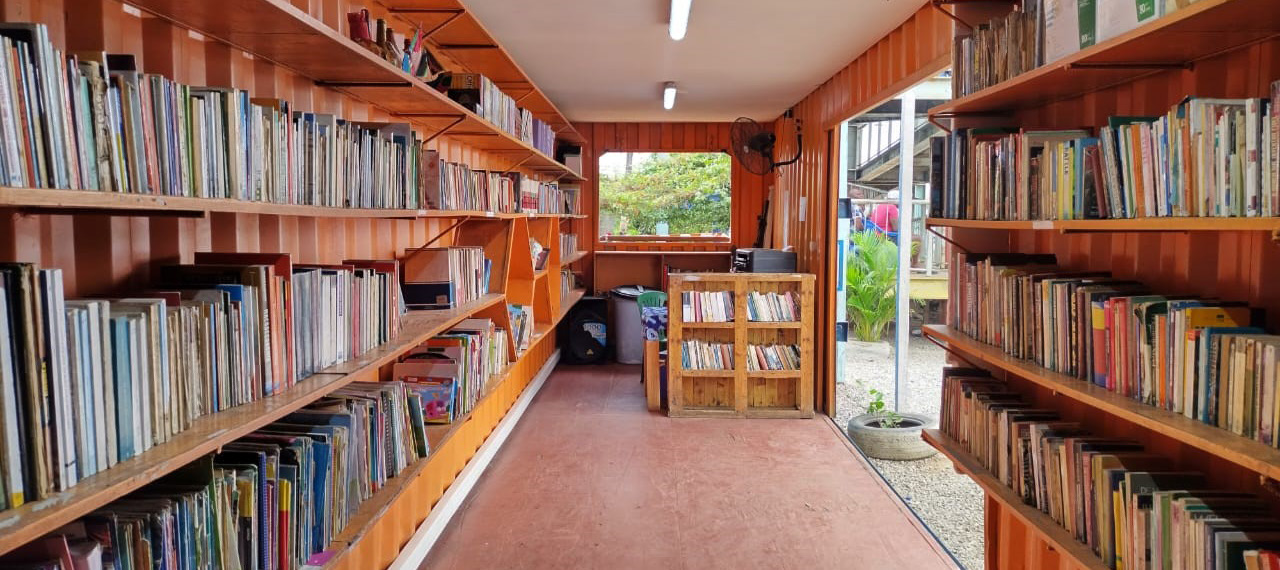
Angolan community library 10Padronizada grew from 14 shared books at a pedestrian crossing into a space for reading, education, art workshops and free children’s activities. Co-founder Dago Nível Intelecto travelled to Essen through Goethe-Institut Angola to participate in Manifesta 16 Ruhr alongside cultural practitioners from across Africa. The European nomadic biennial ran from 21 June to 4 October 2026 across former church buildings and several Ruhr cities.
A Museum of Black Futures conversation with architect and researcher Patti Anahory asks how African cosmologies might change the way museums understand time and space. Richard Kofi’s introduction frames a debate over whether the project should work within established museum definitions or build its future outside them, linking institutional form with decolonial practice.
ACP reports that Africa Legacy will run in Belgium from September 4 to November 1, bringing historic African art into dialogue with contemporary expression. Panellist Ytal Mwena Lumpungu argues that young Africans should actively reinterpret and preserve their heritage, rather than regard it as a distant or static inheritance.
Olivier Barlet surveys the young sub-Saharan African documentary programme at Lussas, following films that connect personal experience with wider histories. His account moves from colonial archives and extraction to contemporary streets and rural communities, considering how observation, performance and autobiographical approaches reshape the representation of place, memory and everyday life across the continent.
Sabo Kpade reviewed three Accra exhibitions for Art Report Africa in August 2026. At Nubuke Foundation, domestic objects became records of labour and belonging; at Gallery 1957, Gabriel Selassie Tsagli explored movement and memory through colour. Frank Coffie’s Worldfaze presentation showed yarn functioning both as a tactile pictorial material and as a way of organising different emotional states.
Zeitz MOCAA announced a presentation by Nolan Oswald Dennis for FNB Art Joburg, scheduled for 3–6 September 2026. Revisiting the artist’s UNDERSTUDIES exhibition, the booth focused on collaborative works using soil and geological materials to explore relationships between land, knowledge and collective labour. The museum also announced the launch of ECLIPTICS, Dennis’s first monograph, alongside discussions extending the presentation beyond the fair.
In an August 2026 interview with Art Report Africa, Gabriel Selassie Tsagli discussed making Son of Kafui after returning from Berlin to Accra. He described working intuitively across several canvases, using locally available colours and treating movement as part of his process. The conversation considers artistic dedication, the influence of other artists and the changing experience of making and exhibiting work at home.
In August 2026, Novo Jornal reported that Angolan sculptors were eligible for a granite-sculpture symposium in Burkina Faso, citing Angola’s culture ministry. The announcement described places for experienced sculptors, assistants and trainees, with selection considering artistic quality and technical experience. This archived report records a cross-border professional opportunity; it does not establish that applications remain open, and applicants should verify current details with the organisers.
At the Interstice brings TAELON7’s adaptable spatial practice to the Foundation for Contemporary Art Ghana in Accra. Led by Juergen Benson-Strohmayer, the installation combines shade netting, sculptural assemblies, photographs and drawings to explore how modest materials can support gathering, negotiation and shared public life across the boundary between gallery and courtyard.
In an ArtThrob interview, Alexander Richards and Igshaan Adams explain how they curated Peter Clarke’s The Departure at Stevenson in Cape Town. A short story Clarke wrote in 1955 provided a starting point for connecting paintings, prints, drawings and personal material. The curators describe exploring Simon’s Town, studying Clarke’s carefully annotated archive and developing an exhibition that suggests relationships among his works rather than a straightforward biographical chronology.
ArtThrob·
Elvira Dyangani Ose speaking at TEOR/ética in 2019. Photo: TEORETICA, CC BY 3.0.TEORETICA · CC BY 3.0
Zeitz MOCAA announced Elvira Dyangani Ose’s appointment as artistic director, effective 1 October 2026. The Cape Town museum said she would lead its curatorial direction as it approached its second decade, building on Koyo Kouoh’s legacy. The announcement highlighted her leadership at MACBA and The Showroom, her curatorial work at Tate, and her longstanding engagement with art from Africa and its diaspora.
Ahead of the inaugural KZN Art Fair in August 2026, founders Angela Shaw and Lungelo Mkhize told ArtThrob how their partnership with the Hilton Arts Festival developed. They described a programme combining galleries, artist collectives, craft, publications and discussions at Hilton College. The interview centres on their ambition to create sustainable local opportunities and retain creative talent in KwaZulu-Natal, rather than requiring artists to relocate.
ArtThrob considers Pyda Nyariri’s Paivapo at Cape Town’s Association for Visual Arts through the fictional figure Pidgin. The Zimbabwean-born artist combines relief paintings, cotton gauze and clay with sound by Denise Onen and writing by Rabia Abba Omar. The review reads these interlocking elements through Édouard Glissant’s ideas about relation and opacity, arguing that their elusive language resists colonial classification and opens possibilities for collective belonging.
A S+T+ARTS residency cohort explores artificial intelligence through artistic practices grounded in African contexts. C& highlights Mahoutondji Kinmagbo’s interactive memory tablet, Chipo Mapondera’s water-focused installation and Evans Akanyijuka’s living photographic archive. Together, the projects shift attention from technology as a neutral tool towards the communities and inherited knowledge that shape its use.
Africultures previews the 2026 Festival International du Film de la Diaspora Africaine through a programme concerned with memory, resistance and repair. Olivier Barlet considers films spanning political histories and intimate lives, including Karen Hayes’s documentary with Desmond Tutu and Vincho Nchogu’s One Woman One Bra. The Paris festival was scheduled for September 4–6.
Gopalen Parthiben Chellapermal discusses Nous sommes tous des migrants in a FESPACO conversation published by Africultures. The Mauritian filmmaker describes building the documentary from family photographs, his father’s travel diary and encounters with Mauritian families in Britain. His account considers how personal archives and independent filmmaking can open questions about identity, migration and belonging.
ArtThrob asked artists, curators and other practitioners what they were reading in winter 2026. Contributions from Olga Speakes, Jo Stella-Sawicka, George Mahashe, Nisha Merit and Lerato Shadi ranged across fiction, photography, textiles and critical theory. Recommendations included a Carrie Mae Weems publication, Matter Mattering Matters and writing by African women, offering a view into the intellectual interests surrounding contemporary artistic practice.