ACP examined an untitled acrylic painting by Congolese artist Misoko Ngusu through the observations of critic John Bongenya. He read the central female figure, blue setting, vegetation and birds as connections between femininity, nature and spirituality. The report focuses on how colour, texture and symbolism shape his interpretation of the work, without identifying a new exhibition or a creation date.
During an ACP gallery visit, Congolese artist Serge Homboyoka Kadima, known as Makadi, discussed Malamba, a painting drawing on the ritual dancer of the same name in Bashilele culture. The artist described the figure’s ancestral significance and the costumes associated with its performance. His broader practice combines painting, recovered materials and textile sculpture to revisit the community’s mythic and ritual imagery.
An illustrated environmental education book by Gaëlle Mabanza brings artist Lepa Mabila Saye’s work into a project about relations between people and wildlife. Culture Congo reports that a mock-up of Dispute interminable was presented to the Congolese conservation institute on October 2. Publication is planned for March 2027, with the project intended for educational use.
Congolese artist Cédrick Sungo is preparing a five-sculpture installation for the inaugural Festival International de Sculpture de Cotonou, scheduled for October 26–30. Working with assembled wire and cut metal, he explores relations between people and their environment. Culture Congo places his contribution within the festival’s “Retour aux sources” theme and a four-artist delegation from the DRC.
Culture Congo profiles Kinshasa photographer Nathanael Milambo, whose work follows people, sport and cultural life across the city. He describes photography as a way to preserve memories and make overlooked stories visible. The profile also records his recognition for aesthetic expression and photography at the Mwinda Awards, held in Kinshasa on October 3.
In an interview with ACP, Aïcha Muteba announced Rencontre, an exhibition of around twenty previously unseen works scheduled to open in Kinshasa on 20 October. The painter presented the event as a return to audiences and collectors at home, inviting them to explore the messages within a vivid, semi-abstract practice concerned with Congolese society. Muteba’s wider work also encompasses street performance and installation.
Speaking to ACP in his studio, JP Mika revisited Le Triomphant, his painting honouring Chéri Samba’s artistic journey. The composition places a younger, monochrome Samba beside his mature counterpart in colour, with curator André Magnin connecting the two. Mika described the work as a reflection on perseverance, memory and intergenerational recognition. He also explained how precise details and the shift in colour contribute to its narrative, eleven years after its creation.
The Institut français de Kinshasa announced an exhibition of Chéri Chérin’s paintings to mark a year since his death. Reporting on October 6, ACP gave dates of October 22–November 21 for the presentation. The selection was intended to revisit the Congolese painter’s observations of society and his contribution to popular painting, rather than introduce a newly produced body of work.
ACP reported on Kakibaruki, a photographic exhibition in Lubumbashi exploring African hairstyles as carriers of identity and memory. Ruth Mpombo connected the project to childhood experiences of school-imposed hairstyles and to the transmission of cultural knowledge. Fellow photographer Chris Mizangi described portraits pairing dreadlocks with knitted plant forms, examining how people inherit, reshape and carry their roots.
A collective mural has given Kinshasa’s Le Zoo cultural centre a new façade, placing African women at the centre of its imagery. Director Paul Ngoie Le Perc told ACP that the work grew from the Kinshasa Urban Art Festival’s focus on violence against women, with Kimpa Vita representing resistance. He presented the mural as part of an effort to reopen the centre to artists and creative communities.
Agence Congolaise de Presse·
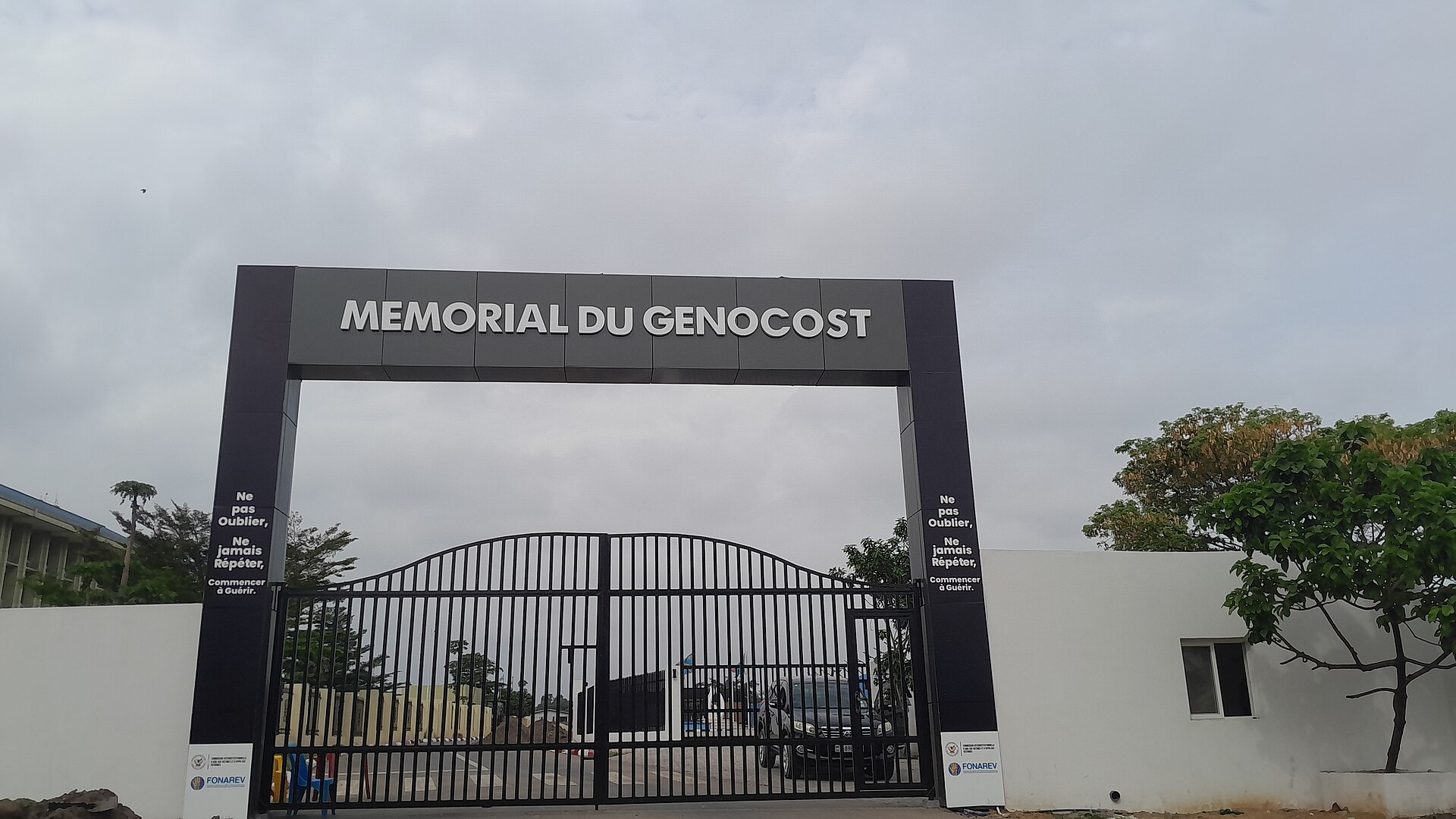
Context: entrance to Kinshasa’s Genocost memorial, photographed on 31 October 2025, not the exhibition or presentation.Alphonse Masandi · CC BY-SA 4.0
The Tobundela Congo collective has presented a portrait and a book of artists’ messages to Kinshasa’s Genocost memorial, ACP reports. Painter Noelline N’Samu describes the portrait as honouring women and survivors in eastern DR Congo. The presentation formed part of Les mémoires des vivants, a performance developed with Fonarev around remembrance, justice and peace.
Agence Congolaise de Presse·
Entrance to the Mémorial du Genocost, Kinshasa, photographed in October 2025. The ELIKIA-Archéologies exhibition is not pictured. Photo: Alphonse Masandi, CC BY-SA 4.0.Alphonse Masandi · CC BY-SA 4.0
ACP reports that ELIKIA-Archéologies brings four artists from eastern DR Congo to Kinshasa’s Genocost memorial. The exhibition addresses memory, peace and resilience through visual art. Among the participants, Edith Congane uses painting and collage to explore the body as a site of memory, emphasising vitality and survival rather than reducing communities to suffering.
Agence Congolaise de Presse·
Arnold Kufulula, photographed on 23 October 2020. Contextual author portrait, not an image of Shango et Zaïire.Congo.kin243 · CC BY-SA 4.0
Speaking to ACP, Arnold Kufulula describes Shango et Zaïire as a comic built around a father’s message to his son. Its visual storytelling brings together Kongo cosmology, oral traditions and rites of passage. The author positions the work as a means for young Congolese readers to encounter cultural memory and intergenerational responsibility.
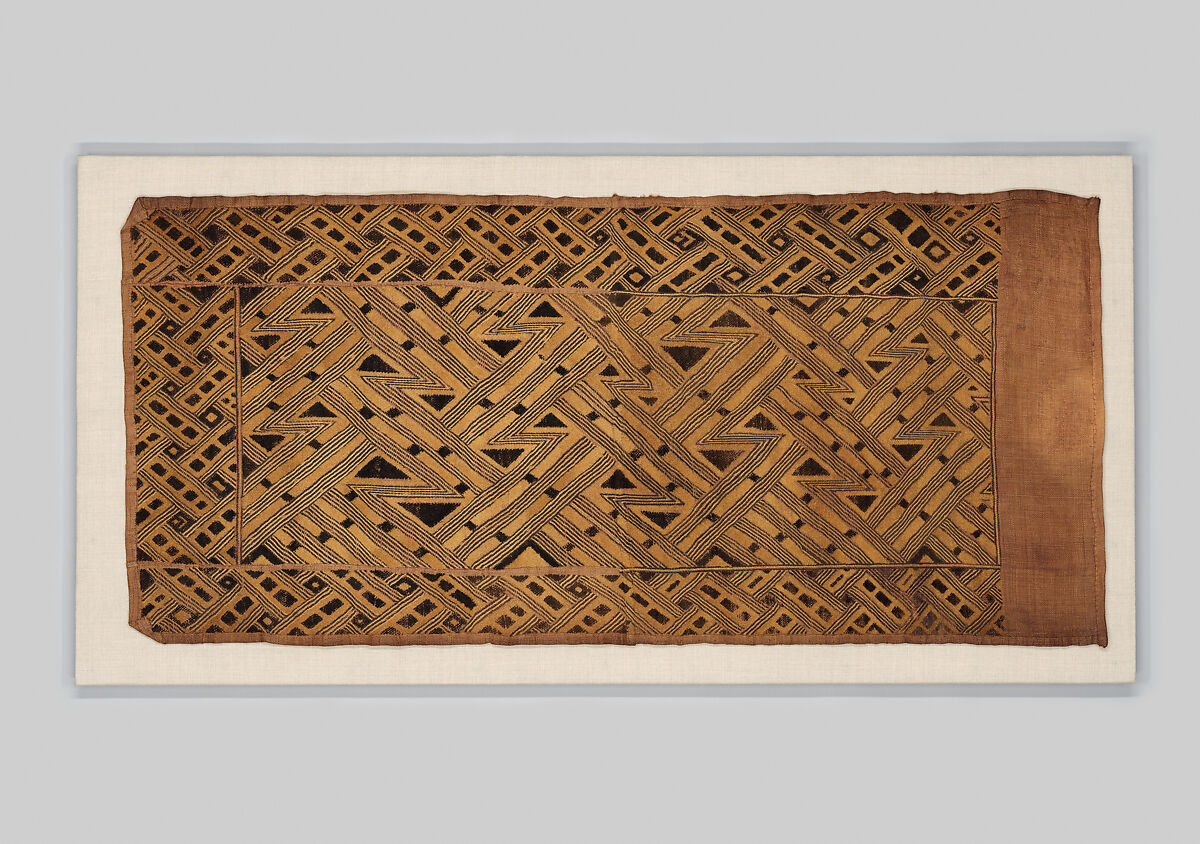
ACP reports on Kadima Muadianvita’s painting inspired by a palm-fibre textile given to him during a visit to the Kuba kingdom. The Congolese artist depicts its maker and carries the textile’s patterns into the background, connecting inherited craftsmanship with contemporary painting and the transmission of cultural memory.
ACP visits Kinshasa’s Galerie Symphonie des Arts, where animal imagery and recovered materials shape contemporary objects and artworks. Gallery director Christa Göpfert describes limited and unique pieces, including an elephant made from used coffee capsules. The report connects these material experiments with Congolese biodiversity, local craft and environmental awareness.
Reporting from Kinshasa Urban Art Festival, ACP examines Mathieu Poissinet’s work Non. Non, pourquoi non?, which presents women’s silhouettes as figures of resistance. The artist connects the painting to the festival’s concern with silenced experiences. Around twenty national and international artists contribute to the exhibition addressing violence against women.
ACP previews the fourth Kinshasa Urban Art Fest, running September 4–12 across several cultural venues. Its programme brings together street-art exhibitions, graffiti battles and creative workshops, including six women graffiti artists. Coordinator Tata Nizzo describes the festival as both a platform for emerging talent and a civic response to violence against women.
In a BUALA essay translated into Portuguese by Marta Lança, Imani Jacqueline Brown interpreted Memórias do Rio Envenenado, a multimedia exhibition by Kiluanji Kia Henda and Felix Shumba in Luanda. Across the Natural History Museum and Jahmek Contemporary Art, Brown read the works through a river’s imagined memory of colonial extraction and ecological damage. Her discussion of Restless Landscape and Nocturnal Bodies connected artistic form with interdependence, inherited violence and collective resistance.
ART AFRICA’s March 2020 interview by Sean O’Toole revisited Carsten Höller’s Fara Fara and its December 2019 screening in Kinshasa. Höller discussed working with Congolese rumba performers and using deliberately altered subtitles to construct an artwork rather than a straightforward documentary. The exchange records tensions between musical context, artistic invention and the reception of a film before an audience familiar with its language and protagonists.
In a 2020 interview with ART AFRICA, René Tavares discussed how São Tomé and Príncipe’s Tchiloli theatre tradition informed Migrations and Things. Working across painting, drawing and photography, he linked the movement of people and objects with cultural exchange, colonial histories and changing identities. Tavares described memory and heritage as active forces in contemporary life, connecting these concerns with his participation in This Is Not a White Cube’s programme.