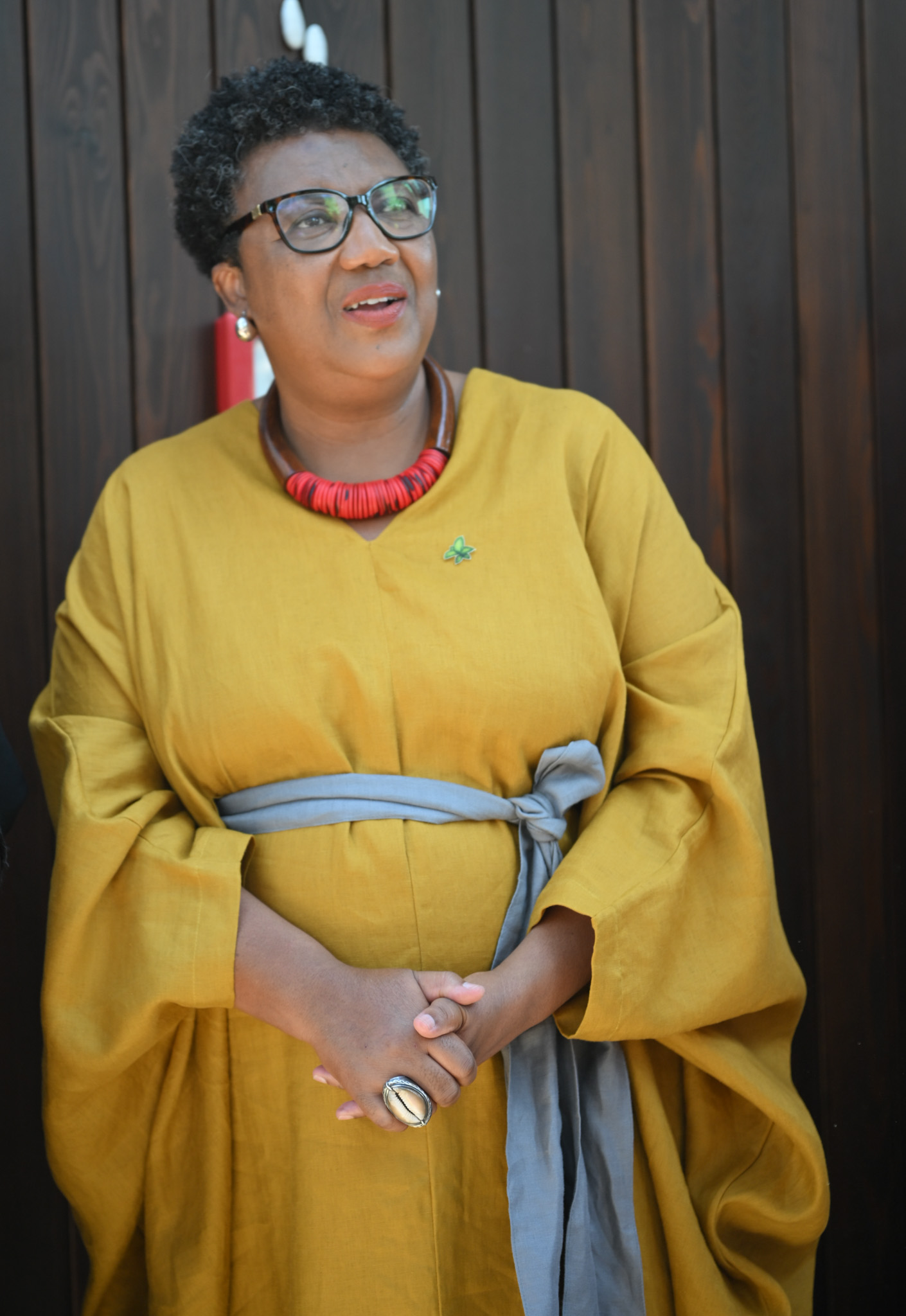
In an interview with Daniela Mayer, Afro-Brazilian artist Rosana Paulino explains how her artist’s book ¿História Natural? challenges colonial representations of Brazil and Black people. The 2016 work combines printmaking, altered expedition photographs and stitching on paper and fabric. Presented by the Vera List Center in New York, her exhibition places that critique of archival images alongside her natural-pigment drawings of figures within seeds.
For National Heroes Day, Jamaica's National Gallery highlighted Michael ‘FreeStylee’ Thompson's 2010 digital poster Rebel from its collection. The work depicts Paul Bogle, leader of the 1865 Morant Bay Rebellion. The museum's October 19 post connects the image to the holiday's remembrance of Jamaica's national heroes.
National Gallery of Jamaica·
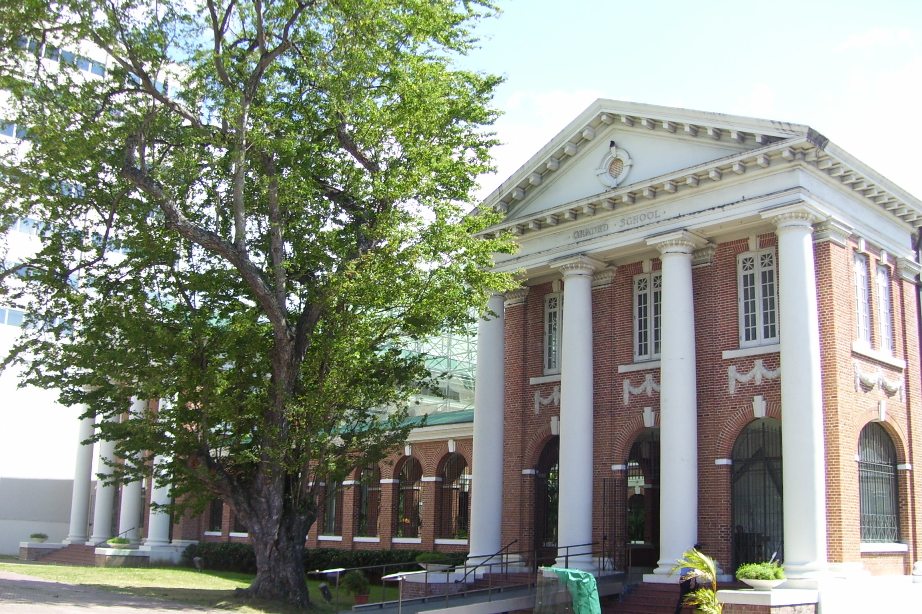
Museo de Arte Contemporáneo de Puerto Rico, March 2009—not a view of the current exhibition. Photograph: Carlo Giovannetti (Thief12 at English Wikipedia), CC BY-SA 3.0, via Wikimedia Commons.Thief12 at English Wikipedia · CC BY-SA 3.0
Afro-Caribbean artist Awilda Sterling-Duprey is among the participants in Diasporican Abstraction: Identities Beyond Representation at the Museo de Arte Contemporáneo de Puerto Rico. The museum’s sponsored announcement describes a survey of more than sixty artists exploring migration, memory and abstraction across Puerto Rico and its diaspora. Sterling-Duprey’s inclusion connects the show to an artistic practice that the Joan Mitchell Foundation describes as combining abstract painting and Caribbean religious dance traditions.
Hyperallergic·
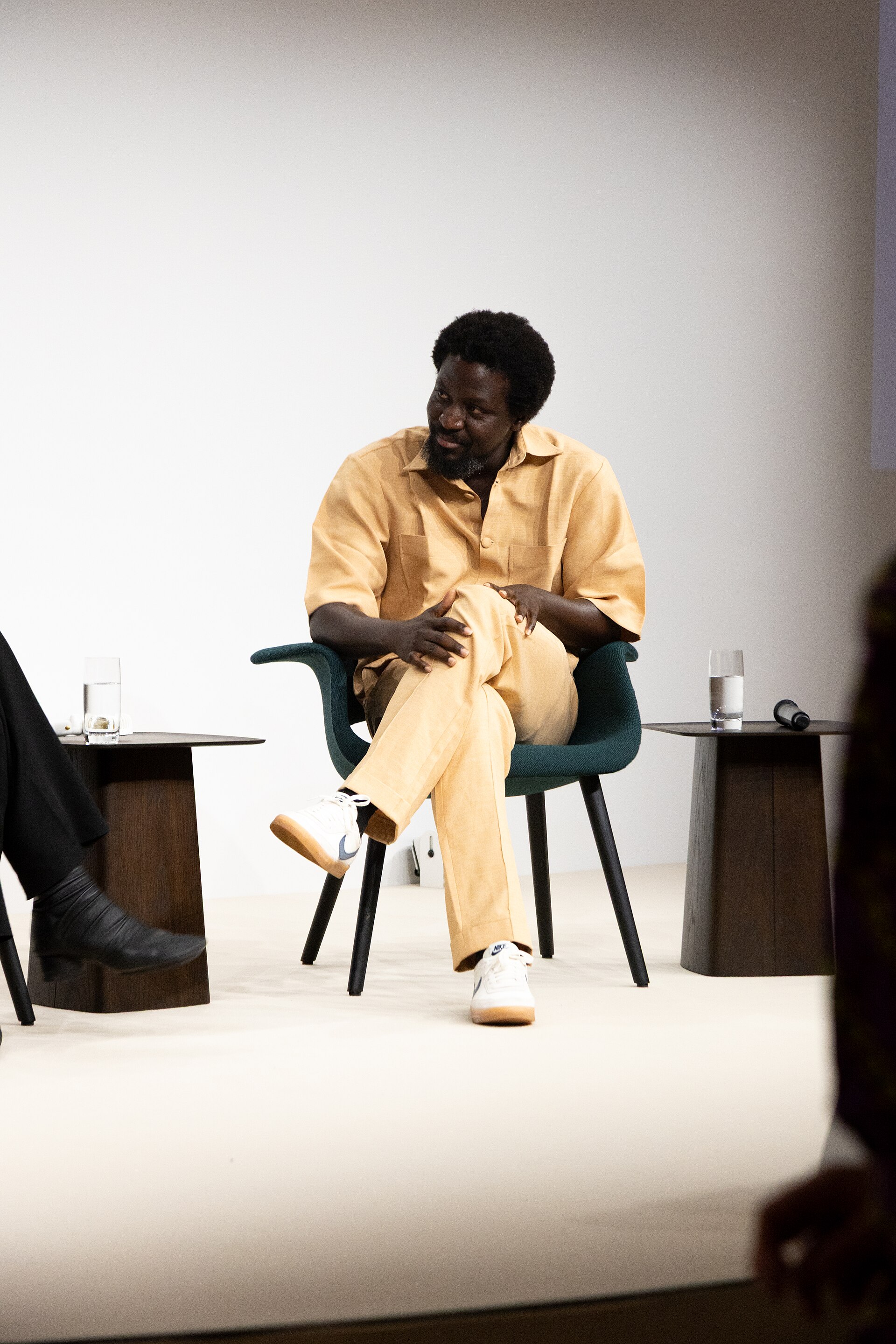
Ibrahim Mahama at Art Basel in Basel, Switzerland, on 20 June 2025. Contextual artist portrait, not the Paris exhibition. Photo: Bea Phi, CC BY-SA 4.0.Bea Phi · CC BY-SA 4.0
ART AFRICA reports that Ibrahim Mahama’s The Harvest Season at Fondation Cartier in Paris will connect installations and archival materials with contributions from nine artists and collectives. Drawing on Ghana’s colonial and postcolonial histories, the exhibition examines labour, industrial heritage and collective memory. Contributors include James Barnor, Dorothy Akpene Amenuke, Gideon Appah, Zohra Opoku and the Congolese collective CATPC, extending the collaborative approach of Mahama’s cultural institutions in Tamale.
ART AFRICA describes Sonja John’s Balikbayan installation at the Katonah Museum of Art as an exploration of migration and Caribbean family memory. Collage, stencils and light connect architectural shapes with plant imagery, drawing on relationships between New York, Jamaica, Trinidad and Tobago, and the Philippines. Visitors can also take part in mixed-media activities and a collaborative light installation. The exhibition runs until 24 January 2027.
Intermittent Islands at New York’s Katonah Museum of Art brings together Belkis Ayón, Yanira Collado, Marielle Plaisir and Lisa C Soto. ART AFRICA describes an exhibition connecting Caribbean displacement and cultural memory through printmaking, textiles, found materials and installation. Ayón draws on Afro-Cuban spiritual traditions, while Plaisir examines race and power; their works connect personal experience with wider histories of identity and belonging.
ART AFRICA reports on Torkwase Dyson’s first solo exhibition in Austria, at Kunsthaus Bregenz. Monumental sculptures, paintings, animation and sound examine how Black communities create spaces of autonomy within environments shaped by slavery and colonialism. Dyson’s large black sculptural forms and abstract compositions turn the museum itself into part of her inquiry into movement and belonging. The exhibition is reported on view until 24 January 2027.
ART AFRICA reports that Ayana Evans’s first museum survey at the Contemporary Art Museum St. Louis brings together performance documentation, videos, archival material and new work. Curated by Dean Daderko, the exhibition explores how race, gender and class influence visibility and self-expression. It includes her long-running Operation Catsuit project and an interactive installation inviting visitors onto a red carpet. The exhibition is reported on view until 7 February 2027.
Africans Column explored Emily Alice Mitchell’s presentation with DēpART at FUZE Caribbean Art Fair in Nassau. Working across photography, collage and sculpture, the British-Caribbean artist brought family archives into dialogue with migration, memory and belonging. The feature examined how materials including wood, steel, beads and shells carry personal histories, and how sculptural gates incorporating Sankofa connect her Trinidadian family context with wider African diasporic traditions.
Art Report Africa reported on Yinka Ilori’s Chairman exhibition at the Walter Sickert Community Centre in Islington, where the British-Nigerian artist grew up. Drawing on Tobi Alexandra Falade’s interview and reporting, the article connected around thirty chair works with personal histories and Ilori’s first monograph. It examined his choice of a community setting beyond Frieze Week’s main venues and his ambitions for wider access.
Art Report Africa·
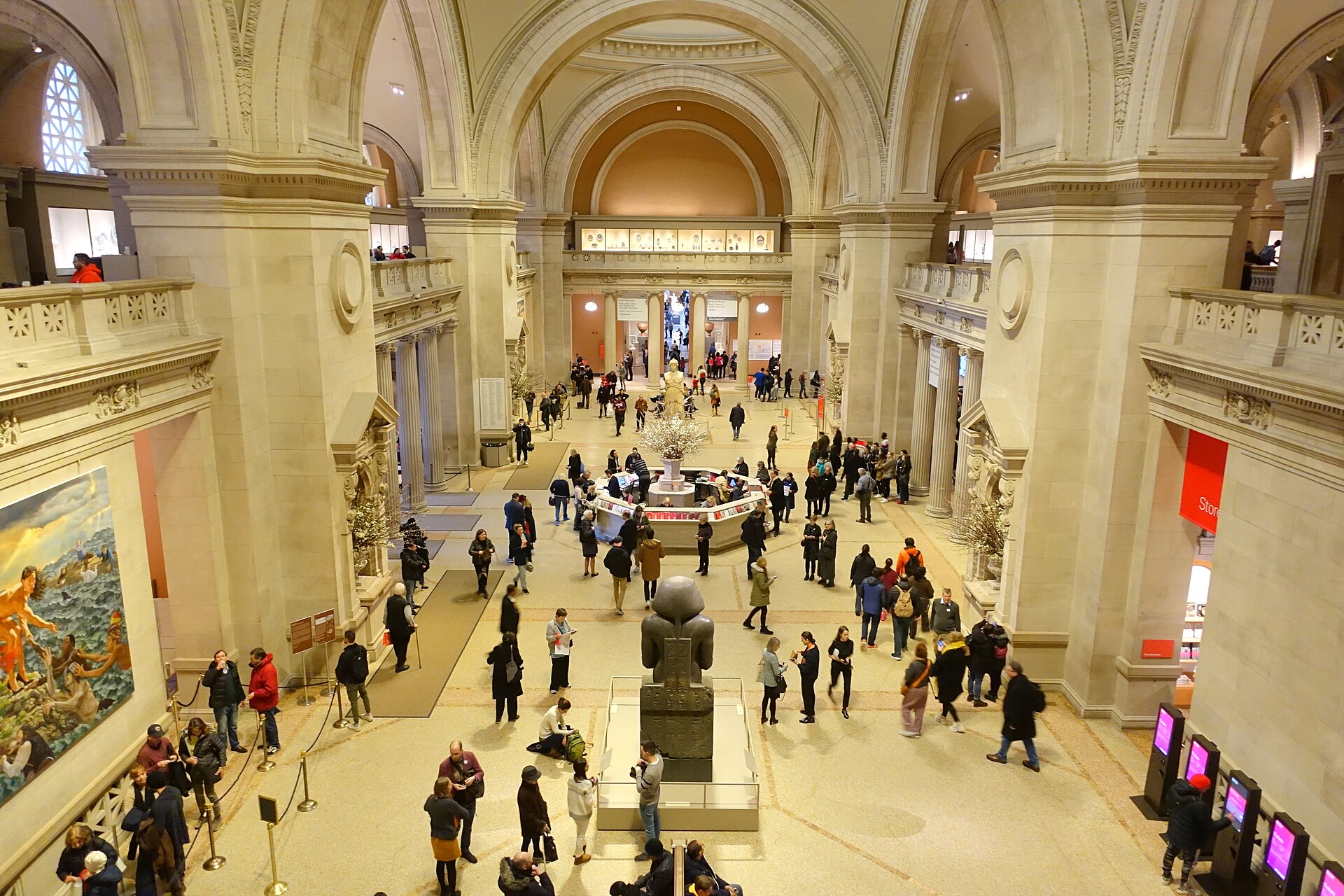
The Met’s Great Hall in 2020, where Sandra Mujinga’s commission is planned for November 2027. The future installation is not pictured.Daderot · CC0 · Cropped
Sandra Mujinga has been selected for the Metropolitan Museum of Art’s 2027 Great Hall commission, according to Hyperallergic. Her installation is planned for November 2027. The report describes her engagement with Afrofuturism, science fiction and postcolonial thought; Danh Vo receives the separate facade commission.
Hyperallergic·
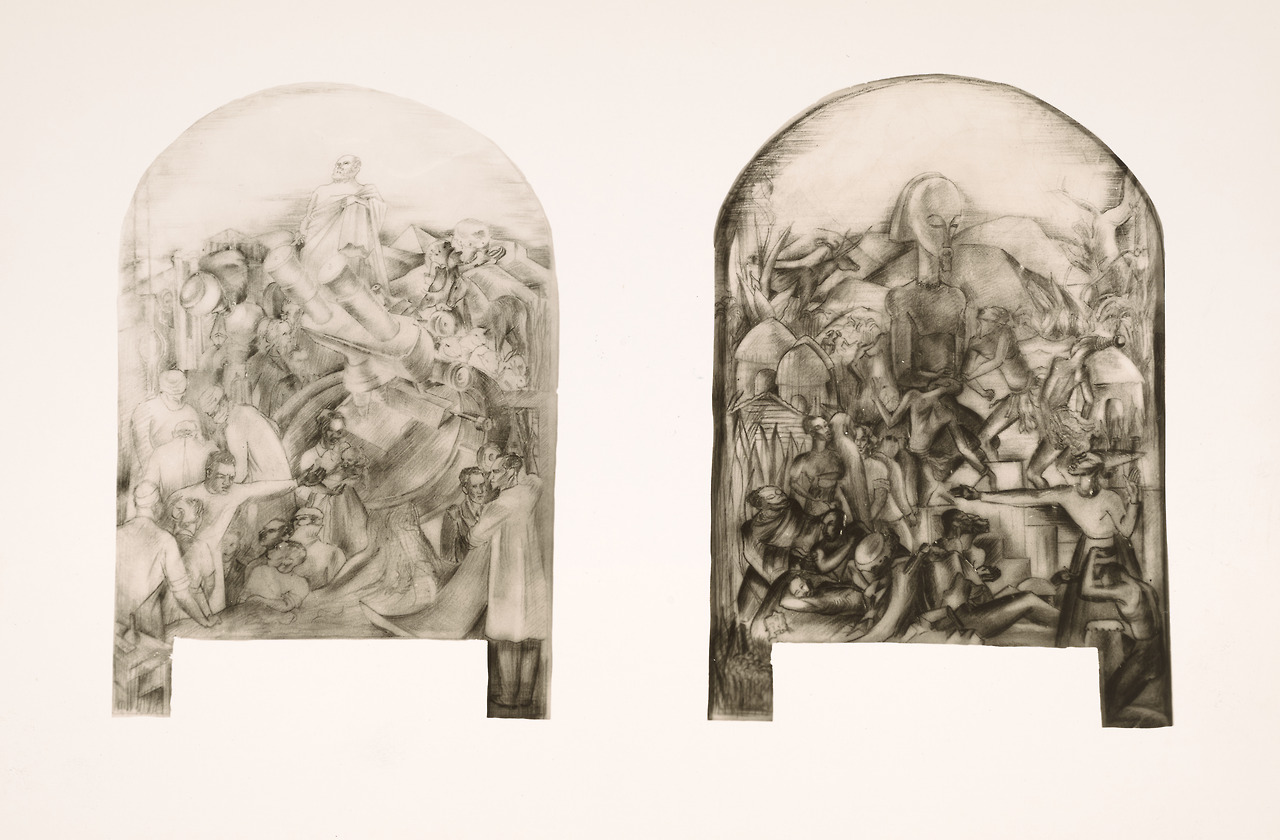
Charles Alston’s Harlem Hospital mural, photographed by Mark Nadir in 1936. This is an archival view, not a photograph of the 2026 restoration.Mark Nadir · Public domain
A conservation project at Harlem Hospital has restored murals by Charles Alston and Vertis Hayes, alongside a sculpture by John Rhoden. Hyperallergic places the work within the history of Black artists gaining access to federal public commissions during the New Deal.
Jazmine Hayes’s I Am Protected places four designs at the entrances of Brooklyn’s Brownsville Multi-Service Center through New York City’s Percent for Art programme. In Hyperallergic, Rhea Nayyar reports that Hayes intended the commission to offer children a sense of protection and community. ArtBridge describes her wider practice as exploring African-diaspora histories, inherited cultural traditions and Black women’s rituals of care.
BUALA outlines Coimbra’s Afro-Portugal festival, whose visual-arts programme includes O Nosso Lugar no Agora at Casa da Esquina and a residency for two young Afro-descendant artists. The exhibition brings together eight emerging practitioners. Across exhibitions, film and discussion, the festival asks how African and Afro-descendant creators can shape their representation and futures in Portugal.
Writing in C& América Latina, Inés Sybille examined how Cherish Menzo and Camilo Mejía use movement, sound and changing stage materials in DARKMATTER. Reflecting on a Barcelona performance she saw in April, the critic connected its slowed gestures and shifting bodily forms with Black diasporic ways of imagining other possibilities. Her October essay treats the performers’ transformation of the stage as integral to the work’s exploration of visibility.
Jamaica's National Gallery is keeping Of Wood and Water: The Scotiabank Collection on view until November 1. The exhibition pairs Scotiabank Jamaica holdings with works from the national collection, exploring land, natural forces, people and spirituality. An October 13 announcement also outlined a related curators' discussion scheduled for October 17. That date has passed, so the current visitor news is the exhibition's extended run.
Vitória’s municipal government announced Turmalina, an exhibition of twelve Black women photographers at Mucane, scheduled for 20 October–20 November. Curated by Taynara Barreto and Tamara dos Santos, the presentation foregrounds varied artistic approaches, including Afrofuturism. The announcement emphasises imagination and creative freedom beyond accounts of suffering, with mediated visits intended to bring audiences into conversation with the artists’ visual choices.
Prefeitura de Vitória — Mucane / Black visual arts·
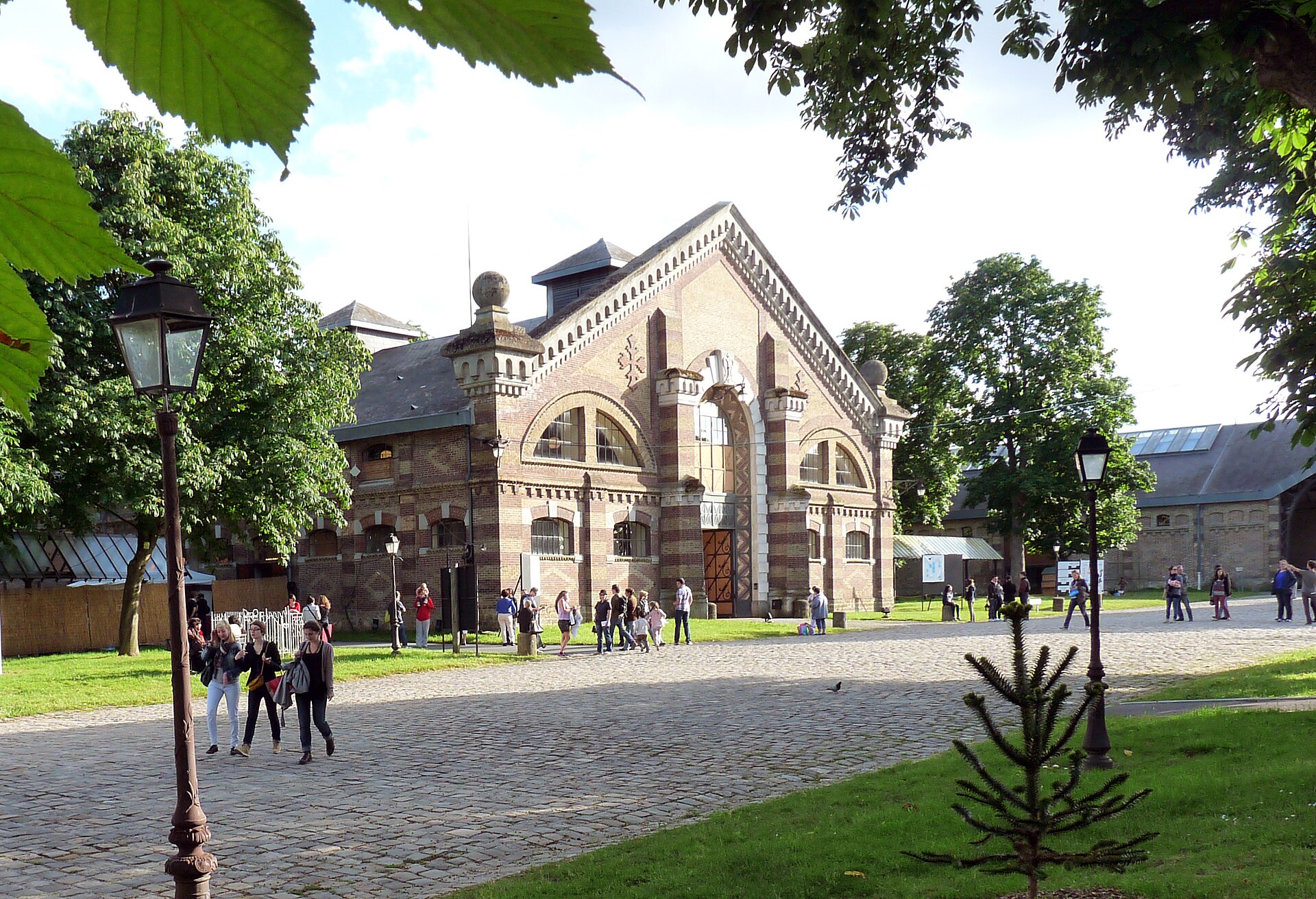
La Ferme du Buisson in Noisiel, photographed in 2013. Brandon Gercara’s exhibition is not pictured.La Ferme du Buisson · CC BY-SA 4.0 · Cropped
Réunionese artist Brandon Gercara’s exhibition Destin Vogoya at La Ferme du Buisson combines performance and visual art with a fictional world of queer protagonists. ART AFRICA describes how the work brings Réunion’s maloya tradition into conversation with voguing to explore cultural memory, identity and collective liberation.
ART AFRICA reports that Steve McQueen’s 66–76–26 at the Guggenheim Museum Bilbao places two unaccompanied recordings of Wild Is the Wind in dialogue. Nina Simone’s 1966 performance and David Bowie’s 1976 version are heard from opposite ends of a darkened room. Curated by Lekha Hileman, the installation shifts attention from images to listening, memory and emotional expression. The exhibition continues until 21 February 2027.
ART AFRICA·
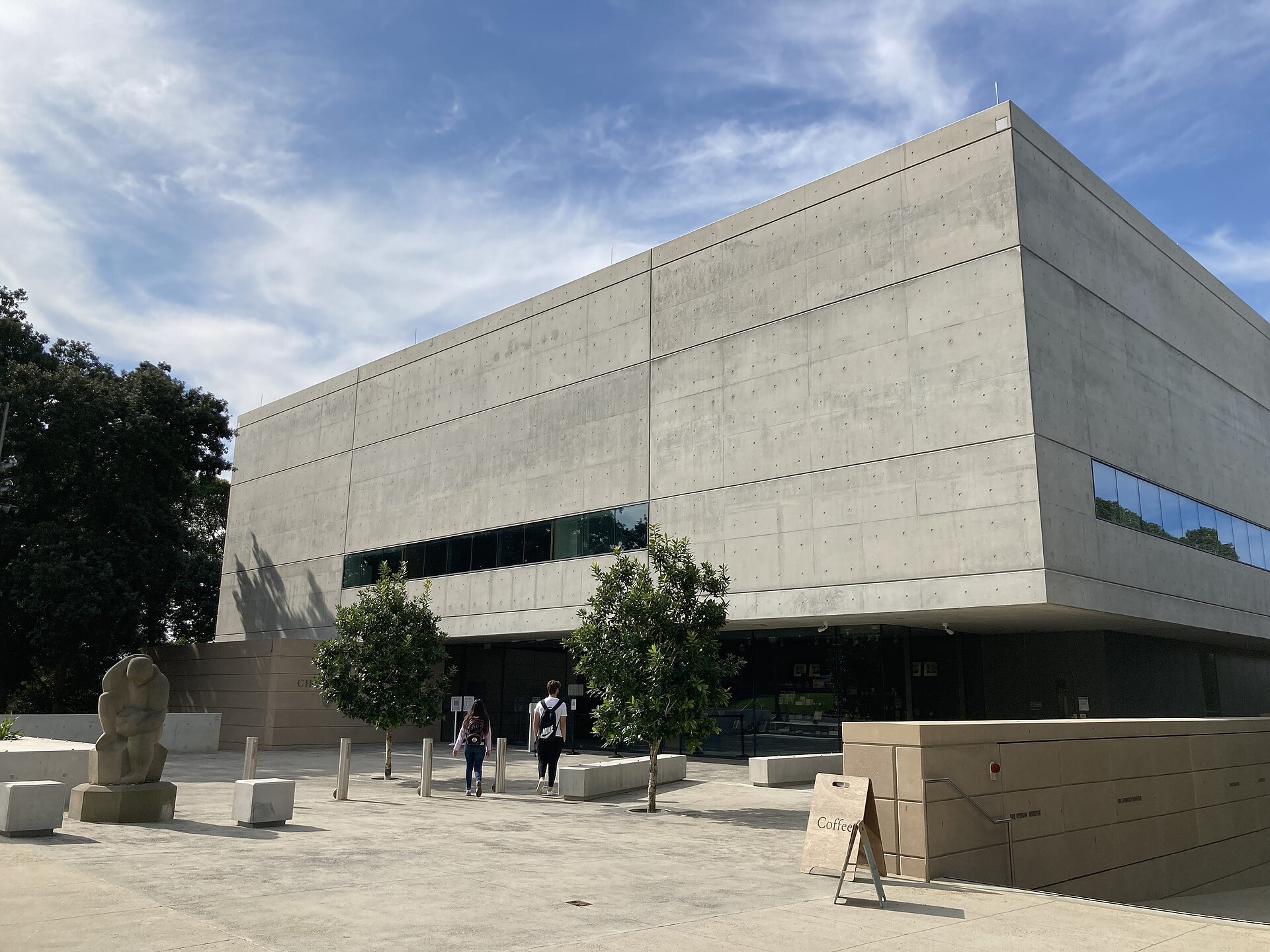
Chau Chak Wing Museum, Sydney, photographed in 2021. The image shows the museum, not Victor Ehikhamenor’s exhibition.Nick-D · CC BY-SA 4.0 · Cropped
Victor Ehikhamenor’s first Australian solo exhibition brings questions of displacement and cultural memory to the Chau Chak Wing Museum. ART AFRICA reports that the Nigerian artist connects communities in Sydney, Cairo and Port Harcourt, while a partnership with Blacktown Arts includes mentoring for African and African-descended creatives.