Nancy Dantas discusses West Wind, an exhibition bringing African modernists into conversation across national borders. Works by artists including Kofi Antubam, Gerard Sekoto, Bertina Lopes and Baya frame an exploration of independence, migration and cultural exchange. Her interview emphasises archival research and the relationships that complicate a single, linear account of African art history.
In an Art Report Africa interview, Frank Coffie explained how stitching damaged paintings developed into a practice combining yarn, found fabric and paint. Discussing his first solo exhibition in Ghana at WorldFaze, Accra, he connected reused tailoring offcuts, patterned figures and tapestries with family memory and everyday experience. His account described materials as active carriers of personal stories rather than decorative additions to painting.
Speaking to ACP in his studio, JP Mika revisited Le Triomphant, his painting honouring Chéri Samba’s artistic journey. The composition places a younger, monochrome Samba beside his mature counterpart in colour, with curator André Magnin connecting the two. Mika described the work as a reflection on perseverance, memory and intergenerational recognition. He also explained how precise details and the shift in colour contribute to its narrative, eleven years after its creation.
Speaking with Sabo Kpade for Art Report Africa, Luke Agada discussed the paintings and charcoal works in When the Center Holds at Sean Kelly, New York. The Nigerian artist described colour, unstable figures and remembered spaces as ways to explore belonging and change. He also explained why drawings often follow paintings in his practice, allowing him to reconsider gestures and relationships already formed on canvas.
In C& América Latina, Thaís Regina explored how Brazilian artist Dalton Paula developed Sertão Negro from a studio into a community for artistic learning and exchange in Goiás. Her feature connects his painting practice with a wider commitment to Black communal life, including residencies, a library and teaching. The interview considers how sharing resources and nurturing other artists can become part of an artist’s legacy, rather than an activity separate from making work.
In Nana Poulot’s Art Report Africa interview, Emma Prempeh discussed paintings developed between a residency at dot.ateliers in Accra and her London studio. The British artist of Ghanaian and Vincentian heritage described contrasting palettes, combined landscapes and reading as foundations for The Domain of the Stranger at Perrotin Paris. Her account explored how painting can connect places, family histories and experiences of belonging without resolving their differences.
Tunisian filmmaker Ridha Tlili discusses how documentary lets him work alongside communities often absent from mainstream images. Speaking to Africultures at Lussas, where three of his films were screened, he connects filmmaking with graffiti, performance and everyday acts of resistance. The interview explores a practice shaped by observation, experimentation and each new encounter.
In an August 2026 interview with Art Report Africa, Gabriel Selassie Tsagli discussed making Son of Kafui after returning from Berlin to Accra. He described working intuitively across several canvases, using locally available colours and treating movement as part of his process. The conversation considers artistic dedication, the influence of other artists and the changing experience of making and exhibiting work at home.
In an ArtThrob interview, Alexander Richards and Igshaan Adams explain how they curated Peter Clarke’s The Departure at Stevenson in Cape Town. A short story Clarke wrote in 1955 provided a starting point for connecting paintings, prints, drawings and personal material. The curators describe exploring Simon’s Town, studying Clarke’s carefully annotated archive and developing an exhibition that suggests relationships among his works rather than a straightforward biographical chronology.
Ahead of the inaugural KZN Art Fair in August 2026, founders Angela Shaw and Lungelo Mkhize told ArtThrob how their partnership with the Hilton Arts Festival developed. They described a programme combining galleries, artist collectives, craft, publications and discussions at Hilton College. The interview centres on their ambition to create sustainable local opportunities and retain creative talent in KwaZulu-Natal, rather than requiring artists to relocate.
Gopalen Parthiben Chellapermal discusses Nous sommes tous des migrants in a FESPACO conversation published by Africultures. The Mauritian filmmaker describes building the documentary from family photographs, his father’s travel diary and encounters with Mauritian families in Britain. His account considers how personal archives and independent filmmaking can open questions about identity, migration and belonging.
Africultures·
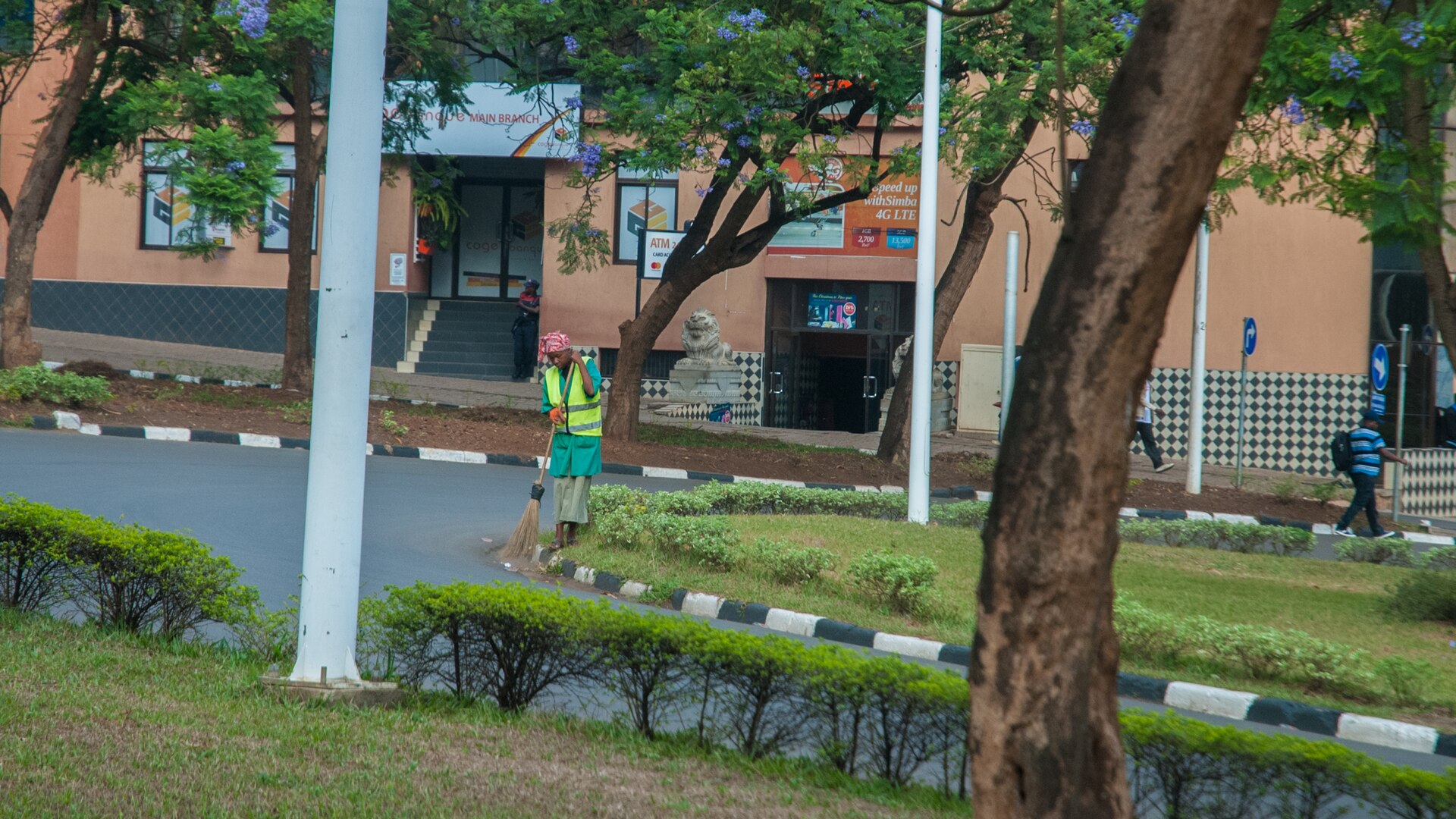
Cleaning Lady, a photograph by Mutiganda wa Nkunda made in Kigali in 2017. Context from his photographic practice, not a still from Phiona. Full image, unaltered.Mutiganda wa Nkunda · CC BY-SA 4.0
Rwandan filmmaker Mutiganda wa Nkunda explains the conversational structure and largely fixed-camera approach of Phiona, la fille de Madrid in an Africultures interview. He describes drawing on everyday exchanges and domestic space to shape the film, while reflecting on women’s stories, the possibilities of non-linear narration and the difficulties of sustaining an independent production.
Africultures·
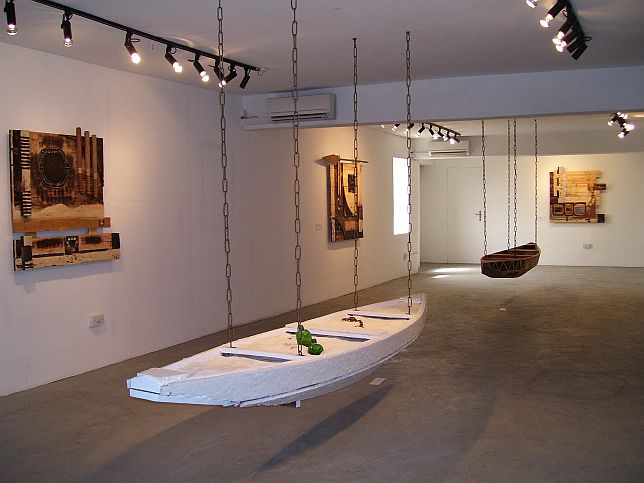
Ndidi Dike, Waka-Into-Bondage: The Last 3/4 Mile, installation view, CCA Lagos, 2008. Historical context for her practice, not the 2026 Rare Earth Rare Justice exhibition.Ndidi Dike · CC BY 3.0
Ndidi Dike discusses how Rare Earth Rare Justice brings resource extraction, labour and historical violence into a sculptural environment. In conversation with Naima Hassan, she explains the exhibition’s sound, constructed landscapes and charged materials, connecting her longstanding interests in trade and migration with the human and ecological costs of mineral economies in the Democratic Republic of Congo.
Thenjiwe Niki Nkosi and printmaker Sara-Aimee Verity discuss translating painting into woodcut for Anchor (Reprise), a C& artist edition. Their exchange follows decisions about laser-cut blocks, wood grain, black paper and negative space. The image’s relay-race subject becomes a way to describe collaboration itself, with different strengths contributing to a shared result.
Olukemi Lijadu discusses Feedback, her Spike Island exhibition, through the personal histories and sonic exchanges connecting Lagos, Bristol and the wider Black Atlantic. The interview explores how original and archival footage, filmmaking and a sculptural sound system work together, treating contradiction and memory as active materials rather than histories that can be neatly resolved.
ART AFRICA interviewed curator Oluremi C. Onabanjo about Ideas of Africa: Portraiture and Political Imagination, which opened at New York’s Museum of Modern Art in December 2025. She discussed photographic portraits as collaborations between sitters and image-makers rather than straightforward records of identity. Bringing African and diasporic photographs into dialogue, the exhibition explored how images circulated across regions and how curators can acknowledge gaps in photographic archives without closing down interpretation.
ART AFRICA interviewed curator Larissa-Diana Fuhrmann about Sudan Retold, an exhibition and publication developed with Khalid Albaih and Rahiem Shadad. The 2025 London presentation at Almas Art Foundation combined photographs, paintings, drawings and multimedia work. Fuhrmann described a collaborative process involving family conversations, personal archives and imaginative storytelling. She distinguished the project’s artistic approach from a conventional history book, explaining how exhibition-making created space for Sudanese communities to share and extend these narratives.
Hiba Baddou discussed Paraboles, A Hertzian Odyssey with ART AFRICA during its 2025 run at MACAAL in Marrakech. Through film, photography, calligraphy and installation, the Moroccan artist explored how communications technology intersects with memory and domestic life. Her work Kesskass transformed a couscoussier into an antenna. Baddou described this meeting of familiar objects and imagined technologies as a way to connect cultural inheritance with possible futures.
Osei Bonsu discussed Tate Modern’s Nigerian Modernism with ART AFRICA in November 2025. Co-curated with Bilal Akkouche, the London exhibition brought painting, sculpture, photography, ceramics and textiles into dialogue across generations. Bonsu explained the importance of the Zaria Art Society’s Natural Synthesis and the contributions of Ladi Kwali and Nike Davies-Okundaye. His account situated Nigerian artistic experimentation within local cultural knowledge and international exchange, rather than presenting modernism as a single imported model.
In ART AFRICA, curator Koulla Xinisteris discussed Still We Rise, a 2025 exhibition at Johannesburg’s Keyes Art Mile bringing together the Ifa Lethu Foundation and SABC Art collections. The selection focused on works made during South Africa’s struggle era. Xinisteris explained how presenting the collections together opened conversations about memory, belonging and the public role of art collections, while giving audiences access to works that might otherwise remain in storage.