In ART AFRICA, curator Koulla Xinisteris discussed Still We Rise, a 2025 exhibition at Johannesburg’s Keyes Art Mile bringing together the Ifa Lethu Foundation and SABC Art collections. The selection focused on works made during South Africa’s struggle era. Xinisteris explained how presenting the collections together opened conversations about memory, belonging and the public role of art collections, while giving audiences access to works that might otherwise remain in storage.
ART AFRICA·
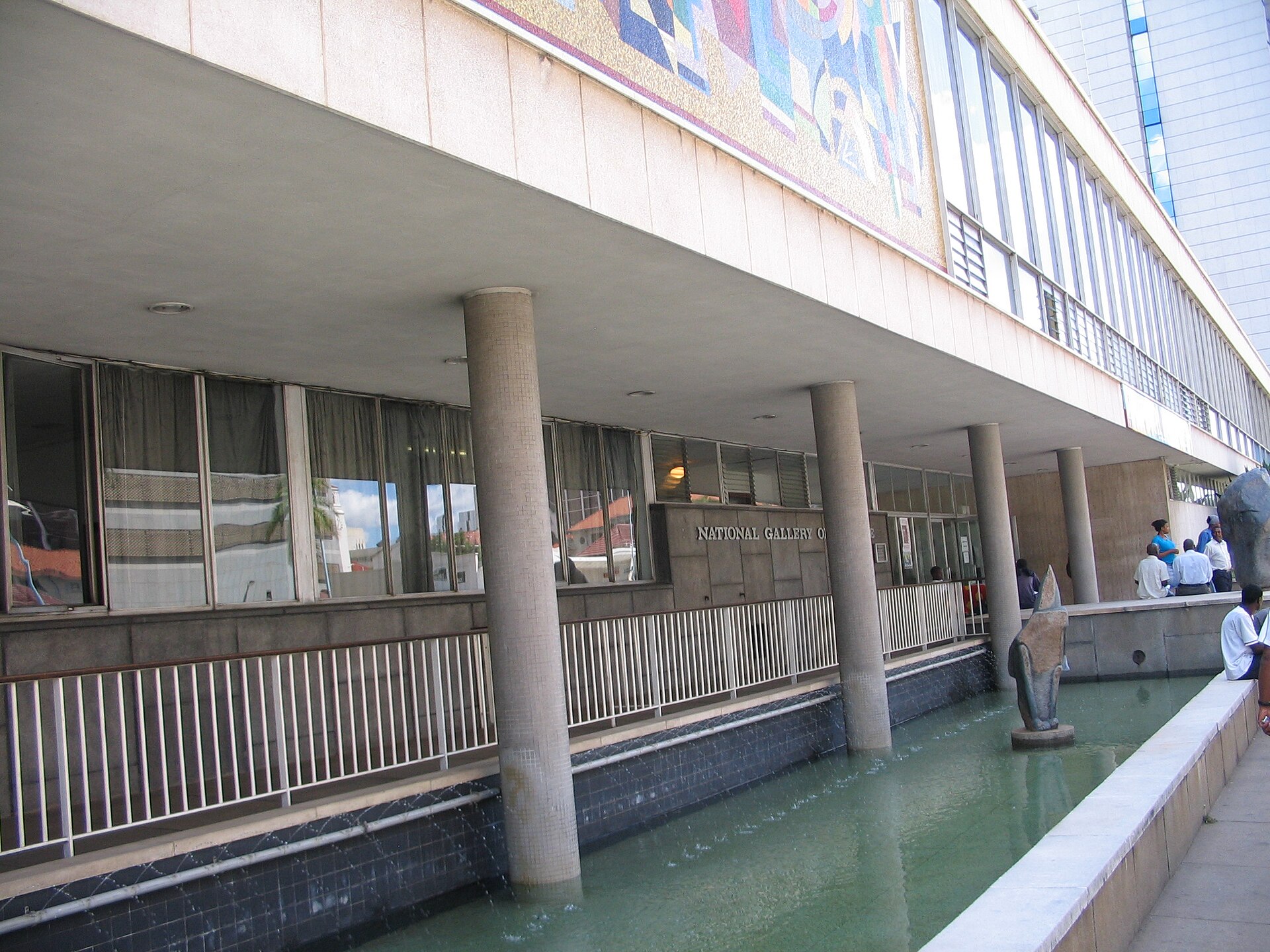
Entrance to the National Gallery of Zimbabwe, photographed in 2007. It does not show the 2026 CIMAM conference.National Gallery of Zimbabwe · CC BY-SA 3.0 · Cropped
In an ART AFRICA interview, Raphael Chikukwa discusses Zimbabwe’s selection to host the 2026 CIMAM Annual Conference. The National Gallery of Zimbabwe director considers how meeting in Africa could strengthen collaboration among museums and bring greater attention to locally developed approaches to leadership and cultural work.
In ArtThrob, Nkgopoleng Moloi interviewed Clive Kellner about the Joburg Contemporary Art Foundation’s non-collecting, research-led model. Kellner described free public programming that places Johannesburg artists in dialogue with the wider Global South and builds audiences through exhibitions, publications and talks. The discussion highlighted MADEYOULOOK’s Dinokana in the Structures exhibition, alongside the foundation’s effort to connect local knowledge, architectural history and international artistic exchange.
ART AFRICA described how artists at Johannesburg’s August House transformed donated back issues into Kanti Senzeni, an installation and exhibition associated with Parliament of the Wild. Painting over, cutting and reworking magazine covers allowed the artists to question visibility, erasure and ownership of the historical record. The publisher’s first-person account documented an unusual local collaboration in which an archive became material for artistic dissent rather than simply a source to preserve.
Writing for ArtThrob, Lukho Witbooi considered how the 2025 group exhibition Thresholds at Southern Guild in Cape Town approached relationships between people, materials and land. The review examined works by Amine El Gotaibi, Simphiwe Buthelezi, Patrick Bongoy and others, connecting their different practices to memory, cosmology and environmental histories.
In August 2025, ART AFRICA reported plans for Zohra Opoku’s first museum survey at Zeitz MOCAA in Cape Town. Curated by Beata America and Phokeng Setai, We Proceed in the Footsteps of the Sunlight was scheduled to bring together more than a decade of photography, textiles, print and installation. The announcement connected the Ghanaian-German artist’s work with ancestry and diasporic experience, describing water, breath and ground as recurring themes.
Nkgopoleng Moloi’s ArtThrob interview examined the new Standard Bank Art Lab at Nelson Mandela Square through curator Same Mdluli’s ambitions for wider public access. Its inaugural textile exhibition included Gladys Xaba and the Katlehong Community Centre alongside loans from tapestry studios. Moloi weighed the possibilities of encountering historical art in a shopping centre against questions about corporate collecting, colonial commercial histories and who such spaces actually reach.
ArtThrob announced that Gabrielle Goliath, Lebohang Kganye, Sabelo Mlangeni and Lindokuhle Sobekwa would appear at MoMA for the first time in New Photography 2025: Lines of Belonging. The series’ fortieth-anniversary edition connected Johannesburg with Kathmandu, New Orleans and Mexico City. Rather than treating photography as isolated image-making, the exhibition situated personal narratives within community formation and environmental, colonial and structural histories.
Zada Hanmer’s 2025 ArtThrob review explored Daneel Thumbiran’s Brahmacarya at Johannesburg’s Bag Factory. Part of the Young/Unframed programme, the exhibition combined Hindu imagery, city scenes and collage to examine the artist’s layered South African Indian identity. Hanmer considered how wheat-pasted works moved between the visual languages of public space, personal reflection and the gallery.
In a July 2025 ArtThrob review, Emily Freedman examined Aaron Philander’s Nanna’s Kitchen at AVA Gallery. Philander assembled tools, furniture and other inherited or discarded objects into sculptures exploring family histories, domestic labour and coloured identity in South Africa. Freedman read the works as acts of remembering that also reconsider how everyday objects carry cultural knowledge.
Nolan Stevens reviewed Usha Seejarim’s Unfolding Servitude at Southern Guild in Cape Town for ArtThrob in April 2025. The exhibition repurposed clothes pegs, serving trays and ironing soleplates into sculptural forms. Stevens linked these material transformations to the artist’s examination of gendered expectations, domestic work and the often-unrecognised labour of care.
C& reported that Nigerian artist Modupeola Fadugba won the 2025 Norval Sovereign African Art Prize for Portrait of an Artist at Ease. The award included funding, a planned Cape Town solo exhibition and a London residency. DuduBloom More received the FAMM Women’s Prize for Contending With Control, while the finalists’ exhibition brought painting, printmaking and textile practices into the Norval Foundation’s programme.
In its December 2024 announcement, Zeitz MOCAA named Otobong Nkanga as the recipient of its 2025 Honorary Award for Artistic Excellence. The museum highlighted her research-led work across textiles, sculpture, performance and other media, connecting bodies, land and resources. The announcement situates that recognition within the institution’s support for contemporary African and diasporic art; its gala fundraising invitations are now historical.
Zeitz MOCAA’s 2024 announcement introduced Simone Leigh, Stephanie Thomas, Jo-Ann Strauss and Emma Menell as new members of its Global Council. The museum described the group’s role in advocacy, fundraising and strengthening connections with African creative communities. The appointments offer a historical view of how the institution assembled artistic and philanthropic support for its exhibitions and education work, rather than a verified account of its current membership.
Zeitz MOCAA’s 2024 announcement of Rita Mawuena Benissan’s One Must Be Seated described an exhibition exploring Asante enstoolment through umbrellas, stools, textiles, sculpture, photography and film. Curated by Beata America, the presentation drew on archives and collaboration with Kumasi artisans. Its historical significance lies in connecting Ghanaian traditions of leadership with contemporary artistic practice while recognising the craftspeople who sustain those traditions.
Zeitz MOCAA’s September 2024 announcement described Silo Through the Century: Into the Contemporary as a movable exhibition about the building’s changing uses. Combining archival images, video and objects, it traced the grain silo from its 1924 industrial beginnings to its conversion into a contemporary-art museum. The project placed the institution’s architecture within Cape Town’s economic and cultural history, beyond the centenary celebration itself.
Zeitz MOCAA’s 2024 announcement presented UNDERSTUDIES as Nolan Oswald Dennis’s first major solo exhibition at a South African museum. Curated by Thato Mogotsi, it explored how diagrams, models and collaborative processes could question authority, landlessness and scientific representations of the world. The museum highlighted a soil-based work made with staff and a reconfigured Black Liberation Zodiac, connecting artistic experimentation with collective learning.
In ArtThrob, Claudia Marion Stemberger considered MADEYOULOOK’s Dinokana within Quiet Ground, the 2024 South African Pavilion curated by Portia Malatjie. Her account connected its voices, environmental sounds, suspended plants and spatial arrangements to ancestral relationships with land and water. Rather than treating the pavilion as spectacle, the review explored how the installation asserted Indigenous knowledge and agency against histories of dispossession and colonial representation.
In its 2024 announcement of The Other Side of Now, Zeitz MOCAA described Tuan Andrew Nguyen’s films and sculptures as an exploration of histories linked by colonialism and war. Stories of Moroccan soldiers and Senegalese-Vietnamese families placed African experiences at the exhibition’s centre. Curated by Beata America, the presentation used memory, imagined dialogue and objects associated with conflict to consider displacement, intergenerational connection and healing.
Voni Baloyi’s ArtThrob review of Esther Mahlangu’s Iziko retrospective considered how a major survey could honour both an individual artist and the Ndebele community sustaining her practice. The account discussed curator Nontobeko Ntombela’s thematic approach, the returned BMW Art Car and less-familiar figurative works. Baloyi argued for placing Mahlangu within broader histories of South African abstraction, Black women artists and communal cultural preservation.