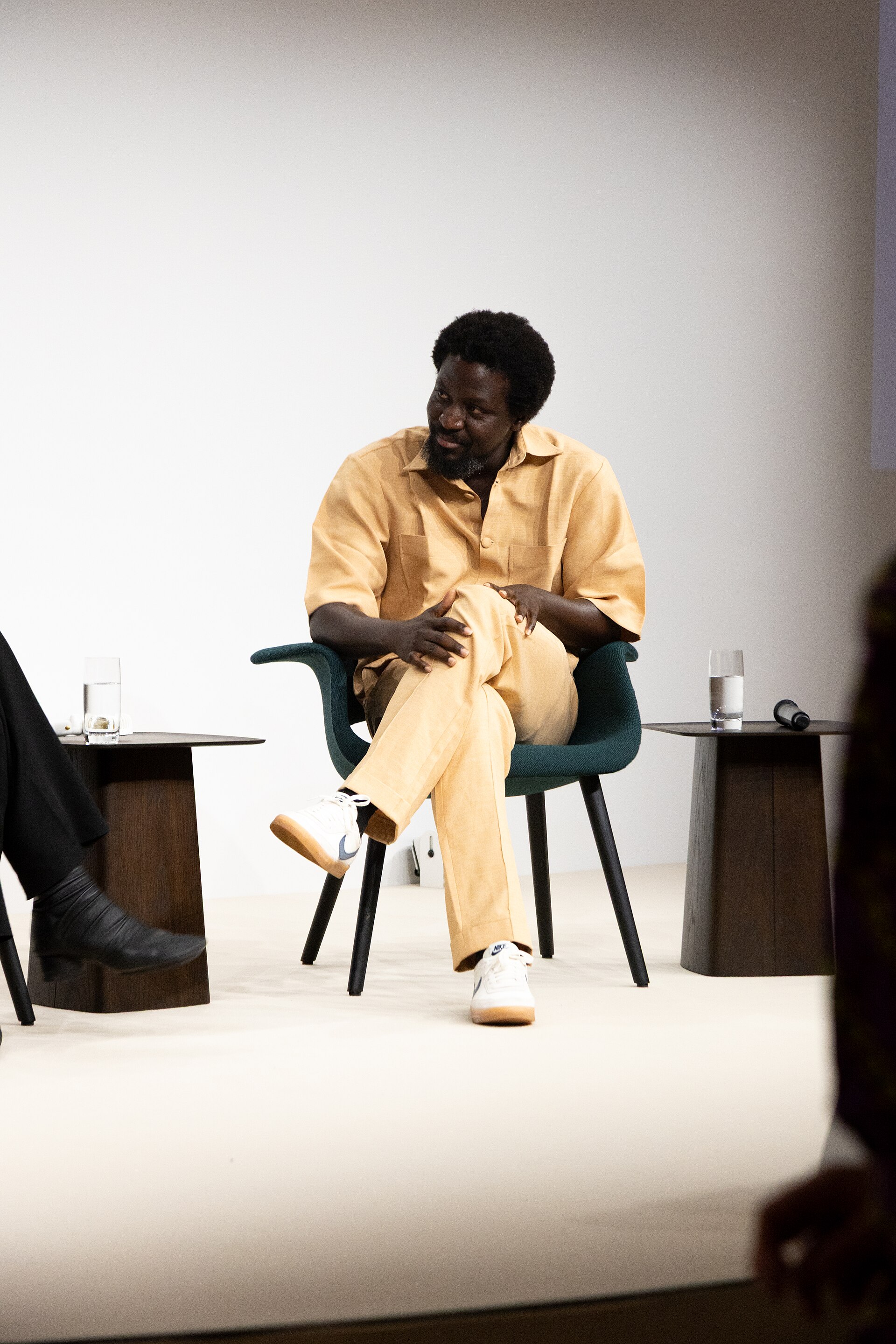
In an August 2026 interview with Art Report Africa, Gabriel Selassie Tsagli discussed making Son of Kafui after returning from Berlin to Accra. He described working intuitively across several canvases, using locally available colours and treating movement as part of his process. The conversation considers artistic dedication, the influence of other artists and the changing experience of making and exhibiting work at home.
In August 2026, Novo Jornal reported that Angolan sculptors were eligible for a granite-sculpture symposium in Burkina Faso, citing Angola’s culture ministry. The announcement described places for experienced sculptors, assistants and trainees, with selection considering artistic quality and technical experience. This archived report records a cross-border professional opportunity; it does not establish that applications remain open, and applicants should verify current details with the organisers.
At the Interstice brings TAELON7’s adaptable spatial practice to the Foundation for Contemporary Art Ghana in Accra. Led by Juergen Benson-Strohmayer, the installation combines shade netting, sculptural assemblies, photographs and drawings to explore how modest materials can support gathering, negotiation and shared public life across the boundary between gallery and courtyard.
William Ousmane Mbaye’s Ndar, Saga Waalo brings residents’ voices, historical images and contemporary streets into a portrait of Saint-Louis. In his Africultures review, Olivier Barlet considers how the film and Laurence Attali’s editing resist a single account of the city, making its colonial histories, contested memories and present-day uncertainties part of a shared visual conversation.
Olivier Barlet reviews Valdiodio, Amina N’Diaye Leclerc’s fiction film about her father, the Senegalese independence-era politician Valdiodio N’Diaye. Following two earlier documentaries, the filmmaker approaches political history through family experience. The review examines her shift towards biographical drama and the role of a daughter’s viewpoint in reconstructing an inherited story on screen.
Africultures·
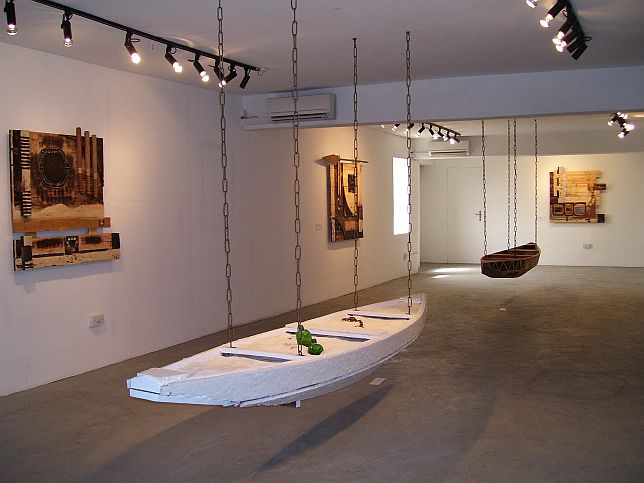
Ndidi Dike, Waka-Into-Bondage: The Last 3/4 Mile, installation view, CCA Lagos, 2008. Historical context for her practice, not the 2026 Rare Earth Rare Justice exhibition.Ndidi Dike · CC BY 3.0
Ndidi Dike discusses how Rare Earth Rare Justice brings resource extraction, labour and historical violence into a sculptural environment. In conversation with Naima Hassan, she explains the exhibition’s sound, constructed landscapes and charged materials, connecting her longstanding interests in trade and migration with the human and ecological costs of mineral economies in the Democratic Republic of Congo.
In a December 2025 review for Contemporary And, Roli O’tsemaye reflected on the Re:assemblages Symposium in Lagos. Convened by G.A.S. Foundation and Yinka Shonibare Foundation, the gathering explored African and diasporic art archives through performances, workshops and discussion. The review described artist-led approaches to memory and shared custodianship, alongside the launch of the African Arts Libraries Lab.
Contemporary And (C&)·
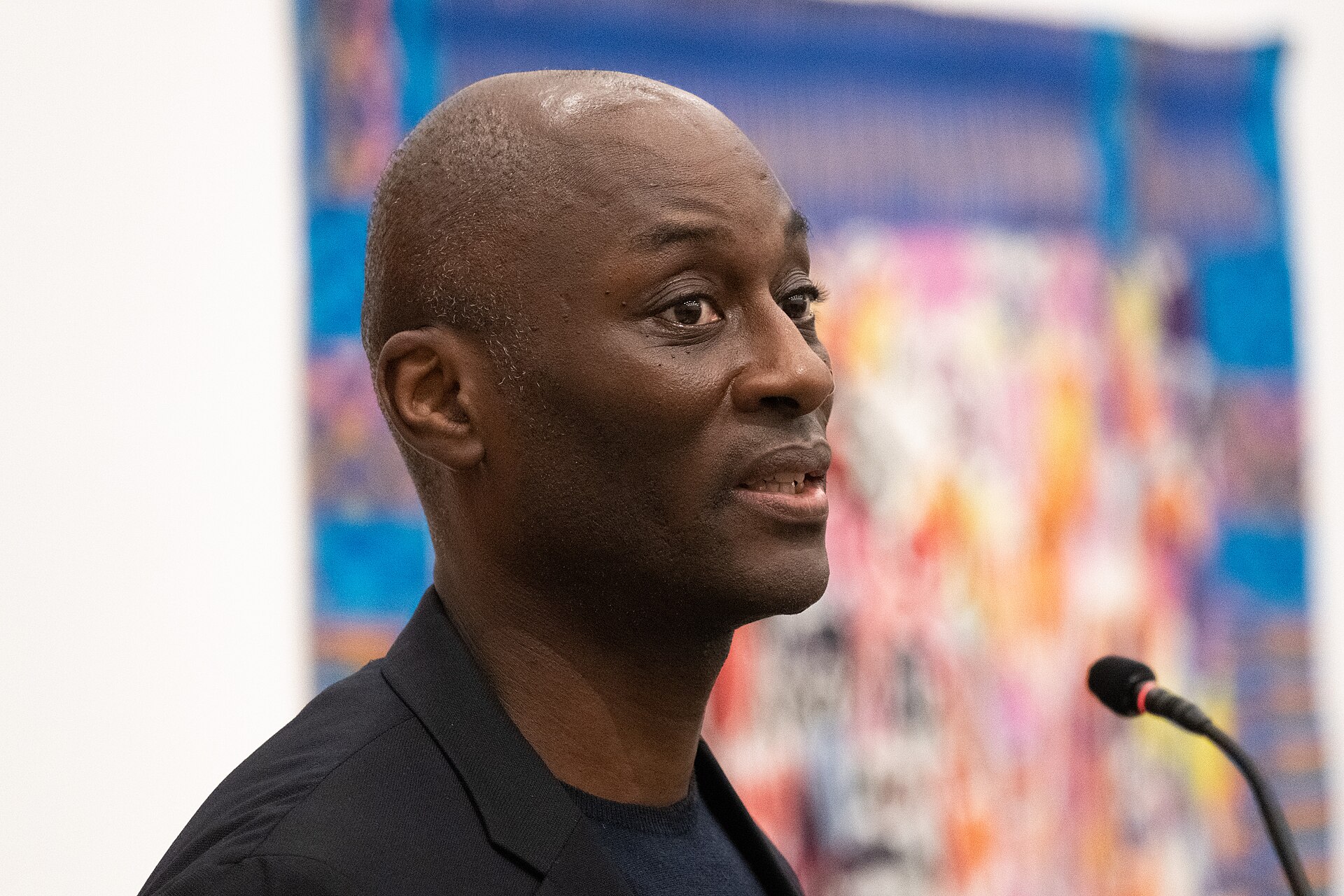
Ibrahim Mahama at Art Basel in June 2025. The Power 100 announcement is not pictured.Bea Phi · CC BY-SA 4.0 · Cropped
ArtReview placed Ibrahim Mahama first in its 2025 Power 100, citing both his artistic practice and his support for cultural infrastructure. The magazine highlighted the Ghanaian artist’s investment in Red Clay Studio, the Savannah Centre for Contemporary Art and Nkrumah Volini in Tamale.
Ivorian artist Joana Choumali turns dawn photographs into layered works using embroidery, sheer fabrics and collage. In this Global Voices interview, she traces the move from documentary photography towards an intuitive practice shaped by memory, faith and inner peace. Her Alba’hian series grew from early walks in Abidjan, while her reflections on scale and hand-stitching show how making art can open a dialogue with both herself and her audience.
C& reported in June 2025 that Emmanuel Aggrey Tieku had won the Ellipse Prize in an edition focused on Ghana’s emerging artists. His practice repurposed second-hand textiles to examine consumption, identity and environmental change. Selected from five finalists, Tieku was awarded production support and an announced presentation at AKAA in Paris, following the finalists’ exhibition at Accra’s Mix Design Hub.
In a May 2025 C& interview with Joshua Segun-Lean, curator Favour Ritaro described developing Archives and Memories at CCA Lagos while working remotely. Research into Bisi Silva’s curatorial archive shaped the exhibition, alongside collaboration with Nigerian women artists and the centre’s team. Ritaro discussed trust, peer critique and careful attention to process as ways to sustain curatorial relationships across distance.
Contemporary And (C&)·
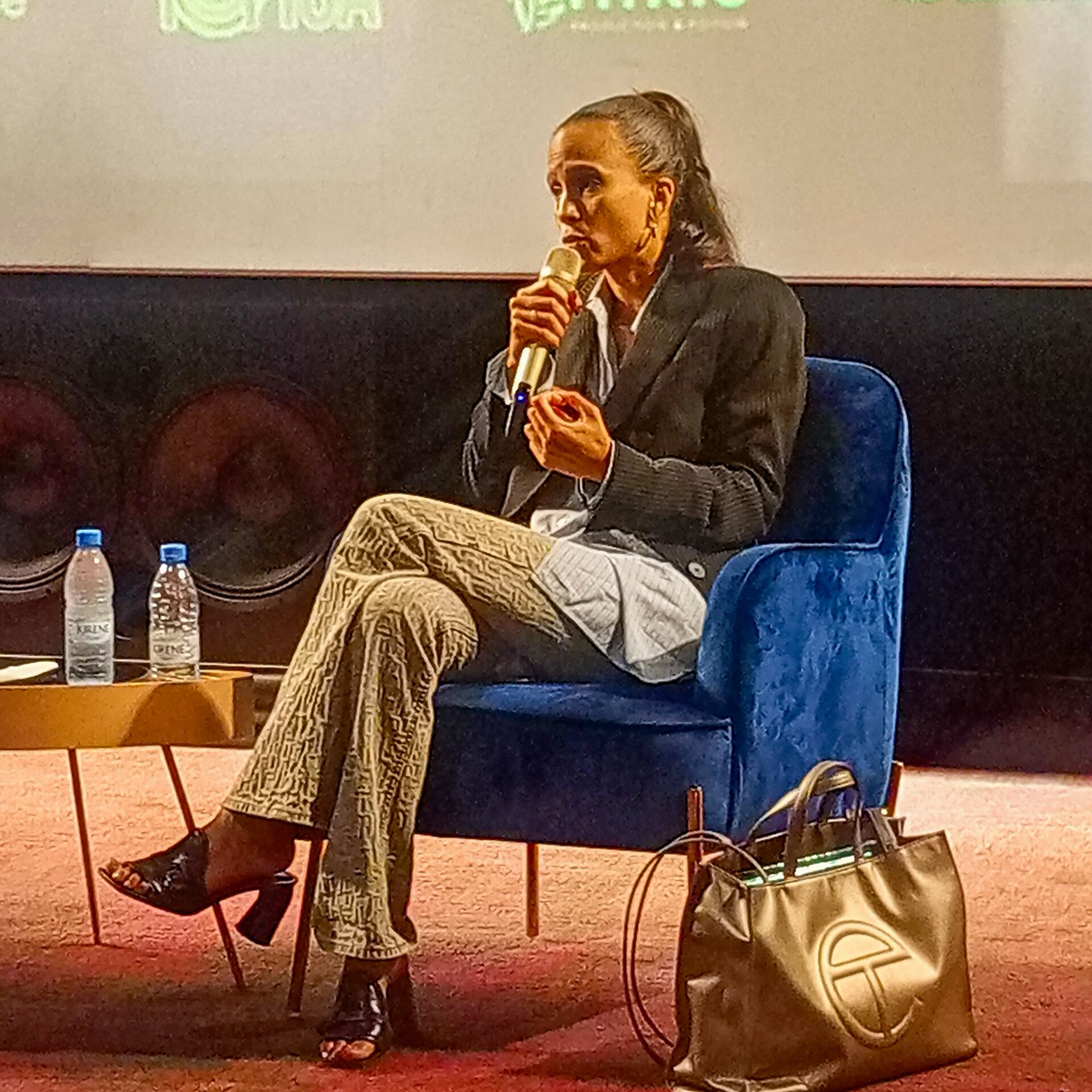
Mati Diop at a screening of Dahomey at Sea’nema in May 2024.4MAPS · CC BY-SA 4.0 · Cropped
Sarah Jilani reviews Mati Diop’s Dahomey, which follows 26 objects returning from France to Benin. Her essay considers how the documentary connects cultural restitution with the work of caring for collections and debates among Beninese students about colonial legacies and the terms of return.
ART AFRICA published the curatorial announcement of thirty artists selected for La Panafricaine, the central group exhibition of the fourteenth Bamako photography biennial. Under the theme Kuma, or the Word, the edition proposed a dialogue between images, speech and memory. Its selection ranged across the continent and diaspora, including Héla Ammar, Nuno Silas, Zara Julius, Maheder Haileselassie Tadese and Jeannette Ehlers.
Writing in ArtThrob after the 2024 Lagos Biennial, Sinazo Chiya examined how its temporary installations reworked the historically charged Tafawa Balewa Square. Works by Bruce Onobrakpeya, Ibrahim Mahama, Victor Ehikhamenor and Tabita Rezaire tested refuge through material, belief and communal space. The review situated those experiments within the square’s colonial, independence and FESTAC histories, finding possibilities for communities to reshape inherited settings.
ART AFRICA’s account of the completed eighth ART X Lagos highlighted a compact selection of ten exhibitors alongside projects that connected generations. Bruce Onobrakpeya’s Writing with… appeared with presentations by Access ART X Prize recipients Dafe Oboro and Belinda Kazeem-Kamiński. MOWAA’s Nigeria Imaginary Incubator and other commissioned projects widened the fair beyond sales, documenting an ecosystem of historical research, emerging practice and institution-building.
ART AFRICA·
Ekow Eshun at Kunsthalle Krems in November 2022. His 2023 Gallery 1957 exhibition in Accra is not pictured.Bernhard Holub · CC BY-SA 4.0 · Cropped
ART AFRICA announced Ekow Eshun’s group exhibition at Gallery 1957, exploring African and diasporic ideas of time through painting, collage and moving image. Informed by Sankofa and collective memory, the programme brought established and emerging artists together in an industrial exhibition space in Accra.
ART AFRICA documented the second Dig Where You Stand exhibition at Palais de Lomé and satellite sites in Togo. Curated by Rosemary Esinam Damalie with advice from Azu Nwagbogu, it brought together more than 166 works addressing migration, colonial economies and restitution. Planned Ewe translations and mobile displays extended its argument beyond museum walls, making local participation part of the project rather than an afterthought.
ART AFRICA reported that Amoako Boafo expanded his Gagosian debut into a presentation at dot.ateliers in Accra, adding new portraits to paintings first seen in New York. The exhibition connected international circulation with an artist-built local infrastructure: Boafo’s space, opened in December 2022, combined galleries, studios and an art library with residencies. It documented a concrete effort to retain artistic exchange and experimentation within Accra.
ART AFRICA’s October 2022 report outlined the thirteenth Bamako Encounters, scheduled across venues including Mali’s National Museum and Bamako railway station. The photography biennial planned contributions from around 75 artists, with five thematic chapters drawing on Aimé Césaire. Artistic director Bonaventure Soh Bejeng Ndikung and a collaborative curatorial team foregrounded layered identities and heritage; announced retrospectives included Samuel Fosso, Joy Gregory and Maria Magdalena Campos-Pons.
ART AFRICA·
Ibrahim Mahama at Art Basel, June 2025. Photo: Bea Phi, CC BY-SA 4.0. This is not a photograph of the 2022 announcement or the Ljubljana Biennale.Bea Phi · CC BY-SA 4.0
ArtReview reported in June 2022 that Ghanaian artist Ibrahim Mahama would direct the 35th Ljubljana Biennale of Graphic Arts, scheduled for 2023. The announcement connected his appointment to the histories shared by Ghana and Yugoslavia through the Non-Aligned Movement. It also highlighted his institution-building in Tamale, including Nkrumah Volini, the Savannah Centre for Contemporary Art and Red Clay, alongside the large installations for which he is internationally known.