At Seed Archives in North London, Thabo’s LALELA installation creates a veiled listening space within a library of African and Caribbean material culture. The artist reflects on photographs and books that prompted sonic imaginings during his residency, connecting an interest in oral histories with the ways images can suggest stories beyond the frame.
Cameroonian-born artist Tanka Fonta has received the Wi Di Mimba Wi Prize, a commission supporting artists of colour based in Germany. Awarded by AKB Stiftung and SAVVY Contemporary, it supports new work and a year-long working grant. The announcement highlights a practice spanning visual art, sound and philosophy, with memory and perception among its recurring concerns.
Olukemi Lijadu discusses Feedback, her Spike Island exhibition, through the personal histories and sonic exchanges connecting Lagos, Bristol and the wider Black Atlantic. The interview explores how original and archival footage, filmmaking and a sculptural sound system work together, treating contradiction and memory as active materials rather than histories that can be neatly resolved.
Contemporary And (C&)·
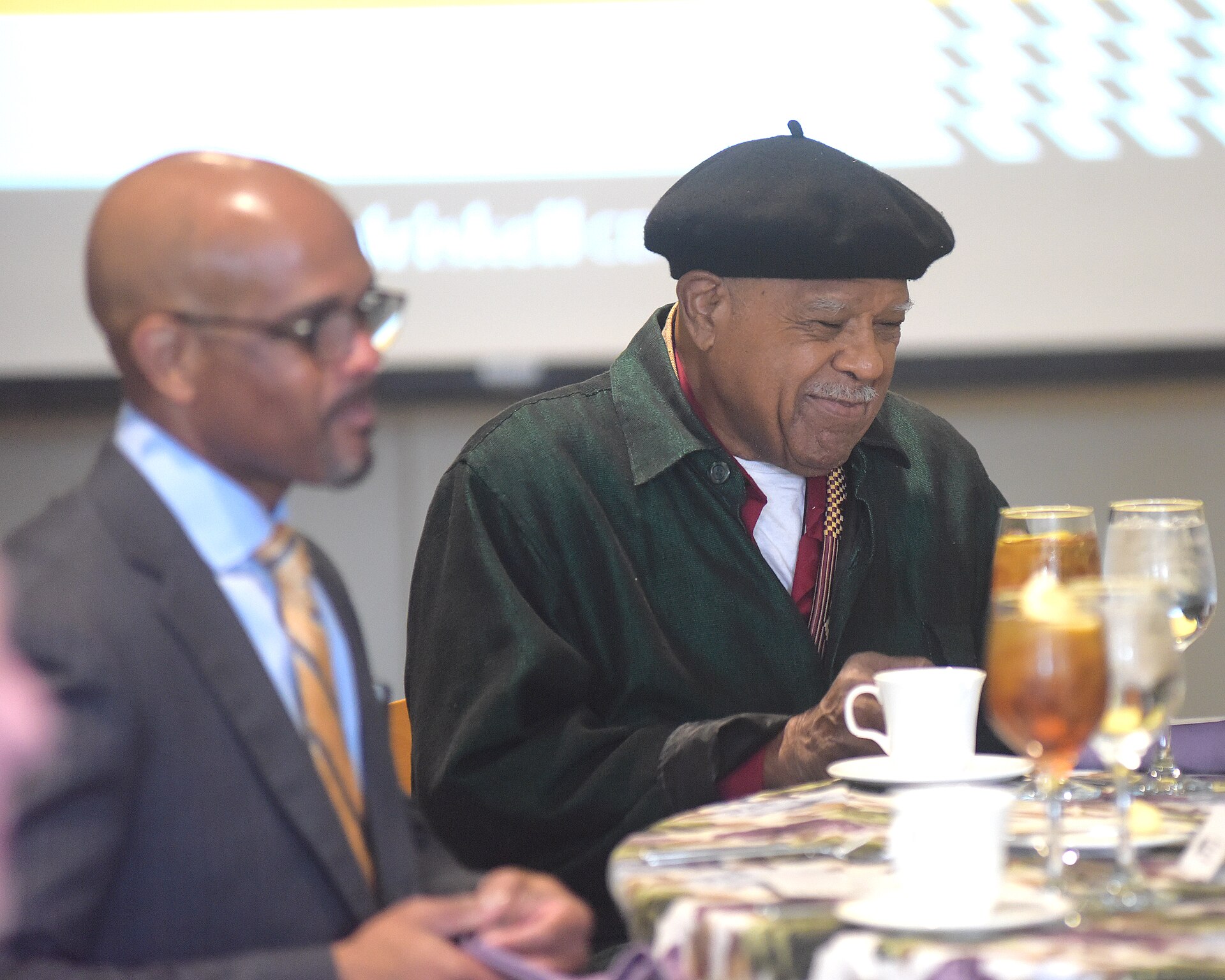
Melvin Edwards (right) at the University of Maryland, College Park, at an event honoring David C. Driskell, 4 April 2024.Tom Nappi · CC BY 2.0
C& remembers sculptor Melvin Edwards, whose welded-steel works connected abstraction with histories of racial violence, labour and diaspora. The obituary traces his Lynch Fragments, teaching and exhibitions alongside enduring relationships with West Africa, including a home and studio in Dakar. It presents those exchanges as central to a practice developed across decades.
ART AFRICA interviewed curator Oluremi C. Onabanjo about Ideas of Africa: Portraiture and Political Imagination, which opened at New York’s Museum of Modern Art in December 2025. She discussed photographic portraits as collaborations between sitters and image-makers rather than straightforward records of identity. Bringing African and diasporic photographs into dialogue, the exhibition explored how images circulated across regions and how curators can acknowledge gaps in photographic archives without closing down interpretation.
Jasmine Weber’s Hyperallergic review examined the first monograph devoted to Coreen Simpson, published in Aperture’s Vision & Justice series. Covering street portraits, nightlife and celebrity photographs, the book placed her decades-long documentation of Black style alongside her work as a jewellery designer. Weber connected Simpson’s intimate, dignified portrayals to wider diasporic photographic traditions, showing how everyday self-presentation can become a sustained form of cultural memory.
Valentina Di Liscia reported for Hyperallergic that Nnena Kalu won the 2025 Turner Prize, becoming its first recipient with a learning disability. Born in Glasgow to Nigerian parents, the London-based artist builds sculptures through repeated wrapping, knotting and coiling, with related circular gestures in her drawings. Her nomination recognised work shown at Manifesta 15 and Liverpool’s Walker Art Gallery, bringing sustained attention to an established, distinctive practice.
Clara Maria Apostolatos’s Hyperallergic review read MoMA’s Wifredo Lam retrospective as a reassessment of an artist once marginalised within the museum’s modernist narrative. She traced Lam’s engagement with African and Afro-Caribbean traditions without reducing him to a follower of European Surrealism. The review also questioned how fully the galleries addressed the racialised frameworks surrounding his career, finding richer treatment of some of those tensions in the catalogue.
ART AFRICA interviewed curator Larissa-Diana Fuhrmann about Sudan Retold, an exhibition and publication developed with Khalid Albaih and Rahiem Shadad. The 2025 London presentation at Almas Art Foundation combined photographs, paintings, drawings and multimedia work. Fuhrmann described a collaborative process involving family conversations, personal archives and imaginative storytelling. She distinguished the project’s artistic approach from a conventional history book, explaining how exhibition-making created space for Sudanese communities to share and extend these narratives.
In a November 2025 essay for Contemporary And, Afi Venessa Appiah connected Black Canadian publishing histories with contemporary artist-book production and archival practice. Discussing Anteism Books, Artexte and her own imprint, she explored how small presses, tactile formats and digital tools can support cultural memory and the circulation of underrepresented work.
Osei Bonsu discussed Tate Modern’s Nigerian Modernism with ART AFRICA in November 2025. Co-curated with Bilal Akkouche, the London exhibition brought painting, sculpture, photography, ceramics and textiles into dialogue across generations. Bonsu explained the importance of the Zaria Art Society’s Natural Synthesis and the contributions of Ladi Kwali and Nike Davies-Okundaye. His account situated Nigerian artistic experimentation within local cultural knowledge and international exchange, rather than presenting modernism as a single imported model.
In an October 2025 contribution to C&, Maktaba Room described its month-long reading space at Düsseldorf’s ThisThat Gallery in August 2025, without specifying exact dates. Initiated by Cate Lartey and Donja Nasseri, the project brought together art, design and printed matter by African, Asian and diasporic authors. Its selections included Grace Wales Bonner’s MoMA publication and Project a Black Planet, treating books as resources for creative exchange rather than fixed displays.
ART AFRICA interviewed Senegalese curator Ousseynou Wade about More than Meets the Eye, the 2025 presentation of the CBH Bank Collection at Geneva’s Musée Rath. Co-curated with Jean-Yves Marin, the exhibition connected early modernists including Albert and Antoinette Lubaki with contemporary artists such as El Anatsui and Zanele Muholi. Wade explained how seven thematic sections brought different African artistic histories into conversation without treating the continent as a single cultural identity.
Speaking with Brendon Bell-Roberts for ART AFRICA in October 2025, Laila Hida described Sangeh Khara at the São Paulo Bienal. The Moroccan artist combined 16mm film, sound and a canopy of reused melhifa cloth to create an environment for reclining and watching. She connected the installation to research in Morocco and Mauritania, reflecting on how textiles, memory and moving images circulate between communities.
Suzette Bell-Roberts interviewed Togolese artist Sadikou Oukpedjo for ART AFRICA about 7 Billion People at the 36th São Paulo Bienal. The installation combined two paintings and a sculpture, using human, animal and hybrid forms to develop the artist’s own symbolic mythology. Oukpedjo described his intuitive approach to making and his wish to prompt viewers to reflect on responsibility and the possibility of change, rather than prescribing one interpretation.
ArtReview reported that Tadáskía won the 2025 K21 Global Art Award and that the museum’s friends acquired her site-specific installation. The Brazilian artist combined wall drawing, a bilingual poem and sculptures made from organic materials, including taboa reeds. The award recognised a practice concerned with transformation and Afro-trans cosmologies, while placing a materially experimental work at Kunstsammlung Nordrhein-Westfalen through a permanent loan from its friends’ association.
In a Hyperallergic interview, Alison Saar reflected on the family, historical research and material experimentation behind a practice centred on Black women and girls. The feature marked her recognition as the twentieth David C. Driskell Prize recipient at Atlanta’s High Museum. Saar connected her sculptures’ reclaimed tools and agricultural imagery to resistance, while stressing the mutual importance of artists and scholars in sustaining African American art.
In an ART AFRICA interview about Roots of Resilience at the Sainsbury Centre, Tesfaye Urgessa discussed portraying vulnerability and strength together rather than assigning a single emotion to a figure. He described how encounters with the museum’s collection prompted new work and how Ethiopian iconography remained present in his practice without deliberate imitation. His account framed painting as a way to make others’ experiences felt, rather than claiming that art immediately resolves injustice.
ART AFRICA’s September 2025 report introduced Christine Eyene’s What the Mountain Has Seen at Liverpool’s Exhibition Research Lab. The exhibition connected Lolodorf, Cameroon, with Liverpool through archival material and contemporary art. Works by Yvon Ngassam, Boris Nzebo, Joy Gregory, Shiraz Bayjoo and others approached landscape, botanical histories and memory through film, collage, cyanotype and textiles, with Mount Mbanga as a recurring reference.
ArtThrob reported that Maseru-based artist Thato Toeba received the 2025 FNB Art Prize. Also a lawyer and social-sciences researcher, Toeba works with photomontage and assemblage to examine identity, history and power. The jury’s account stressed the work’s compositional discipline, thoughtful use of materials and conceptual clarity, recognising a practice rooted in Lesotho.