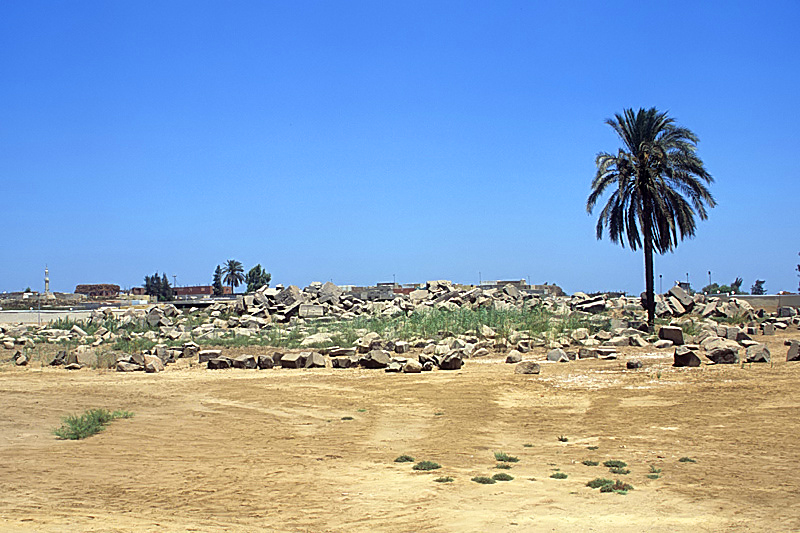
Hyperallergic reports that Egyptian antiquities officials recovered parts of two monumental statues of Ramses II at Behbeit Al-Hagar in the Nile Delta. Excavation followed a resident’s discovery of an inscribed stone. The find includes a large carved head and part of an inscribed back pillar.
Hyperallergic·
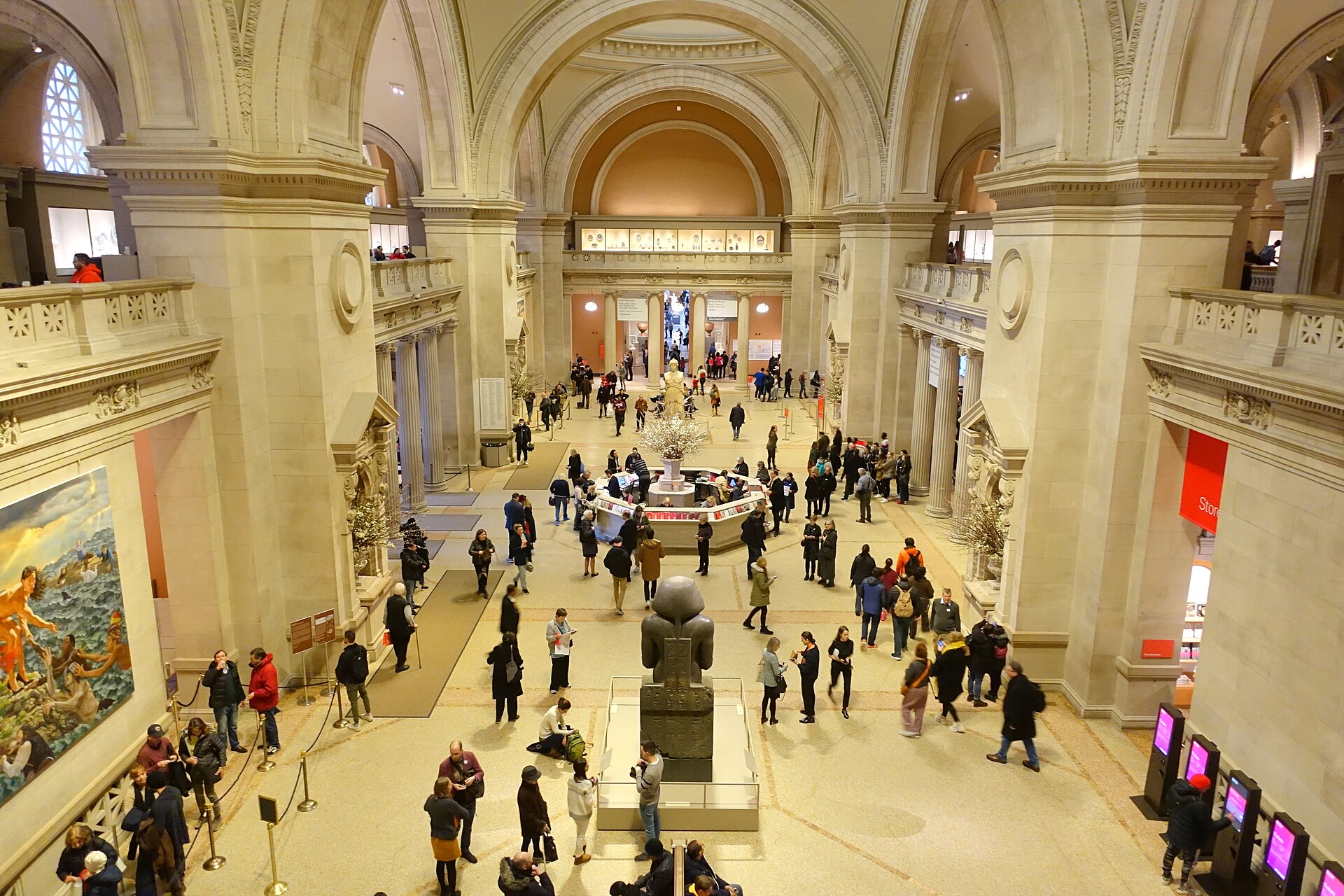
The Met’s Great Hall in 2020, where Sandra Mujinga’s commission is planned for November 2027. The future installation is not pictured.Daderot · CC0 · Cropped
Sandra Mujinga has been selected for the Metropolitan Museum of Art’s 2027 Great Hall commission, according to Hyperallergic. Her installation is planned for November 2027. The report describes her engagement with Afrofuturism, science fiction and postcolonial thought; Danh Vo receives the separate facade commission.
Hyperallergic·
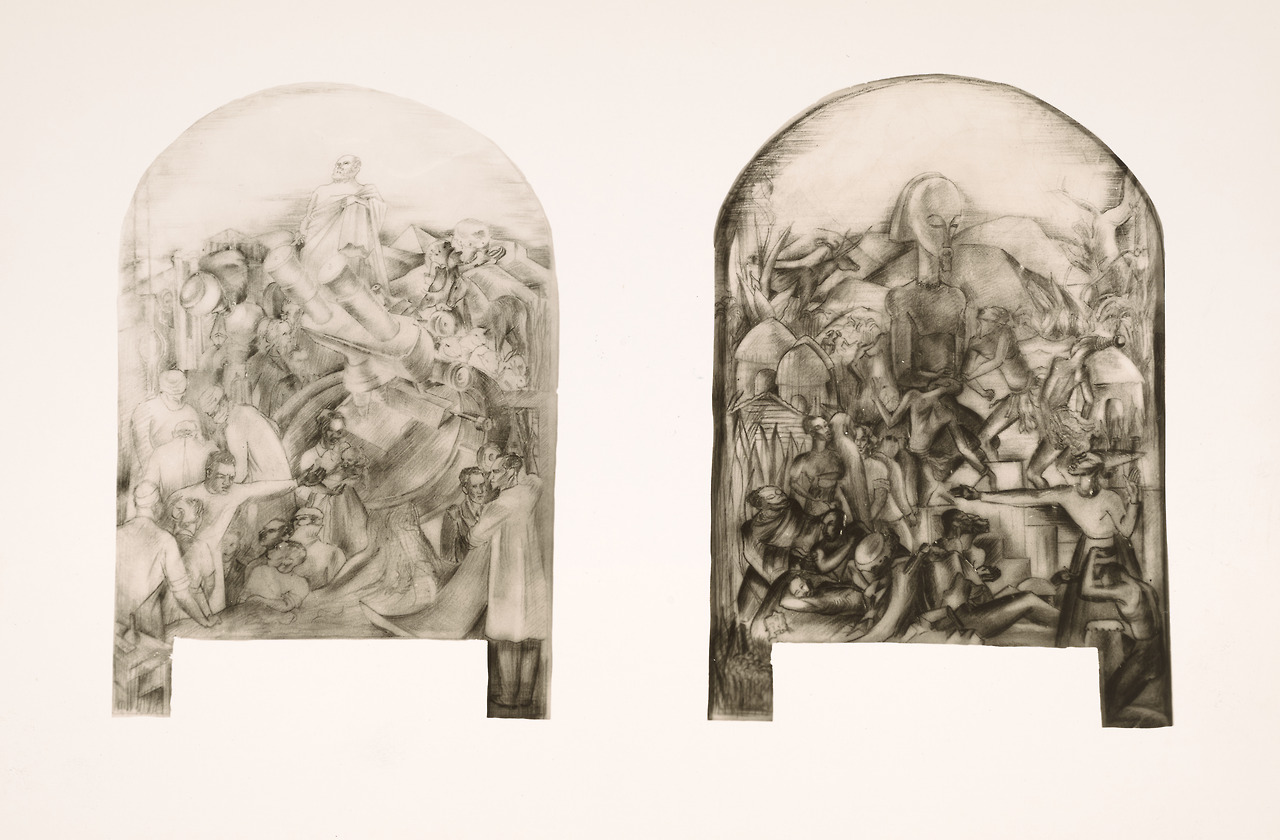
Charles Alston’s Harlem Hospital mural, photographed by Mark Nadir in 1936. This is an archival view, not a photograph of the 2026 restoration.Mark Nadir · Public domain
A conservation project at Harlem Hospital has restored murals by Charles Alston and Vertis Hayes, alongside a sculpture by John Rhoden. Hyperallergic places the work within the history of Black artists gaining access to federal public commissions during the New Deal.
Olivier Barlet reviews a new study of the Cinémathèque Afrique, examining film preservation, circulation and the legacies of French cultural diplomacy. Edited by Farah Clémentine Dramani-Issifou, the volume brings together researchers and practitioners. Barlet, who contributed a chapter himself, argues for stronger connections with African archives and greater attention to cultural sovereignty.
Jazmine Hayes’s I Am Protected places four designs at the entrances of Brooklyn’s Brownsville Multi-Service Center through New York City’s Percent for Art programme. In Hyperallergic, Rhea Nayyar reports that Hayes intended the commission to offer children a sense of protection and community. ArtBridge describes her wider practice as exploring African-diaspora histories, inherited cultural traditions and Black women’s rituals of care.
Hyperallergic·
Filmmaker Mati Diop at Sea’nema in 2024. Diop is among the artists named in Turning Towards the Sun; the forthcoming exhibition is not pictured.4MAPS · CC BY-SA 4.0 · Cropped
Zeitz MOCAA has announced a moving-image exhibition developed with the African Film and Media Arts Collective. Curated by Khanyi Mawhayi, it brings together six artists and filmmakers, including Mati Diop and Wanuri Kahiu, to explore Pan-African connections, learning and artistic exchange.
APS reported on a Dakar discussion about Bocar Niang’s planned Musée griot.tes in Tambacounda, connecting oral traditions with contemporary art and museum practice. Niang described a resource space for griots, griottes, artists and researchers, while curator El Hadji Malick Ndiaye considered how museums might document performance and other living practices. The project’s inauguration was announced for 3 December; the roundtable examined its approach to preserving and transmitting memory.
In a CCA Lagos interview with writer Izehi Amadasu, artist and filmmaker Blessing Bulus discusses how Mi Tazi connects remembrance with clay, sculpture and visual storytelling. She reflects on returning to Nok, encountering family pottery traditions and working intuitively with materials. Published alongside the exhibition Until We See Next Time, the conversation considers how artworks can sustain relationships with memory rather than resolve them into a finished account.
ArtReview reports that Rubaiya Qatar’s first edition in Doha will bring together more than 120 artists through three exhibitions and public installations. African participants listed include Meriem Bennani, Mohamed Bourouissa, Jean Katambayi Mukendi, Wael Shawky and Lydia Ourahmane. The programme also names Basim Magdy and Joseph Ntensibe, while Ibrahim Mahama is among the artists commissioned for public works. The main exhibition, Unruly Waters, is scheduled to open on 21 November.
Nigerian visual artist Oyewole Lawal discusses photography as a way of working with memory and absence in an interview with Izehi Amadasu published by CCA Lagos. He describes using mirrors to bring present and imagined images into conversation, while acknowledging gaps in recollection. His sociology background informs a practice spanning photographs, moving images, sound, text and archival material. The interview accompanies the exhibition Until We See Next Time.
Jérémie Mbuyi of Art et Élégance pour le Développement described new paid roles for street painters and sapeurs in Kinshasa. Speaking to ACP, he pointed to advertising-mural commissions and collaborations with local designers on image and colour. He argued that these practices could develop into small businesses and give local visual culture a stronger economic role.
In an ART AFRICA interview with Suzette Bell-Roberts, ICA director Nomusa Makhubu discusses taking live art beyond Cape Town’s established cultural centres. She describes partnerships with 16 on Lerotholi and Guga S’Thebe in KwaLanga, and the possibilities of free performances in public spaces. The conversation explores how participation, local histories and movement across the city shaped the festival’s approach. The 2026 festival ran from 14 to 18 October.
African Arts with Taj reported a call for a two-month residency at La Campagne Tropicana in Ibeju-Lekki, scheduled for 5 February–4 April 2027. The host’s statement invited Nigeria-based practitioners in visual and applied arts, crafts and design to submit proposals by 30 November. It outlined time for research or new work and a concluding presentation, with participation and support arrangements to be agreed in writing before places are confirmed.
BUALA outlines Coimbra’s Afro-Portugal festival, whose visual-arts programme includes O Nosso Lugar no Agora at Casa da Esquina and a residency for two young Afro-descendant artists. The exhibition brings together eight emerging practitioners. Across exhibitions, film and discussion, the festival asks how African and Afro-descendant creators can shape their representation and futures in Portugal.
Writing in C& América Latina, Inés Sybille examined how Cherish Menzo and Camilo Mejía use movement, sound and changing stage materials in DARKMATTER. Reflecting on a Barcelona performance she saw in April, the critic connected its slowed gestures and shifting bodily forms with Black diasporic ways of imagining other possibilities. Her October essay treats the performers’ transformation of the stage as integral to the work’s exploration of visibility.
In BUALA, Júlia Barata discusses adapting Isabela Figueiredo’s Caderno de Memórias Coloniais into graphic narrative. Drawing on her childhood in post-independence Maputo, she reflects on privilege, racism and the visual possibilities of watercolour. The interview connects her treatment of colonial memory with experimental comics, everyday feminism and collective learning in Buenos Aires.
Jamaica's National Gallery is keeping Of Wood and Water: The Scotiabank Collection on view until November 1. The exhibition pairs Scotiabank Jamaica holdings with works from the national collection, exploring land, natural forces, people and spirituality. An October 13 announcement also outlined a related curators' discussion scheduled for October 17. That date has passed, so the current visitor news is the exhibition's extended run.
Vitória’s municipal government announced Turmalina, an exhibition of twelve Black women photographers at Mucane, scheduled for 20 October–20 November. Curated by Taynara Barreto and Tamara dos Santos, the presentation foregrounds varied artistic approaches, including Afrofuturism. The announcement emphasises imagination and creative freedom beyond accounts of suffering, with mediated visits intended to bring audiences into conversation with the artists’ visual choices.
Prefeitura de Vitória — Mucane / Black visual arts·
Zeitz MOCAA has announced Were It Not for Shadows, bringing together six Cape Town artists who took part in its Koyo Kouoh Atelier residency programme. Curated by Phokeng Setai, the exhibition will present installations, tapestries, sculpture and photography connected to their time at the museum. Scheduled for 12 November 2026 to 29 August 2027, it considers the experimentation and studio work that precede public exhibitions, according to the museum’s announcement.
Zeitz MOCAA·
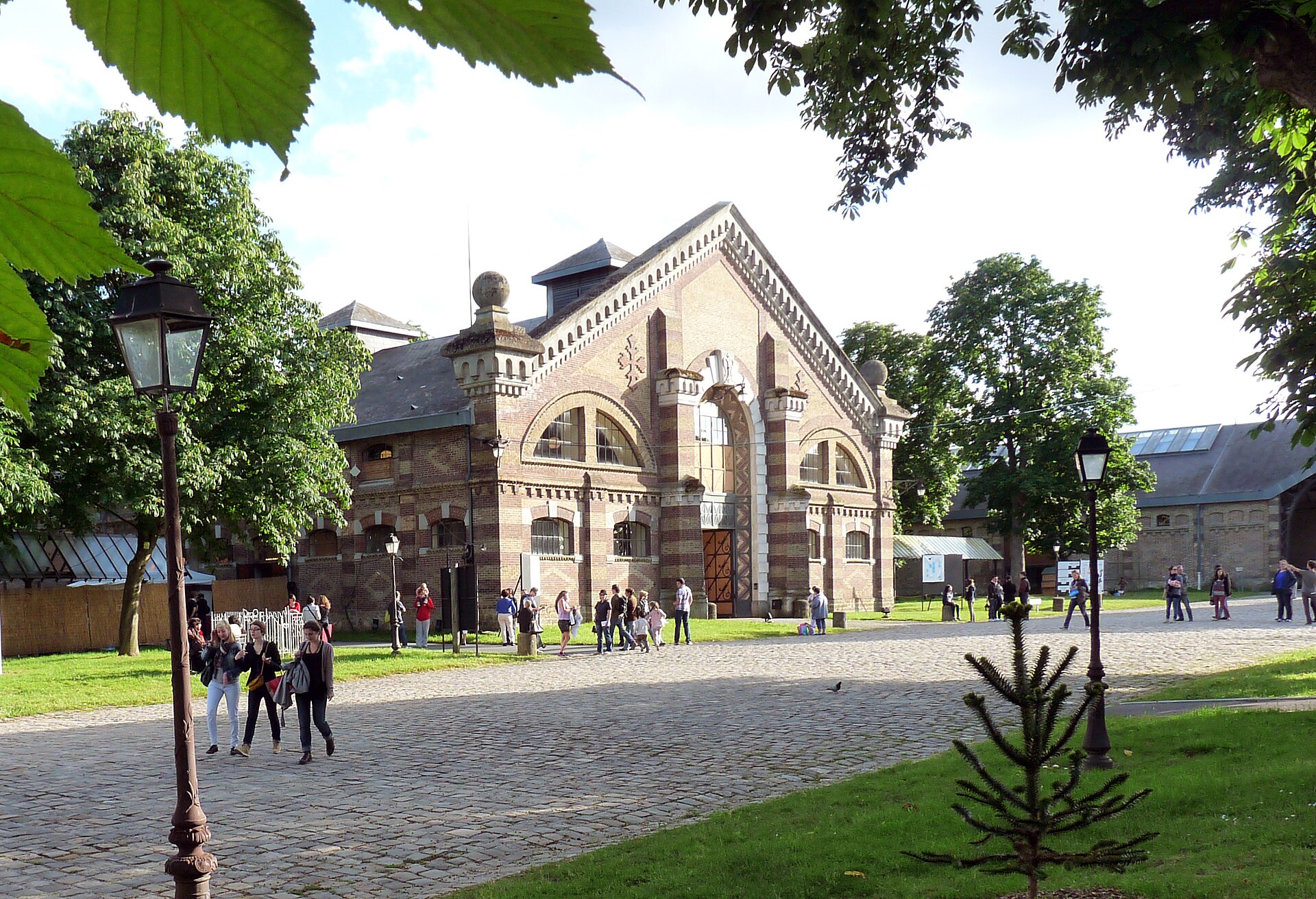
La Ferme du Buisson in Noisiel, photographed in 2013. Brandon Gercara’s exhibition is not pictured.La Ferme du Buisson · CC BY-SA 4.0 · Cropped
Réunionese artist Brandon Gercara’s exhibition Destin Vogoya at La Ferme du Buisson combines performance and visual art with a fictional world of queer protagonists. ART AFRICA describes how the work brings Réunion’s maloya tradition into conversation with voguing to explore cultural memory, identity and collective liberation.