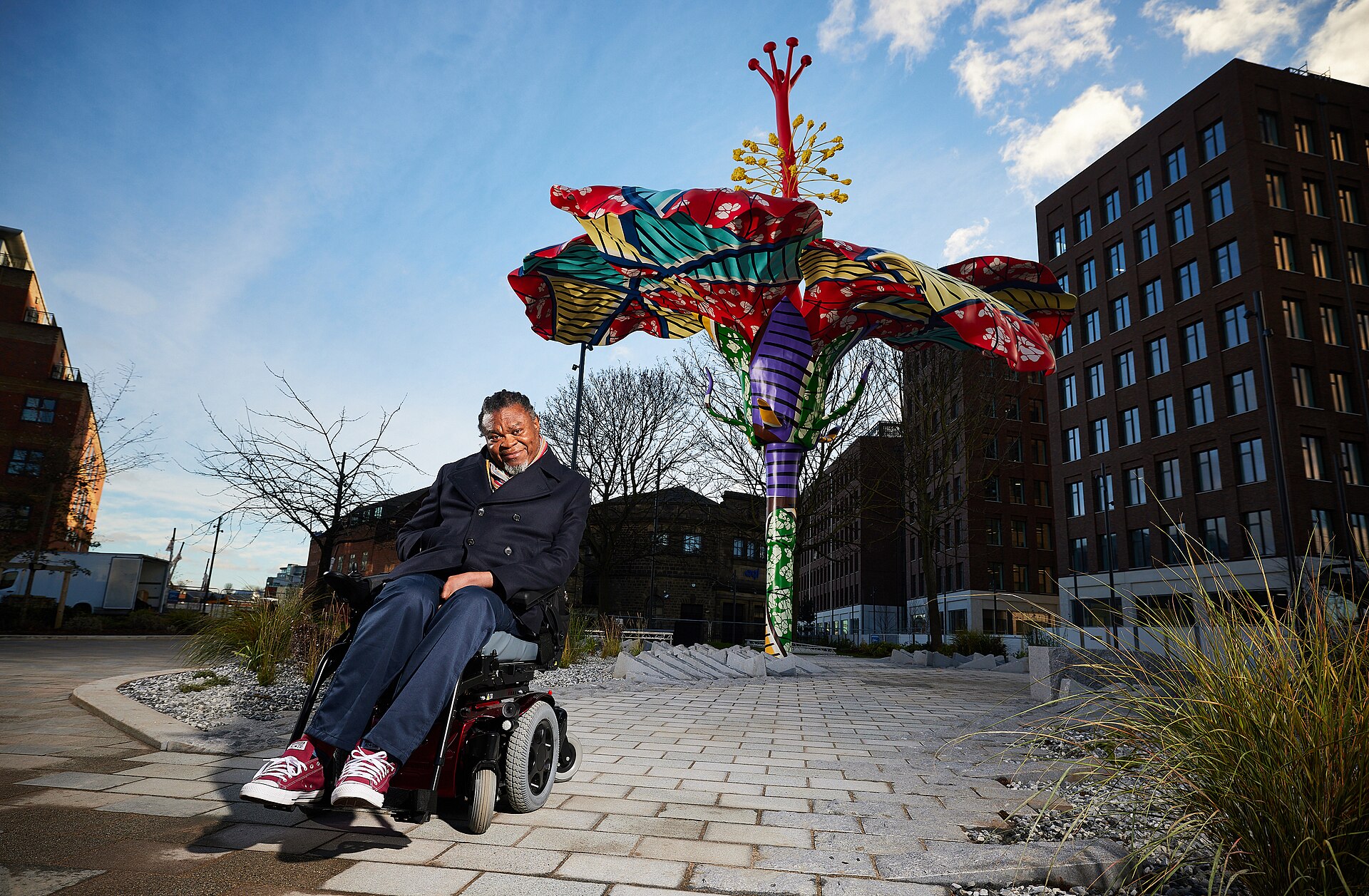
ART AFRICA reports that ART X Lagos’s eleventh edition brings Nigerian artistic histories into conversation with contemporary practice. At Federal Palace, Ladi Kwali: Beyond the Vessel combines ceramics and archival material, while Ndidi Dike’s installation explores displacement and collective memory. The 5–8 November fair also presents galleries from Nigeria, Uganda, Ghana and Britain, alongside Yinka Bernie’s sound-and-image project. Public visiting days are 7–8 November, according to the organiser.
APS profiles the visual design behind Dakar 2026’s opening ceremony, highlighting scenographer Khady Kassé’s arrangement of space, set elements and an urban environment within the stadium. Trained in civil engineering, interior architecture and scenography, Kassé previously designed national pavilions and exhibition spaces for Dak’Art 2024. The report also recognises Marième Ngom’s coordination of costume, makeup and hair teams, showing how different design practices contributed to the ceremony’s visual presentation.
CCA Lagos and Third Space Art Foundation have announced a November 7 panel examining how performance can challenge colonial archives and recover marginalized histories. Part of 1922 Revisited, the discussion will take Jelili Atiku’s artistic work as a starting point. Participants include Atiku, Taiwo Aiyedogbon, Tolulope Ami-Williams, Akin Oladimeji and Jumoke Sanwo, with Oyindamola Faithful moderating. The event is scheduled at CCA Lagos from 10:30am to 12:15pm.
APS profiles Maguette Guèye, Khadija Aisha Ba and Selly Raby Kane, who designed costumes for the three sections of the Dakar 2026 Youth Olympic opening ceremony. Their practices draw on Senegalese textiles, adornment and cultural references. The report highlights Guèye’s fabric and ornament work, Ba’s handmade accessories and historically inspired clothing, and Kane’s distinctive fashion and filmmaking practice.
Art Report Africa’s Lagos Art Week guide looks beyond the fair to exhibitions across the city. Shalom Esene highlights Mobolaji Ogunrosoye’s photographic collages at O’DA Art and Tonia Nneji’s paintings at Rele, two presentations examining women’s experiences and representation. Ogunrosoye builds portraits through conversations and layered imagery, while Nneji draws on the changing daily life of Goriola Street in Ajegunle. Both exhibitions continue until 28 November.
Remi Ajani and Hamed Maiye’s Call and Response is on view at Alára in Lagos through November 29, Art Report Africa reports. Their paintings explore inherited stories, personal memory and belonging through Yoruba philosophy, archival images and family photographs. An accompanying artist-conceived book expands the conversation across Nigerian cultural generations, with a London launch planned for November 17.
APS reported on Empreinte 100 ans at Dakar’s Musée des civilisations noires, bringing together fourteen Senegalese visual artists. Associated curator Kalidou Kassé and promoter Jingshi Feng situated the exhibition within a wider cultural programme linking art and sport. Feng described a presentation spanning painting, digital installations and craft, with the Dakar exhibition scheduled to continue until 15 November. The report highlights the artists’ contributions rather than treating the display solely as an Olympic commemoration.
CCA Lagos announced Angel-Akua Taiwo and Kwame Crentsil as researchers in the first edition of Archival Constellations. Their work centres on founder Bisi Silva’s curatorial legacy and the institution’s exhibition and administrative records. The centre described the project as a way to examine how cultural histories are preserved, whose contributions remain visible and where gaps persist. The residency forms part of a wider programme exploring institutional memory through contemporary-art archives.
CCA Lagos announced a performance by Jelili Atiku at the National Museum in Lagos on 4 November. Presented with Third Space Art Foundation, Eyes No Dey Forget Wetin Heart See was described as a journey through urban space drawing on Orisha ritual and questions of identity, memory and colonial interpretation. The event forms part of 1922 Revisited: West Africa Edition and the ART X pre-programme.
Reporting from Design Week Lagos for Art Report Africa, Chibuzo Emmanuel examined an exhibition spanning furniture, textiles and visual art alongside a tribute to Demas Nwoko. Discussions involving Mpho Matsipa, Myles Igwebuike, Victor Ekpuk and other practitioners shifted attention from overseas recognition toward local institutions, collecting and preservation. The article situated contemporary design within African histories and the practical structures needed to sustain makers.
The tenth Abuja International Photo Festival is scheduled for 27–30 October at the Exhibition Pavilion in Abuja, with 63 artists taking part. In Shalom Esene’s Art Report Africa interview, founder Osaze Efe discusses how Nigerian photography is changing and what artificial intelligence means for the medium. Alongside the exhibitions, the programme includes workshops, panels and masterclasses, connecting photographic practice with wider questions about how images are made and understood.
The Photographers’ Gallery in London presents Colour Years, an exhibition of Sanlé Sory’s colour photographs from Burkina Faso. ART AFRICA reports that the Burkinabé photographer began experimenting with colour in the mid-1980s at his Volta Photo studio in Bobo-Dioulasso. Curated by Taous Dahmani, the presentation includes restored prints and Volta Jazz record covers, examining portraiture, self-representation and everyday life after independence.
G.A.S. Foundation and the Yinka Shonibare Foundation are developing new ways to make their collections accessible online through a partnership with Archival Consciousness. Announced on 18 October, the collaboration uses Biblio-Graph to connect archiving and publishing. A new G.A.S. Publish platform will support Re:assemblages, with an Archive Futures essay series planned for January 2027. The foundation says the work will also preserve material from its African Arts Libraries network.
In African Arts with Taj, critic Tajudeen Sowole considered John Chukwuemeka Okoye’s I Am Just A Boy paintings as an exploration of expectations placed on young men. He discussed the relationship between finely rendered figures, adolescent experimentation and resistance to prescribed roles. While praising Okoye’s technical control, Sowole questioned whether the close resemblance to photography limited the paintings’ expressive possibilities.
APS reported on a Dakar discussion about Bocar Niang’s planned Musée griot.tes in Tambacounda, connecting oral traditions with contemporary art and museum practice. Niang described a resource space for griots, griottes, artists and researchers, while curator El Hadji Malick Ndiaye considered how museums might document performance and other living practices. The project’s inauguration was announced for 3 December; the roundtable examined its approach to preserving and transmitting memory.
In a CCA Lagos interview with writer Izehi Amadasu, artist and filmmaker Blessing Bulus discusses how Mi Tazi connects remembrance with clay, sculpture and visual storytelling. She reflects on returning to Nok, encountering family pottery traditions and working intuitively with materials. Published alongside the exhibition Until We See Next Time, the conversation considers how artworks can sustain relationships with memory rather than resolve them into a finished account.
Nigerian visual artist Oyewole Lawal discusses photography as a way of working with memory and absence in an interview with Izehi Amadasu published by CCA Lagos. He describes using mirrors to bring present and imagined images into conversation, while acknowledging gaps in recollection. His sociology background informs a practice spanning photographs, moving images, sound, text and archival material. The interview accompanies the exhibition Until We See Next Time.
African Arts with Taj reported a call for a two-month residency at La Campagne Tropicana in Ibeju-Lekki, scheduled for 5 February–4 April 2027. The host’s statement invited Nigeria-based practitioners in visual and applied arts, crafts and design to submit proposals by 30 November. It outlined time for research or new work and a concluding presentation, with participation and support arrangements to be agreed in writing before places are confirmed.
Senegal’s National Gallery has brought works by recent Salon national des arts visuels laureates to Louga’s Mademba Diop regional cultural centre. Running through October 21, the touring exhibition is paired with training in portfolios, digital tools and art-market access, extending the institution’s programme beyond Dakar and supporting artists working in the regions.
The 16th Dakar Biennale will take place from 19 November to 19 December 2026, with Morad Montazami as artistic director. An official announcement from Biennale de Dakar, dated 24 September 2026 and posted on 13 October, details 75 artistic proposals: 54 for the international exhibition and 21 for the design section. The theme, “(Anti)fragility,” explores repair, care and responses to disruption. Faouzi Laatiris is the Grand Témoin, alongside a Carte blanche for Serigne Mbaye Camara.