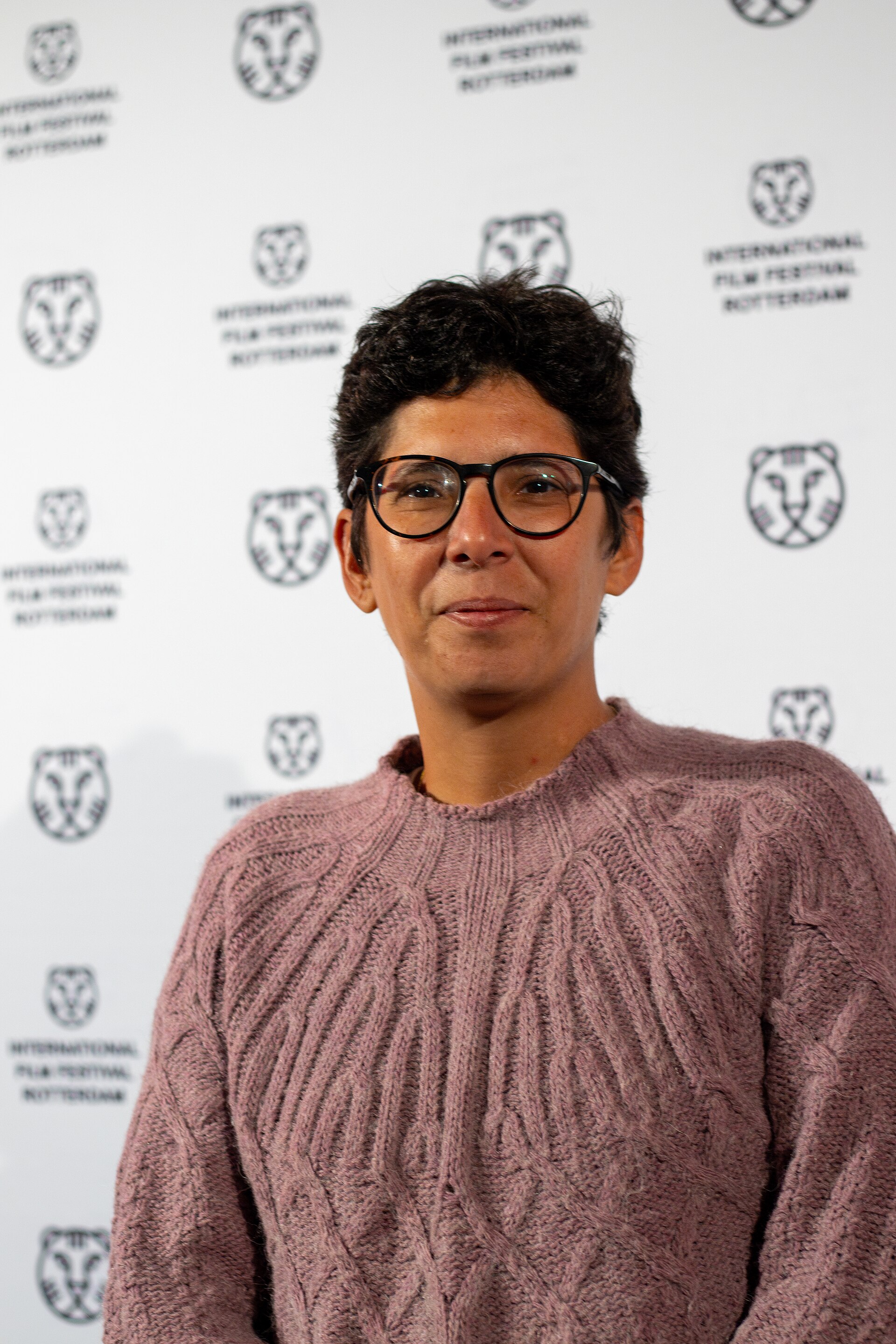
Kamy Lara at the International Film Festival Rotterdam, 3 February 2026. Photo: Vera de Kok / Wikimedia Commons (CC BY-SA 4.0). Contextual portrait, not the Luanda screening or exhibition.Vera de Kok · CC BY-SA 4.0
In an interview with Marta Lança for Buala, filmmaker Kamy Lara discusses documenting Fuckin’Globo, the artist-led exhibitions held in Luanda’s Hotel Globo from 2015. Her 2024 documentary combines interviews, archival material and footage of the event’s final edition. Lara describes artists sharing rooms, resources and ideas, and reflects on how collective working shaped the exhibitions. The conversation accompanied a 30 October screening at FIC Luanda, rather than the launch of a new film.
Amina Agueznay and curator Meriem Berrada discuss Asǝṭṭa, Morocco’s Venice Biennale pavilion, in an ART AFRICA interview with Suzette Bell-Roberts. The installation brings wool, raffia and embroidered threads into an architectural environment developed with 166 craftspeople. Their conversation considers weaving as living knowledge, the visibility of collaborators and the threshold as a space of encounter. Both resist treating craft as a fixed inheritance separate from contemporary artistic thought.
In an Art Report Africa interview with Nana Poulot, AKAA artistic director Sitor Senghor explained the 2026 fair’s pairing of photography and works on paper. He discussed visibility for African photographers, drawing’s expressive independence and differences between the Paris and London markets. Senghor used Ouattara Watts’s drawings to argue that an artist’s ideas need not become large paintings to acquire significance.
In an ART AFRICA interview with Suzette Bell-Roberts, curator Fadzai Veronica Muchemwa discusses Second Nature | Manyonga, Zimbabwe’s presentation at the 2026 Venice Biennale. Work by Franklyn Dzingai, Gideon Gomo, Pardon Mapondera, Eva Raath and Felix Shumba connects material processes with memory and change. Muchemwa questions celebratory accounts of resilience, describing adaptation as uneven rather than automatically liberating.
Anastasia Pather and curator Chepape Makgato discuss Mother Tongue at the William Humphreys Art Gallery in an ART AFRICA interview with Suzette Bell-Roberts. Pather describes finger-painting as a way to explore memory, belonging and identity. Her first solo museum exhibition is presented alongside works by women printmakers from the gallery’s collection and remains on view in Kimberley, South Africa, until 26 November 2026.
In an ART AFRICA interview with Suzette Bell-Roberts, Ranti Bam discusses the five Ifa Ile Oja – Black Ifa sculptures presented at the Arsenale in the 2026 Venice Biennale. She describes a physical, intuitive approach to clay, considering memory, vulnerability and spiritual connection. Rather than prescribing a single interpretation, Bam leaves viewers room to find their own relationships with the forms and their surroundings.
In an Africans Column interview with Sophie Campos, artist and cultural organiser John Cox discussed the institutions and relationships sustaining Bahamian art. He described FUZE as a platform for Caribbean and African artistic exchange, while reflecting on barriers such as shipping costs and limited local collecting markets. Cox also considered the tension between his own studio practice and building opportunities for others, placing community and long-term collaboration at the centre of his approach.
In an ART AFRICA interview published on 20 October, researcher Jane Freedman reflects on a Johannesburg exhibition in which young people used photography and podcasts to examine migration and belonging. Participants selected and arranged their own work, retaining control over how their stories were shared. The exhibition opened at Bag Factory Artists’ Studios on 13 June 2026; the new interview considers its participatory approach rather than announcing a forthcoming show.
In an ART AFRICA interview, Anina Major discusses translating Bahamian palm-plaiting traditions into ceramic sculpture for The Sacred Mangrove at Pérez Art Museum Miami. Drawing on skills inherited from her grandmother, the installation connects family memory, migration and Caribbean ecology. Major describes bottle trees as references to African-diaspora spiritual practices and questions the separation of craft from fine art. The interview considers how inherited techniques change across generations and places.
ART AFRICA·
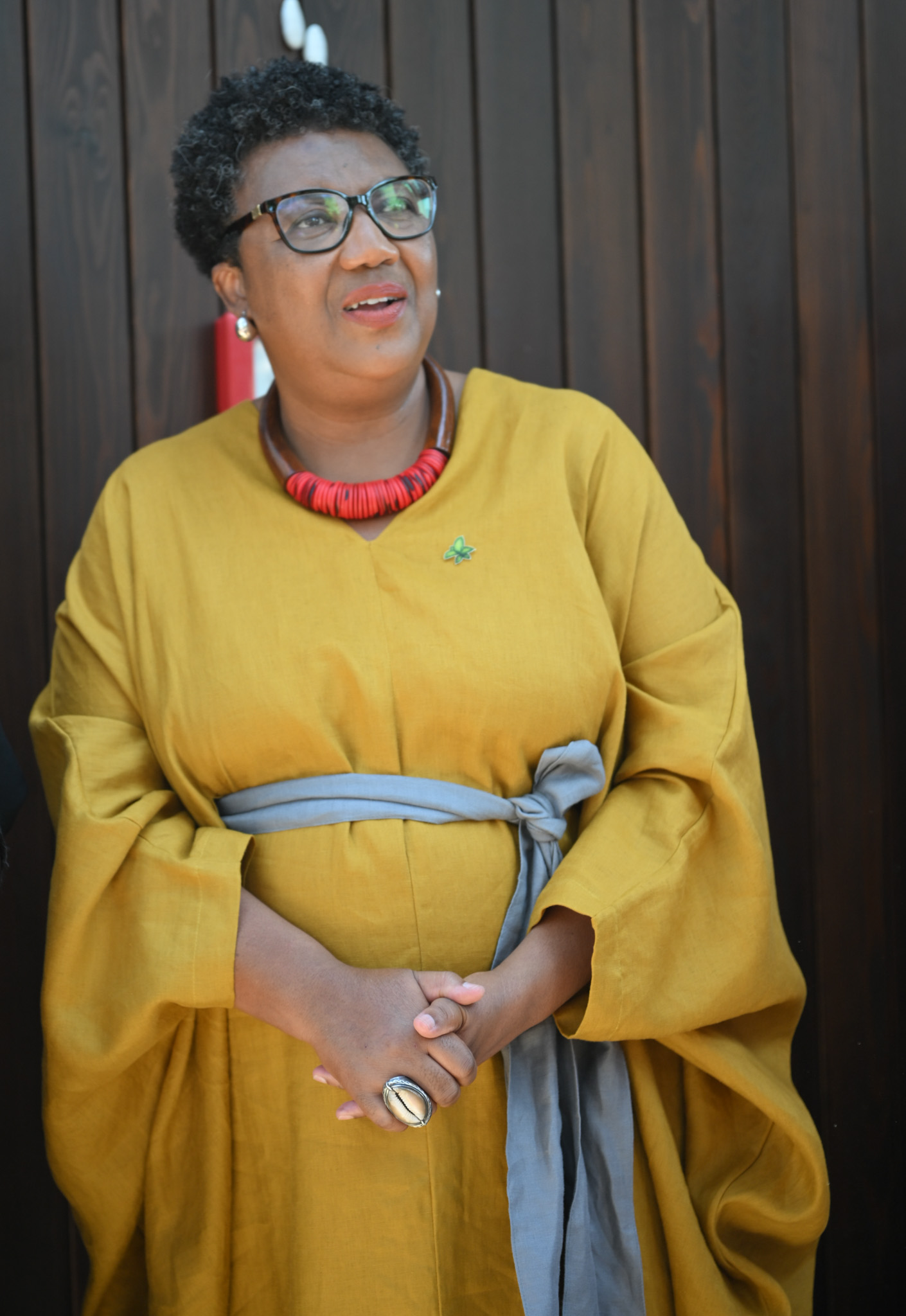
Rosana Paulino at the Venice Biennale, 7 May 2026. Contextual portrait; the New York exhibition discussed here is not pictured.Hano · CC BY-SA 4.0
In an interview with Daniela Mayer, Afro-Brazilian artist Rosana Paulino explains how her artist’s book ¿História Natural? challenges colonial representations of Brazil and Black people. The 2016 work combines printmaking, altered expedition photographs and stitching on paper and fabric. Presented by the Vera List Center in New York, her exhibition places that critique of archival images alongside her natural-pigment drawings of figures within seeds.
Art Report Africa reported on Yinka Ilori’s Chairman exhibition at the Walter Sickert Community Centre in Islington, where the British-Nigerian artist grew up. Drawing on Tobi Alexandra Falade’s interview and reporting, the article connected around thirty chair works with personal histories and Ilori’s first monograph. It examined his choice of a community setting beyond Frieze Week’s main venues and his ambitions for wider access.
In a CCA Lagos interview with writer Izehi Amadasu, artist and filmmaker Blessing Bulus discusses how Mi Tazi connects remembrance with clay, sculpture and visual storytelling. She reflects on returning to Nok, encountering family pottery traditions and working intuitively with materials. Published alongside the exhibition Until We See Next Time, the conversation considers how artworks can sustain relationships with memory rather than resolve them into a finished account.
Nigerian visual artist Oyewole Lawal discusses photography as a way of working with memory and absence in an interview with Izehi Amadasu published by CCA Lagos. He describes using mirrors to bring present and imagined images into conversation, while acknowledging gaps in recollection. His sociology background informs a practice spanning photographs, moving images, sound, text and archival material. The interview accompanies the exhibition Until We See Next Time.
In an ART AFRICA interview with Suzette Bell-Roberts, ICA director Nomusa Makhubu discusses taking live art beyond Cape Town’s established cultural centres. She describes partnerships with 16 on Lerotholi and Guga S’Thebe in KwaLanga, and the possibilities of free performances in public spaces. The conversation explores how participation, local histories and movement across the city shaped the festival’s approach. The 2026 festival ran from 14 to 18 October.
In BUALA, Júlia Barata discusses adapting Isabela Figueiredo’s Caderno de Memórias Coloniais into graphic narrative. Drawing on her childhood in post-independence Maputo, she reflects on privilege, racism and the visual possibilities of watercolour. The interview connects her treatment of colonial memory with experimental comics, everyday feminism and collective learning in Buenos Aires.
Folasade Ologundudu discusses how Nigerian modernist publications and contemporary art can reshape the histories we inherit. Her 1-54 London project combined an exhibition with critical writing labs, inviting participants to contribute to a living archive. The interview makes a case for sustained support for African criticism, publishing and research, rather than visibility alone.
During an ACP gallery visit, Congolese artist Serge Homboyoka Kadima, known as Makadi, discussed Malamba, a painting drawing on the ritual dancer of the same name in Bashilele culture. The artist described the figure’s ancestral significance and the costumes associated with its performance. His broader practice combines painting, recovered materials and textile sculpture to revisit the community’s mythic and ritual imagery.
Agence Congolaise de Presse·
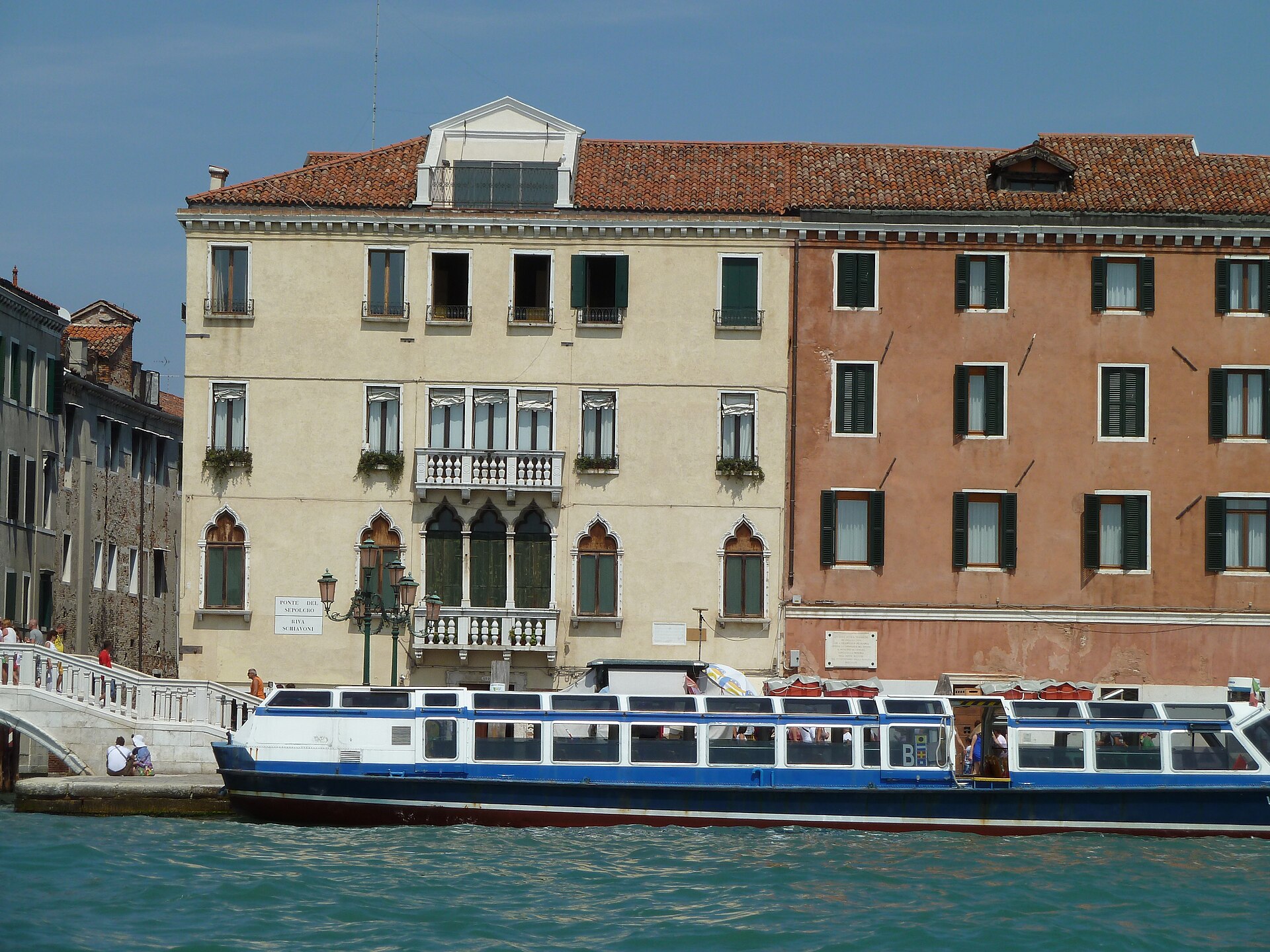
Palazzo Navagero on the Riva degli Schiavoni, photographed in 2012. Caroline Gueye’s WURUS installation is not pictured.Abxbay · CC BY-SA 3.0 · Cropped
In an ART AFRICA interview, Senegalese artist Caroline Gueye discusses WURUS, her Venice Biennale pavilion curated by Massamba Mbaye. The installation transforms Palazzo Navagero through architecture, sculpture and changing viewpoints, using the idea of gold to examine how perception shapes the value people assign to things.
Selassie Atadika brings cocoa farming into the gallery through portraits, field recordings, agricultural materials and a brass pod cast by Emmanuel Fosu. In an interview about Commodity / Couture at 1-54 London, she explains how the installation connects craft and agricultural knowledge while questioning whose labour receives recognition and economic value.
Léon Radegonde discusses a practice built around hessian, wood, rust and deliberately aged materials in an interview about Restan Lepase at 1-54 London. Presented by DēpART, the project connects his work with writing, research and sound, offering a view of Seychelles beyond tourism imagery and reflecting on the country’s developing contemporary-art institutions.