Art Report Africa’s September 2026 exhibition roundup paired criticism from Lagos, Abuja and Paris. Sabo Kpade examined vulnerable architectural surfaces and bodily landscapes in Groundwork; Rejoice Anodo considered Dotun Popoola’s reclaimed-metal sculpture; and Nana Poulot discussed Kerry James Marshall’s treatment of Black life within history painting. Together, the accounts followed how materials and representation could carry memories beyond familiar readings of their subjects.
Theophilus Imani examines how four African institutions bring alternative approaches to learning into the Venice Biennale. Reading installations by blaxTARLINES, RAW Material Company, G.A.S. Foundation and Nairobi Contemporary Art Institute together, his essay connects artistic practice with archives, community and reciprocal knowledge, asking how these networks can endure beyond a temporary international exhibition.
Art Report Africa’s September 2026 roundup considered four exhibitions in Paris and Lagos through space, memory and materials. Reviews of Sungi Mlengeya and Ladji Diaby explored spare painted settings and reused domestic objects, while accounts of Crosscurrents and Affinities and The Weight of Traces examined relationships between Nigerian artists. The writing emphasised formal differences and material experimentation rather than treating the shows as interchangeable expressions of identity.
Art Report Africa·
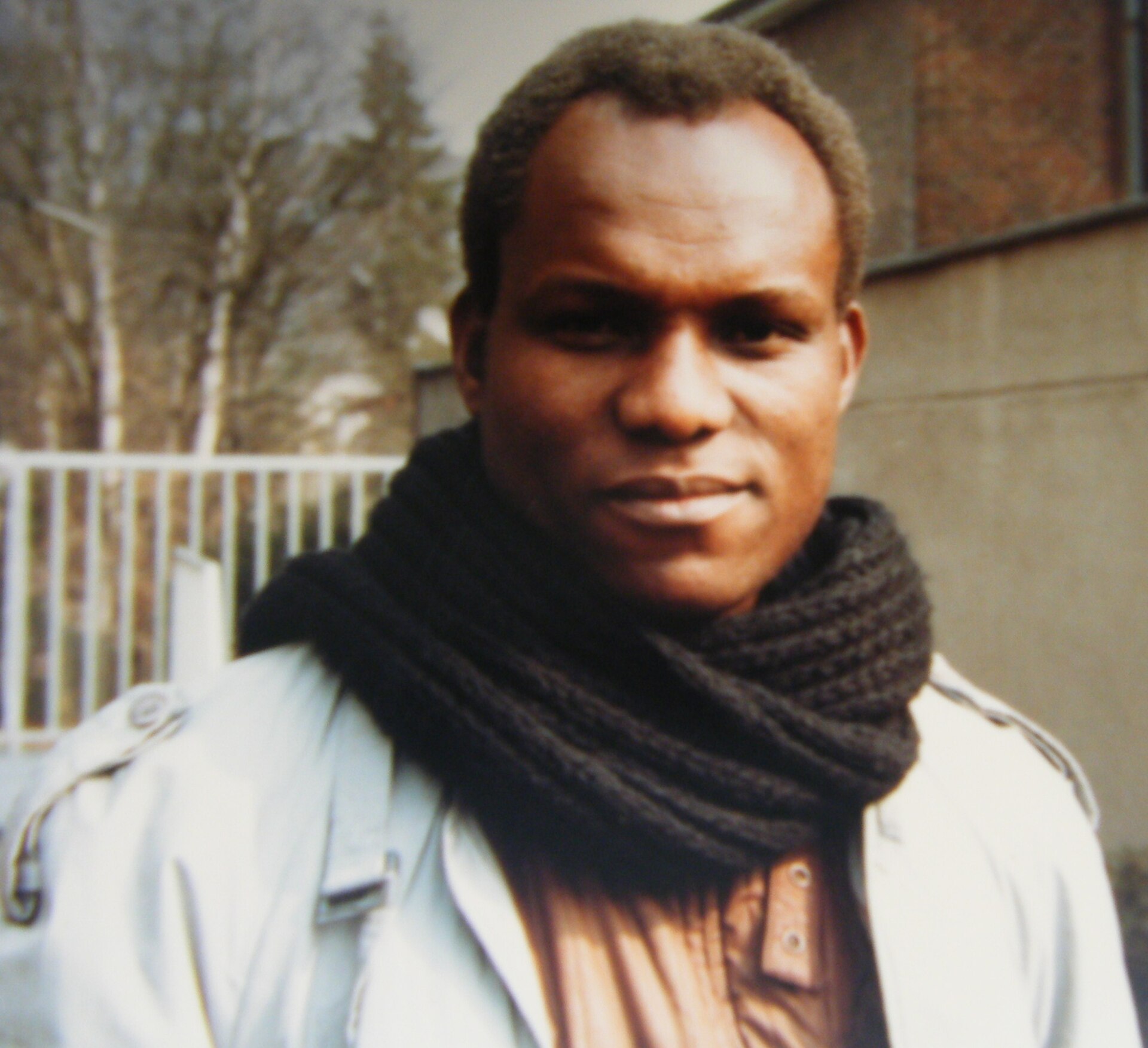
Henry Tayali, circa 1983. A contextual portrait, not a photograph of the 2026 Destiny exhibition.F Anderssen · CC BY-SA 3.0
Banji Chona considers what sustained public access means for Zambia’s art history through Henry Tayali’s Destiny at Lechwe Trust Art Gallery. The review distinguishes the painting’s return to Zambia in 1991 from its renewed display in 2026, arguing that conservation, criticism, education and encounters with collections help keep artistic histories alive.
Africultures considers Samuel Suffren’s three short films, released together in France as Les Vagues dans les yeux. Across Agwe, Des rêves en bateaux papiers and Cœur bleu, the Haitian filmmaker turns attention from migration’s journeys to the families who remain. The review traces how sound, domestic spaces and ordinary objects carry absence and memory.
Art Report Africa surveyed September 2026 exhibitions across Lagos, Paris and Stockholm through the themes of memory, belonging and material history. The writers considered CCA Lagos’s treatment of grief, the craft-led Mémoire Matérielle, Emma Prempeh’s layered paintings and Ndidi Dike’s installations about extraction and value. Their account distinguishes firsthand viewing from a reading of official installation photographs.
A Lussas documentary seminar brought together films exploring resistance, colonial memory and the politics of representation. Olivier Barlet’s account follows a programme curated by Raquel Schefer, including work connected to Mozambique and Guinea-Bissau. It considers how archives, experimental forms and collective filmmaking can challenge established ways of seeing rather than simply illustrate political arguments.
A Museum of Black Futures conversation with architect and researcher Patti Anahory asks how African cosmologies might change the way museums understand time and space. Richard Kofi’s introduction frames a debate over whether the project should work within established museum definitions or build its future outside them, linking institutional form with decolonial practice.
Olivier Barlet surveys the young sub-Saharan African documentary programme at Lussas, following films that connect personal experience with wider histories. His account moves from colonial archives and extraction to contemporary streets and rural communities, considering how observation, performance and autobiographical approaches reshape the representation of place, memory and everyday life across the continent.
Sabo Kpade reviewed three Accra exhibitions for Art Report Africa in August 2026. At Nubuke Foundation, domestic objects became records of labour and belonging; at Gallery 1957, Gabriel Selassie Tsagli explored movement and memory through colour. Frank Coffie’s Worldfaze presentation showed yarn functioning both as a tactile pictorial material and as a way of organising different emotional states.
ArtThrob considers Pyda Nyariri’s Paivapo at Cape Town’s Association for Visual Arts through the fictional figure Pidgin. The Zimbabwean-born artist combines relief paintings, cotton gauze and clay with sound by Denise Onen and writing by Rabia Abba Omar. The review reads these interlocking elements through Édouard Glissant’s ideas about relation and opacity, arguing that their elusive language resists colonial classification and opens possibilities for collective belonging.
Africultures previews the 2026 Festival International du Film de la Diaspora Africaine through a programme concerned with memory, resistance and repair. Olivier Barlet considers films spanning political histories and intimate lives, including Karen Hayes’s documentary with Desmond Tutu and Vincho Nchogu’s One Woman One Bra. The Paris festival was scheduled for September 4–6.
William Ousmane Mbaye’s Ndar, Saga Waalo brings residents’ voices, historical images and contemporary streets into a portrait of Saint-Louis. In his Africultures review, Olivier Barlet considers how the film and Laurence Attali’s editing resist a single account of the city, making its colonial histories, contested memories and present-day uncertainties part of a shared visual conversation.
Olivier Barlet reviews Valdiodio, Amina N’Diaye Leclerc’s fiction film about her father, the Senegalese independence-era politician Valdiodio N’Diaye. Following two earlier documentaries, the filmmaker approaches political history through family experience. The review examines her shift towards biographical drama and the role of a daughter’s viewpoint in reconstructing an inherited story on screen.
ArtThrob’s review of Thembinkosi Hlatshwayo’s Song 1: To be left behind considers how the Cape Town exhibition approaches the artist’s memories of his late father. Fragmented photographs, repeated self-portraits and experiments with printing surfaces connect family history with the physical construction of images. The critic reads these incomplete and sometimes unsettling forms as a meditation on grief, inheritance and photography’s capacity to hold uncertain memories.
ArtThrob·
Ibrahim Mahama at Art Basel in 2025. This contextual portrait is not a photograph of his 2026 installation.Bea Phi · CC BY-SA 4.0
Africans Column surveys African and diasporic artists across Art Basel’s 2026 gallery booths, installations and public programme. The overview moves from Ibrahim Mahama’s work in Münsterplatz to presentations involving El Anatsui, Tunisian artists and historical figures, describing a range of practices rather than a single regional style or market category.
Africans Column·
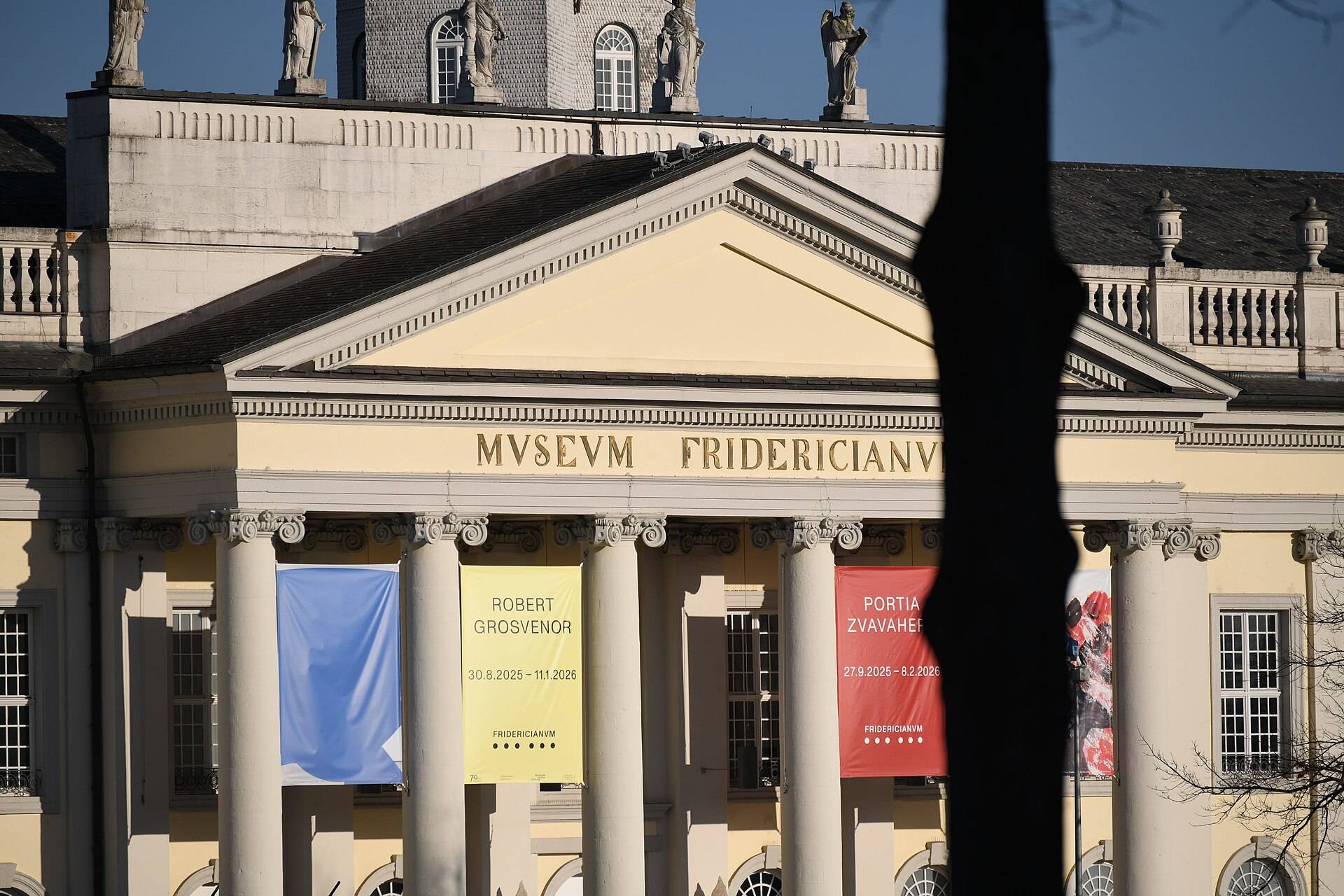
Contextual photograph: exterior of the Fridericianum in Kassel on 20 January 2026, during Portia Zvavahera’s exhibition. This is not an installation view. Photo: Paul Broeker (Paul Bröker), Wikimedia Commons, CC BY-SA 4.0. Full image, no crop.Paul Broeker · CC BY-SA 4.0
Eric Otieno Sumba revisits Portia Zvavahera’s exhibition at the Fridericianum in Kassel, examining how dreams, faith and painted surfaces shape her work. His review praises the expansive installation of House of Praise while questioning more conventional displays, then considers how editorial and institutional pressures affect the timely publication of art criticism.
Amira Bongho Nouarra examines Carrie Mae Weems’s FOMU retrospective through a conversation with the artist and close readings of photographs, video and installation. Moving between family intimacy, cultural institutions and spiritual expression, the review asks how a museum shapes visibility while Weems continually reworks the relationships between images, viewers and power.
Contemporary And (C&)·
Touria El Glaoui, founder of 1-54, on 1 October 2021. Contextual portrait, not a photograph of the 2026 New York fair. Photo: Editvipcontent / Wikimedia Commons / CC BY-SA 4.0.Editvipcontent · CC BY-SA 4.0
Africans Column considers 1-54 New York as an ecosystem linking galleries, artists, collectors and institutions rather than a market alone. Its review of the 2026 edition emphasises diaspora connections, sustained scholarship and the partnerships surrounding the fair, asking how international attention can develop into lasting support for African and diasporic practices.
Africans Column uses Frieze New York to examine the different ways cultural recognition and market value develop. Contrasting El Anatsui’s institutional history with Southern Guild’s expanding presence, the analysis argues that galleries, museums, archives and criticism sustain careers over time. It cautions against treating a single sale price as a measure of artistic achievement.