TIME included South African artist William Kentridge in its 2009 list of 100 influential people, with a profile written by Lou Reed. Reed focused on Kentridge’s ability to translate interior states into charcoal drawing, animation, theatre and installation. Discussing works including Preparing the Flute, Artist and Model and Stereoscope, the profile presented his practice as an unusually direct expression of emotion, beauty and shared humanity.
ART AFRICA’s January 2010 notice described an official art-poster edition for the South African FIFA World Cup, distributed locally by David Krut Projects. Participating artists included William Kentridge, Marlene Dumas, Julie Mehretu, Hassan Musa, Barthélémy Toguo, Soly Cissé and Kay Hassan. The historical announcement documents a visual-art project around the tournament; it does not establish present-day stock or purchasing availability.
Goodman Gallery announced Eleven/TwentyTen, a biennial-style programme of site-specific exhibitions, performances, screenings and public-space installations planned for Johannesburg and Cape Town during the 2010 World Cup. Its international and African roster included El Anatsui, Joël Andrianomearisoa, Bili Bidjocka, Ghada Amer, Yinka Shonibare, William Kentridge, Robin Rhode and others. The project positioned contemporary art across both cities during a period of intense global attention.
ART AFRICA reported in January 2010 that David Goldblatt had received the 2009 Henri Cartier-Bresson Award for TJ, his ongoing photographic examination of Johannesburg. It said an exhibition would follow in 2010. The notice connected the project to decades of observing South African society and emphasised an approach attentive to complexity rather than propaganda or sensationalism.
Marking its thirty-fifth anniversary in December 2009, the National Gallery of Jamaica reported that its collection had grown to more than 1,700 works. The Kingston institution had recently completed new Edna Manley galleries as part of a wider renewal of its permanent displays. Its anniversary statement outlined a collection spanning Taíno art to modern Jamaican practice, alongside exhibitions, educational programmes and plans to refurbish further galleries.
Cape Town's Greatmore Studios was renovating and adding studio space and a small gallery as it prepared for its tenth anniversary in 2008. ArtThrob reported plans for a September Thupelo Found Object Workshop, a November fundraising exhibition and an archival publication. The announcement also highlighted visiting-artist residencies, mentoring and community workshops, documenting the organisation's role in supporting exchanges among local artists and practitioners from elsewhere in Africa and abroad.
Simon Njami's As You Like It accompanied the first Joburg Art Fair at Sandton Convention Centre in March 2008. The exhibition featured artists including Jellel Gasteli, Bili Bidjocka, Michèle Magema and Amal Kenawy. In an April review, Jacki McInnes considered its attempt to separate artworks from the meanings and prices assigned by galleries and critics. She questioned whether the selection achieved that aim, while finding the debate about artistic value worth pursuing.
ArtThrob·
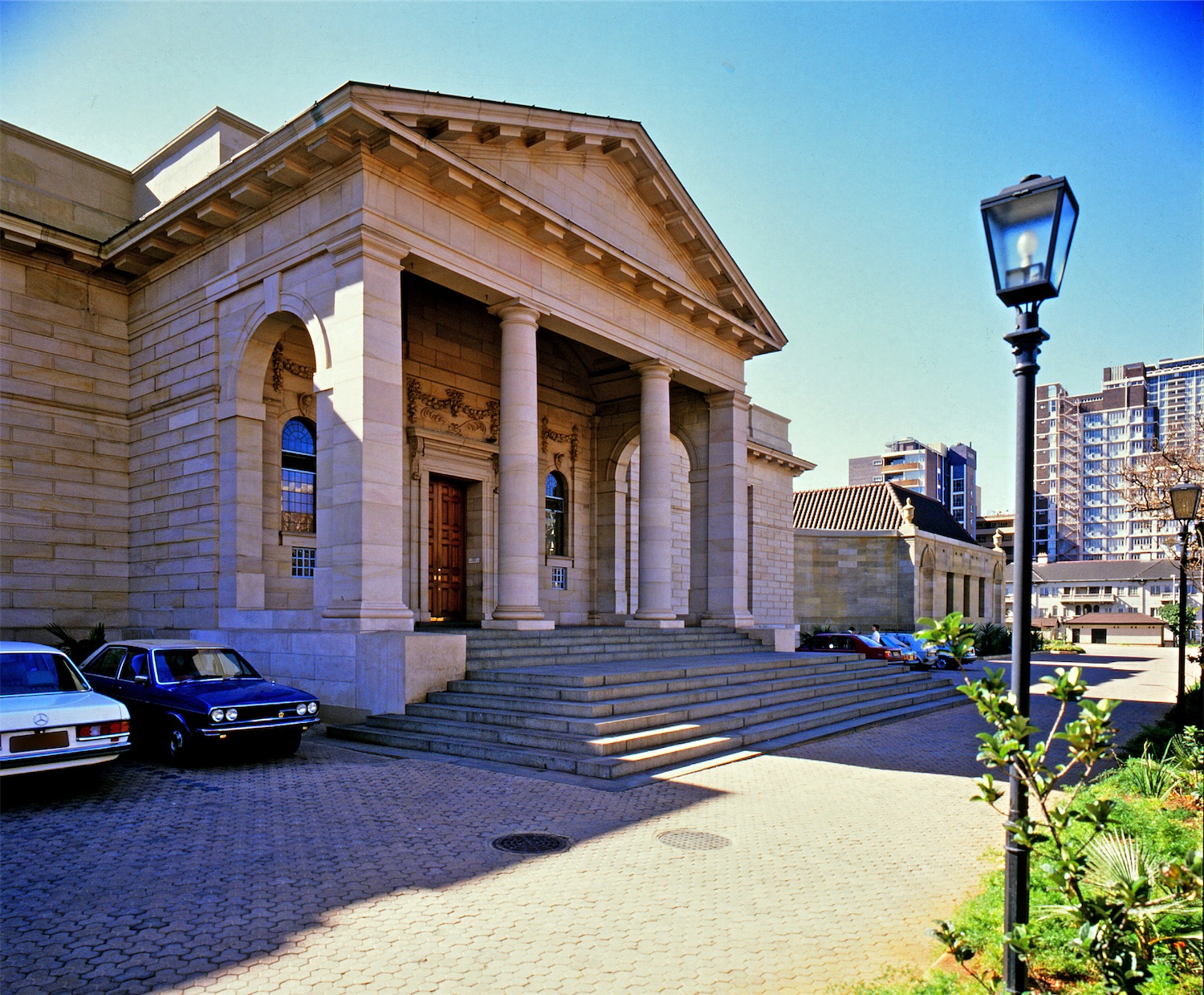
Johannesburg Art Gallery, photographed in 1988. Historical venue context, not a view of the 2007 Africa Remix exhibition. Photo: Janek Szymanowski / Wikimedia Commons, CC BY-SA 3.0.Janek Szymanowski · CC BY-SA 3.0
Africa Remix arrived at Johannesburg Art Gallery in 2007 with work by eighty-five artists from twenty-five countries, according to ArtThrob's contemporary review. Landi Raubenheimer examined how photography, video and installation unsettled familiar views of Africa and raised questions about belonging. Her discussion included Samuel Fosso, Zineb Sedira, Joël Andrianomearisoa and Moataz Nasr. The review records the exhibition's South African presentation, listed for 24 June to 30 September, rather than its earlier overseas tour.
ArtThrob·
Johannesburg Art Gallery, photographed in 1988. Historical venue context, not a view of the 2005 Dumile Feni retrospective. Photo: Janek Szymanowski / Wikimedia Commons, CC BY-SA 3.0.Janek Szymanowski · CC BY-SA 3.0
A 2005 Johannesburg Art Gallery retrospective brought together Dumile Feni's work from South Africa, London and the United States. Curated by Prince Dube, it combined drawings and other artworks with films, interviews and photographs. Reviewing the exhibition, Jacqui Brener welcomed the renewed attention to Feni's career and exile, while arguing that a more selective presentation could have made the extensive display easier to follow. The exhibition was scheduled to close on 10 April.
Illuminando Vidas brought photographs of Mozambique made between 1950 and 2001 to Johannesburg's Bensusan Museum of Photography. The presentation included thirty-six images by sixteen photographers, among them Ricardo Rangel and Kok Nam. Robyn Sassen's review recognised its range, from war and racism to everyday pleasure, but criticised the limited contextual material available to visitors. Published in April 2005, the review records an exhibition that had already closed on 20 February.
ArtThrob·
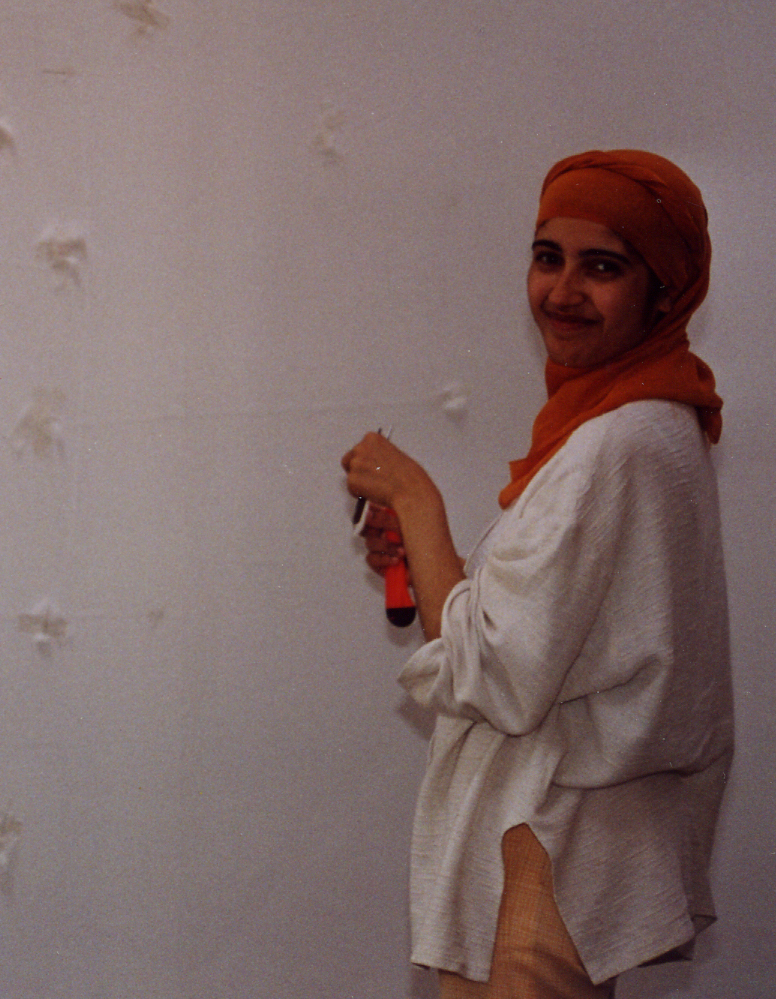
Safaa Erruas at Dak’Art 2002, as documented by photographer Iolanda Pensa.Iolanda Pensa · CC BY-SA 3.0
Maureen Murphy examines the debates over identity and artistic freedom at Dak’Art 2002. Her account follows curatorial arguments and works by artists including Moataz Nasr, Ndary Lo and Safaa Erruas, while considering the biennial’s exchanges across Dakar and the continuing need for cultural infrastructure beyond the festival.
Johannesburg's proposed JHB ARTCITY project would enlarge selected artworks onto inner-city buildings around the 2002 World Summit for Sustainable Development. Kathryn Smith reported plans for an open submission process, thirty selected works and displays of the originals. Her contemporary account also questioned the clarity of the initial publicity and explained organisers' clarifications about reproduction permissions and artists' royalties. The report documents the proposal, not confirmation that every planned element occurred.
Virginia MacKenny reported a cluster of new art-space initiatives in Durban in 2002. Junubi Afriqui Gallery had opened with a focus on contemporary Islamic art and skills development, while Joe Butler's planned Skati Urban Gallery combined exhibition space with other cultural facilities. A proposed Museum of Contemporary African Art remained at an early stage. The article captures local ambitions to widen opportunities for artists, while distinguishing established activity from projects still being planned.
Sabine Cessou profiles South African photographer Peter McKenzie, tracing the collective commitments of his Afrapix years into the post-apartheid period. He discusses teaching, the reassessment of photographers’ roles after 1994 and a twelve-photographer project documenting children across South Africa at the turn of the millennium.
Alexandre Mensah reports on the Musée Dapper’s reopening in Paris after a two-year closure. He describes Alain Moatti’s redesign, developed with director Christiane Falgayrettes-Leveau, and the enlarged museum’s combination of collection galleries, a performance hall and space for contemporary photography and painting.
Africultures·
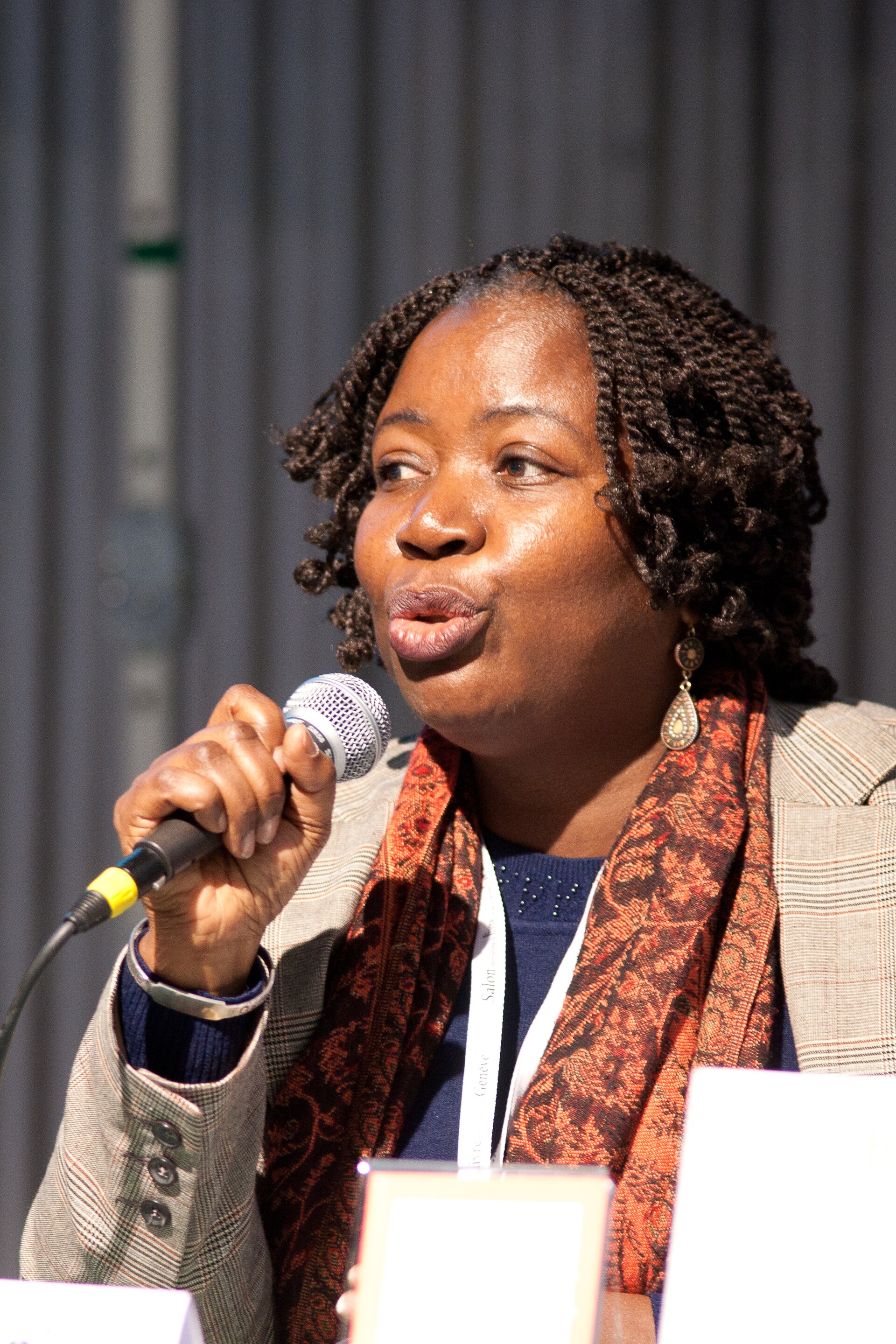
Tanella Boni at the Geneva Book Fair in 2012. Contextual portrait of the critic; not a photograph of Dak’Art 2000.Ludovic Péron · CC BY-SA 3.0
Two Africultures critics offer different readings of Dak’Art 2000. Tanella Boni emphasizes encounters, women artists and the biennial’s international dialogue, while acknowledging disputes over painting and installation. Iba Ndiaye Diadji challenges the curatorial direction and argues that Dakar’s biennial deserves better. Together, the reports document a contested moment rather than a single consensus.
Africultures·
Edouard Duval-Carrié in 2014. Contextual portrait; not a photograph of the 2000 exhibition.Kenneth C. Zirkel · CC BY-SA 3.0
Alexandre Mensah and Jacques Binet review Haiti, anges et démons at the Halle Saint Pierre in Paris. Their account highlights the variety of Haitian painting, including work by Edouard Duval-Carrié, Frantz Lamothe, Mario Benjamin and Elodie Barthélémy, and considers how the exhibition challenges narrow categories applied to these artists.
Jacques Binet profiles Rajae Faddi Salam, Martine Nze and Mam Këk, considering their different routes into painting and approaches to colour, form and personal experience. The original Africultures article offers a period account of three individual practices connected to Morocco and Gabon, rather than a single school or shared style.
Daniel Kondor reports on the third Bamako photography encounters, where Ghana received special attention and North African participants joined for the first time. Studio portraiture, initiation rituals and images of postwar Mozambique offered competing accounts of contemporary African life, while discussions exposed photographers’ uneven access to digital technology.
Erika Nimis looks beyond Bamako’s international photography showcase to the working lives of local image-makers. Her report examines scarce materials, commercial portraiture and the ambitions of Alioune Bâ, the Djaw collective and street photographer Arouna Diarra, revealing how artistic experimentation and everyday livelihoods intersect in the city.