ART AFRICA reports on Fighting for Freedom: Black Craftspeople and the Pursuit of Independence at Charleston’s Gibbes Museum of Art. Bringing together more than 30 objects, the exhibition examines how free and enslaved Black makers used their skills to negotiate identity and agency. Organised with the Black Craftspeople Digital Archive, the presentation spans furniture, ceramics, textiles and other material traditions, with announced dates of 16 October 2026 to 9 May 2027.
Folasade Ologundudu discusses how Nigerian modernist publications and contemporary art can reshape the histories we inherit. Her 1-54 London project combined an exhibition with critical writing labs, inviting participants to contribute to a living archive. The interview makes a case for sustained support for African criticism, publishing and research, rather than visibility alone.
Africans Column’s guide to 1-54 London selected 20 women artists across generations, including Bertina Lopes, Baya, Esther Mahlangu, Thandiwe Muriu and Theresah Ankomah. Its account connected painting, photography, ceramics and textiles with questions of cultural memory and representation, while discussing the fair’s African Modernism spotlight. Published ahead of the 15–18 October fair at Somerset House, the selection reflected the announced programme rather than a definitive ranking or a post-event assessment.
Writing in ArtReview, Alexander Harding examines Lyndon Barrois Jr.’s Desert of Promise at Alma Pearl in London. Paintings, collages and sculptural arrangements draw on National Geographic and film references to question the authority of images and systems of classification. Harding finds the work most effective when its material juxtapositions communicate directly, rather than depend on extensive explanation. The exhibition runs through 24 October.
ArtReview·
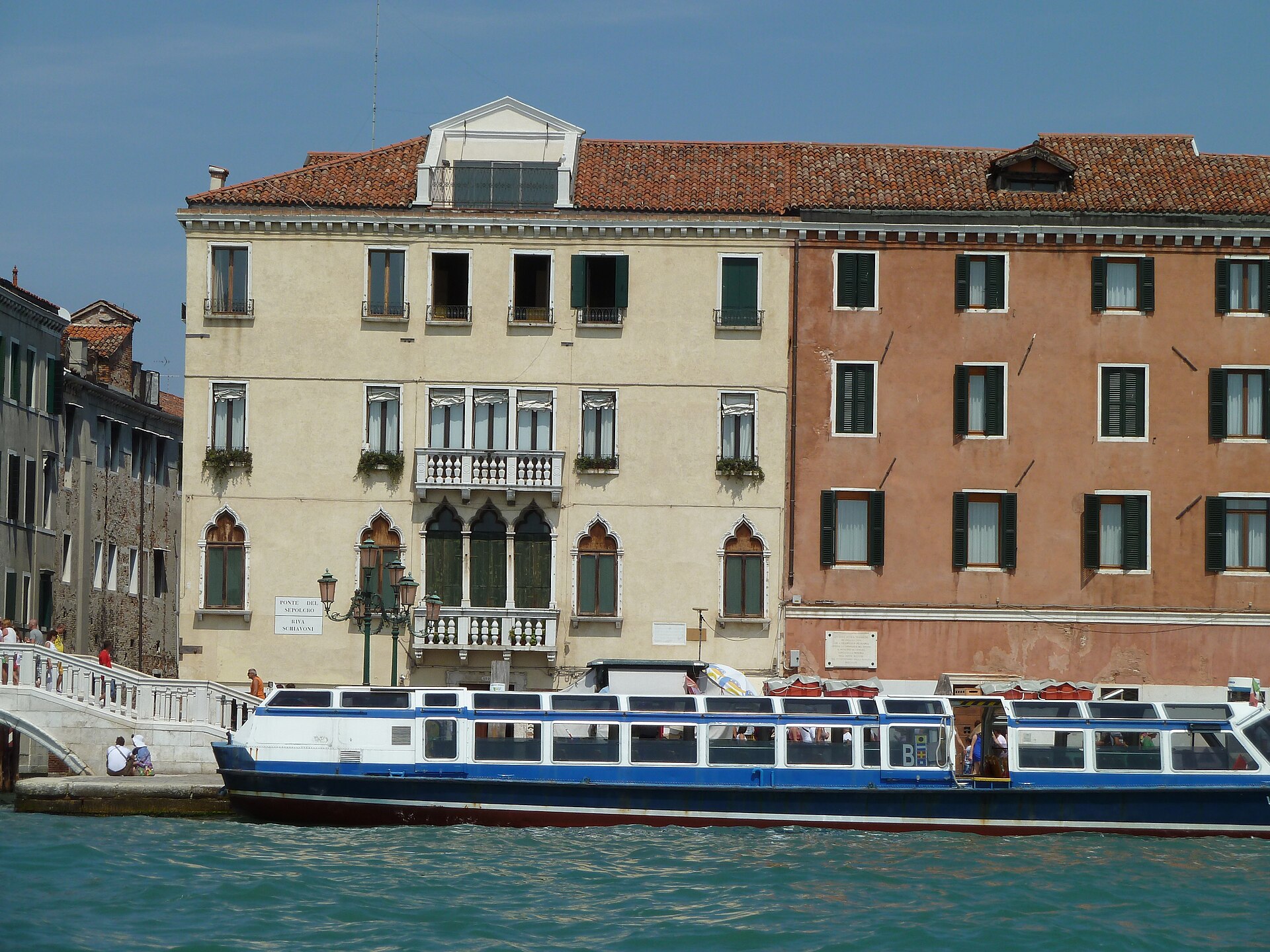
Palazzo Navagero on the Riva degli Schiavoni, photographed in 2012. Caroline Gueye’s WURUS installation is not pictured.Abxbay · CC BY-SA 3.0 · Cropped
In an ART AFRICA interview, Senegalese artist Caroline Gueye discusses WURUS, her Venice Biennale pavilion curated by Massamba Mbaye. The installation transforms Palazzo Navagero through architecture, sculpture and changing viewpoints, using the idea of gold to examine how perception shapes the value people assign to things.
ACP reported that Congolese painter Samuel Mbombo Ilunga presented Art Brings People Together at an autumn festival in Fort Worth, Texas. Cultural organiser Rosalie Ilunga described how participants’ signatures around the composition made the painting a collective undertaking. Its central rooted cross connects themes of faith, cultural inheritance and belonging. The report situated Mbombo’s work within efforts to use art as a meeting place across cultures and generations.
Agence Congolaise de Presse·
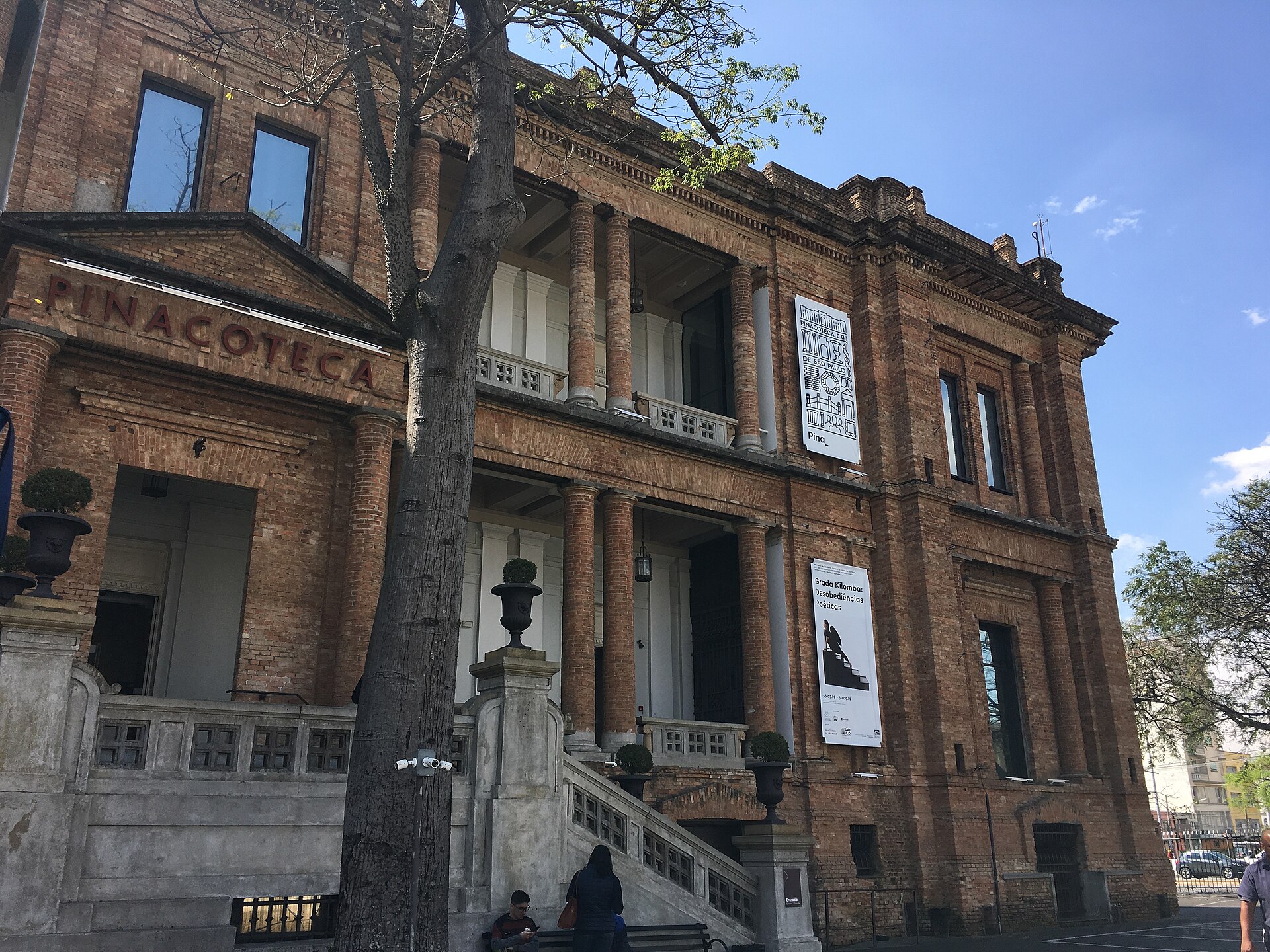
Pinacoteca de São Paulo, photographed in 2019. Paulo Pedro Leal’s 2026 exhibition is not pictured.Leiteligia · CC BY-SA 4.0 · Cropped
Reviewing Paulo Pedro Leal’s exhibition at the Pinacoteca de São Paulo, Mateus Nunes argues for the painter’s place in Brazilian art history. His ArtReview essay examines scenes of violence, religious gathering and everyday life, connecting their formal construction to race, displacement and the neglect of Black painters.
Speaking with Sabo Kpade for Art Report Africa, Luke Agada discussed the paintings and charcoal works in When the Center Holds at Sean Kelly, New York. The Nigerian artist described colour, unstable figures and remembered spaces as ways to explore belonging and change. He also explained why drawings often follow paintings in his practice, allowing him to reconsider gestures and relationships already formed on canvas.
In C& América Latina, Thaís Regina explored how Brazilian artist Dalton Paula developed Sertão Negro from a studio into a community for artistic learning and exchange in Goiás. Her feature connects his painting practice with a wider commitment to Black communal life, including residencies, a library and teaching. The interview considers how sharing resources and nurturing other artists can become part of an artist’s legacy, rather than an activity separate from making work.
Safia Siad’s October C& feature traces how Mallory Lowe Mpoka works with inherited photographs, reused textiles, soil and plants to explore belonging. The Montréal-raised artist’s projects connect family histories in Cameroon with experiences across borders. Siad revisits The Matriarch and Deborah’s Garden, shown in Montréal in 2025, while discussing Mpoka’s evolving practice.
Nigerian artist Jacqueline Suowari’s Art Report Africa account of the 2026 Armory Show centred on works that changed through close observation. Her selections included Dominique Zinkpè’s clustered figures, Desmond Beach’s textile portraits and Austin Uzor’s constructed, weathered materials. The essay connected artistic technique with inherited knowledge, Black representation and memories of Nigeria, showing how material choices carry stories across different practices.
Art Report Africa·
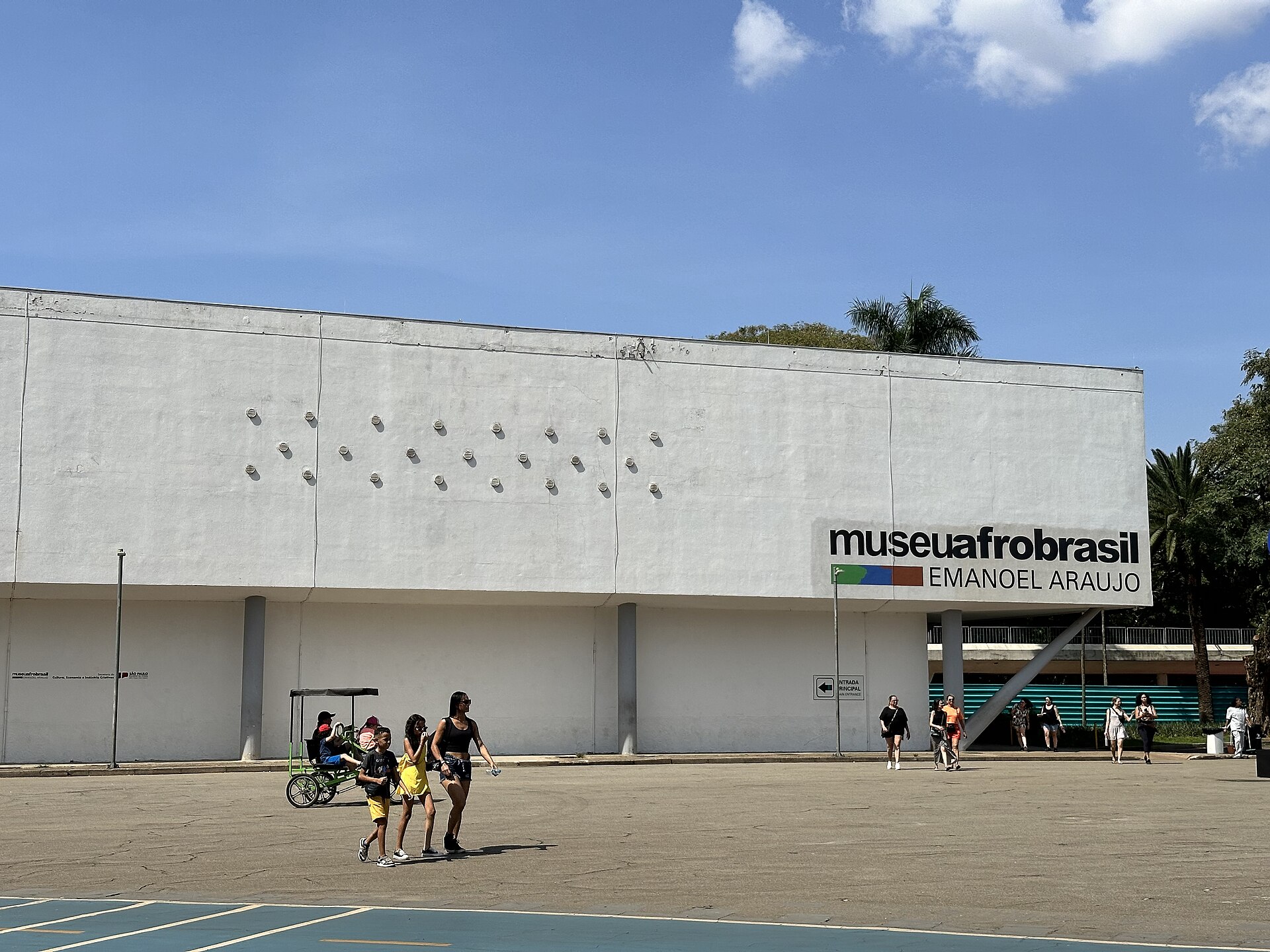
Museu Afro Brasil Emanoel Araujo in São Paulo, photographed on 16 March 2024. Venue context, not an installation view of NZO.Slyronit · CC BY-SA 4.0
São Paulo’s Museu Afro Brasil Emanoel Araujo is hosting NZO – Memórias Afro-brasileiras through February 28, 2027. The exhibition brings together the Rede de Acervos Afro-brasileiros, linking community museums, photographic collections, religious spaces and personal archives across Brazil. Shared curation highlights how Black communities preserve their histories, with material connected to figures including Lélia Gonzalez and Abdias Nascimento. The exhibition opened on September 26.
By AFROSCOPE Daily·Source: Museu Afro Brasil Emanoel Araujo·
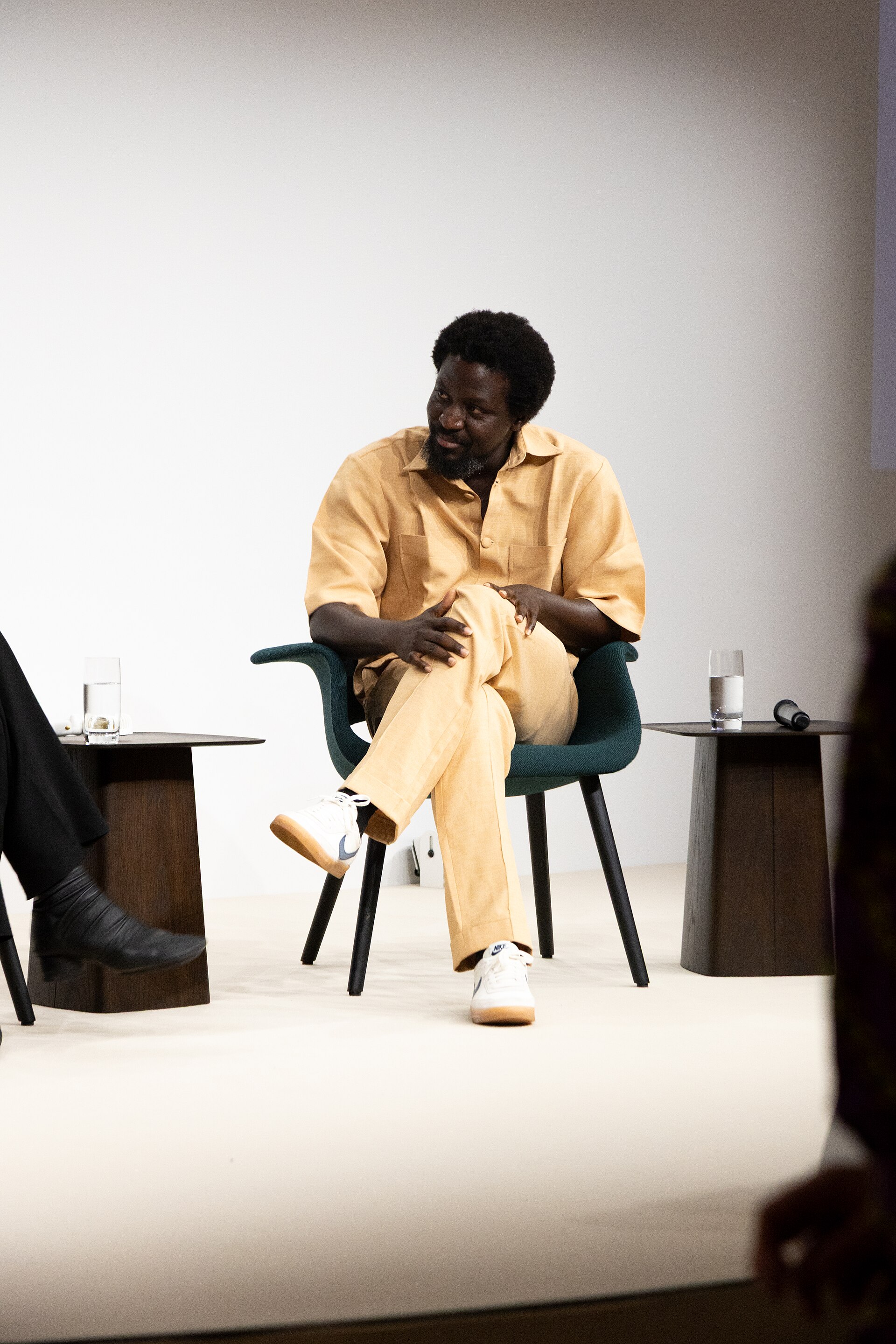
Ibrahim Mahama at Art Basel in 2025. A contextual portrait of the artist, not a photograph of Voyageur in Naples.Bea Phi · CC BY-SA 4.0
Ibrahim Mahama’s Voyageur places three wooden boats upright in Naples’s Piazza Municipio, connecting Ghanaian craftsmanship with the Mediterranean port’s histories of movement. Curated by Vincenzo Trione for Napoli Contemporanea, the public installation considers labour, trade and migration through vessels whose arrested journeys turn familiar objects into carriers of memory and exchange.
In Nana Poulot’s Art Report Africa interview, Emma Prempeh discussed paintings developed between a residency at dot.ateliers in Accra and her London studio. The British artist of Ghanaian and Vincentian heritage described contrasting palettes, combined landscapes and reading as foundations for The Domain of the Stranger at Perrotin Paris. Her account explored how painting can connect places, family histories and experiences of belonging without resolving their differences.
Africultures considers Samuel Suffren’s three short films, released together in France as Les Vagues dans les yeux. Across Agwe, Des rêves en bateaux papiers and Cœur bleu, the Haitian filmmaker turns attention from migration’s journeys to the families who remain. The review traces how sound, domestic spaces and ordinary objects carry absence and memory.
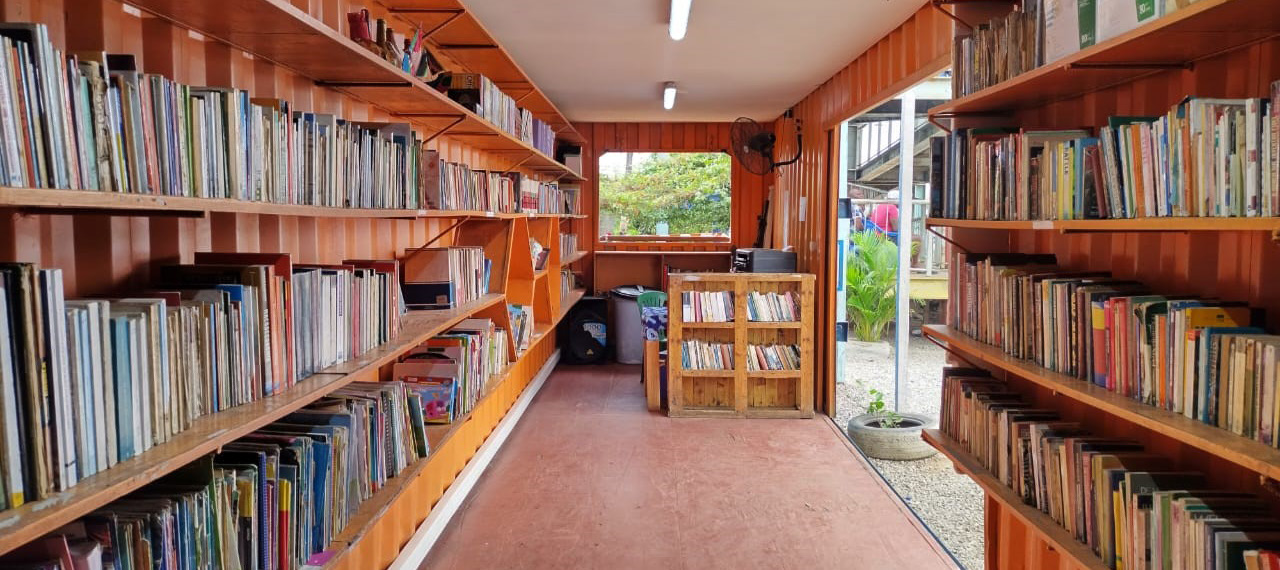
Angolan community library 10Padronizada grew from 14 shared books at a pedestrian crossing into a space for reading, education, art workshops and free children’s activities. Co-founder Dago Nível Intelecto travelled to Essen through Goethe-Institut Angola to participate in Manifesta 16 Ruhr alongside cultural practitioners from across Africa. The European nomadic biennial ran from 21 June to 4 October 2026 across former church buildings and several Ruhr cities.
A Museum of Black Futures conversation with architect and researcher Patti Anahory asks how African cosmologies might change the way museums understand time and space. Richard Kofi’s introduction frames a debate over whether the project should work within established museum definitions or build its future outside them, linking institutional form with decolonial practice.
ACP reports that Africa Legacy will run in Belgium from September 4 to November 1, bringing historic African art into dialogue with contemporary expression. Panellist Ytal Mwena Lumpungu argues that young Africans should actively reinterpret and preserve their heritage, rather than regard it as a distant or static inheritance.
Africultures previews the 2026 Festival International du Film de la Diaspora Africaine through a programme concerned with memory, resistance and repair. Olivier Barlet considers films spanning political histories and intimate lives, including Karen Hayes’s documentary with Desmond Tutu and Vincho Nchogu’s One Woman One Bra. The Paris festival was scheduled for September 4–6.
Amira Bongho Nouarra examines Carrie Mae Weems’s FOMU retrospective through a conversation with the artist and close readings of photographs, video and installation. Moving between family intimacy, cultural institutions and spiritual expression, the review asks how a museum shapes visibility while Weems continually reworks the relationships between images, viewers and power.