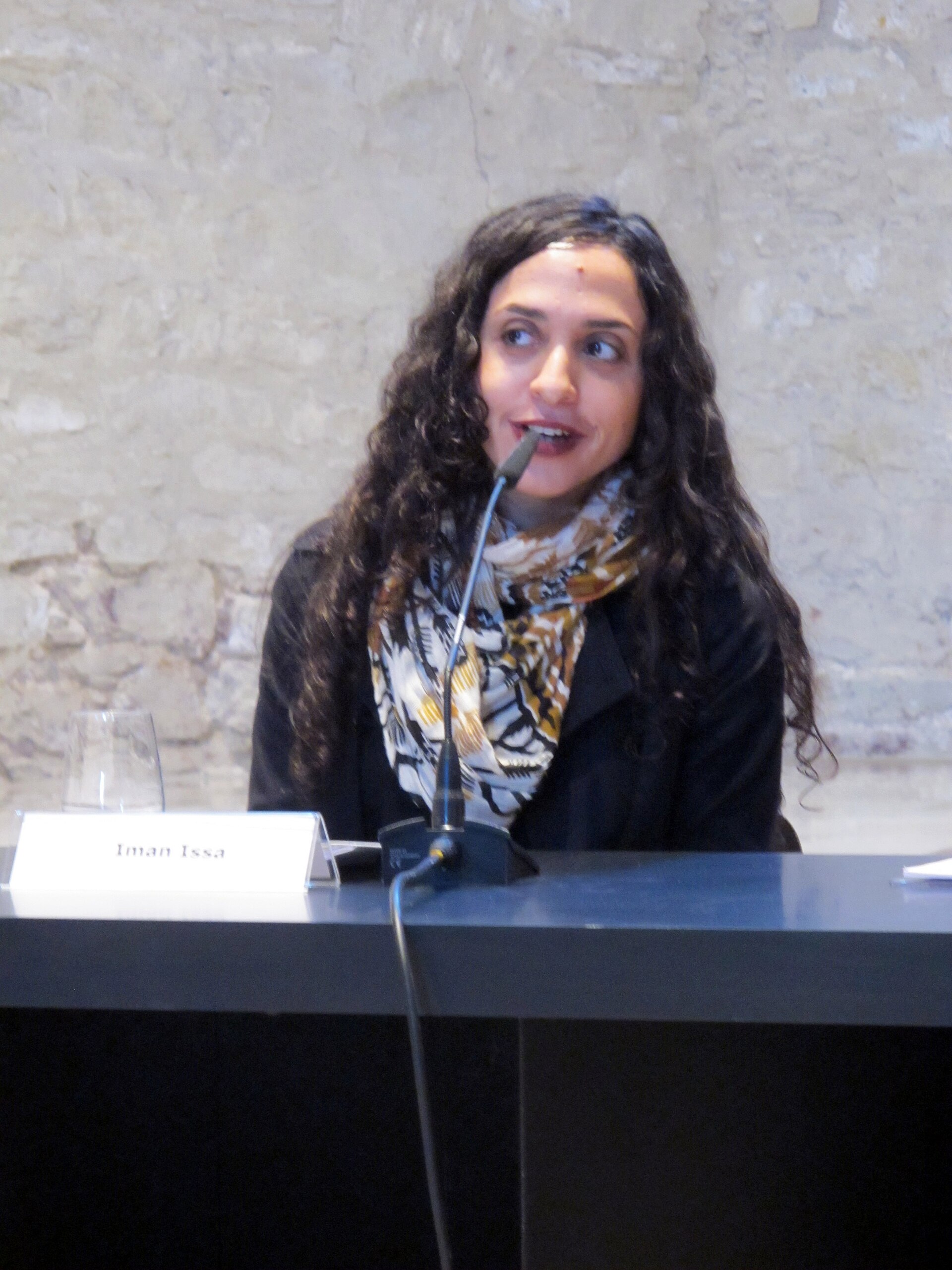
Iman Issa at MACBA, Barcelona, 2012. Photo: Kippelboy / Wikimedia Commons, CC BY-SA 3.0. Archival portrait, not the 2027 project.Kippelboy · CC BY-SA 3.0
Nolan Oswald Dennis, Kapwani Kiwanga and Iman Issa are among 13 newly announced artists and collectives developing site-specific commissions for Skulptur Projekte Münster 2027, ArtReview reports. Led by the curatorial collective What, How & for Whom, the sixth edition runs from 13 June to 3 October 2027. The announcement expands an international programme focused on encounters with art in public space, following an initial group of participating artists named in June.
ArtReview·
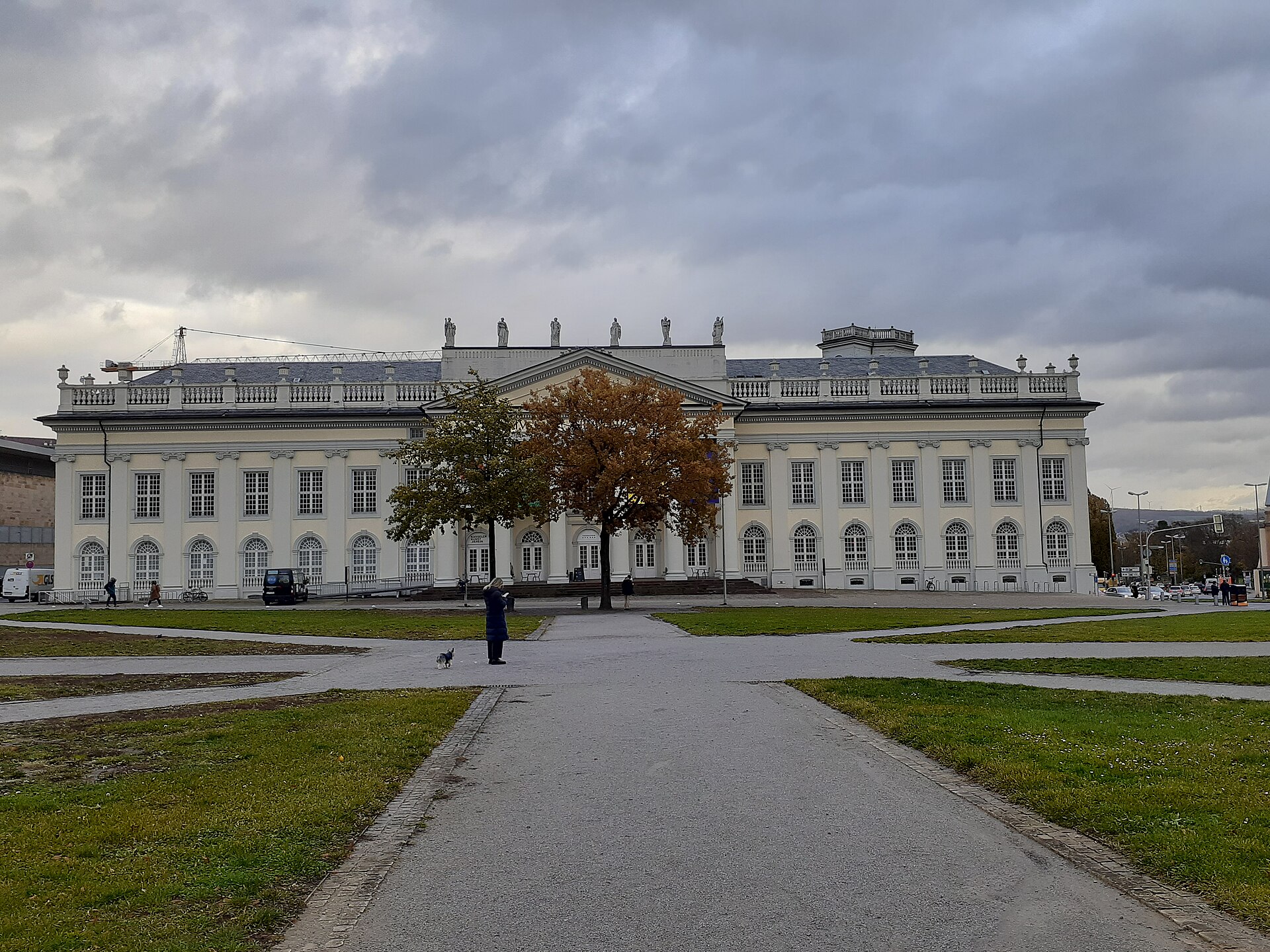
Fridericianum, Kassel, 14 November 2023. Contextual venue photograph, not a Documenta 16 exhibition view. Photo: ГП / Wikimedia Commons (CC BY-SA 4.0).ГП · CC BY-SA 4.0
British-Ghanaian curator Osei Bonsu has been named a curatorial advisor to Documenta 16, ArtReview reports. He joins Timea Junghaus and Noam Segal in advisory roles, while artist and composer Raven Chacon becomes curator-at-large. The appointments expand the team led by artistic director Naomi Beckwith, alongside the core curators announced previously. The exhibition is scheduled for 12 June to 19 September 2027 in Kassel, Germany.
Writing in ArtReview, Mark Rappolt assesses the sound-led Busan Biennale, Dissident Chorus. His review gives sustained attention to Drexciya and Abu Qadim Haqq’s visual universe and Julien Creuzet’s Caribbean-inflected installation, connecting them through water, memory and Black Atlantic histories. Rappolt questions whether curated rebellion can escape didactic display, while identifying moments of play and sensory intensity. The exhibition spans three Busan venues and closes on 1 November 2026.
Museu Afro Brasil Emanoel Araujo brings childhood and intergenerational memory into focus in Encantário Ibeji — Salve às crianças!, which opened in São Paulo on 31 October. The museum says works from Emanoel Araujo’s collection meet contemporary invited artists, drawing on Ibejis, Erês and other enchanted figures. Curated by Vera Nunes with Camila Tuon and Gabriela de Paula, the exhibition continues into March 2027.
Writing for African Arts with Taj, Tajudeen Sowole examined the tension between environmental themes and visual abundance in Godspower Okoro’s Echoes of Extinction. The critic discussed the work’s Ankara-inspired patterns, seated figure and use of light as expressions of identity and memory. While recognising its visual richness, he questioned whether that density weakened its ecological message.
Matt Stromberg’s Hyperallergic guide highlights Black artistic histories and contemporary practice across Los Angeles exhibitions. Its selections include April Bey’s textiles, a survey of the pioneering Brockman Gallery, Todd Gray’s photographic work and Reggie Burrows Hodges’s paintings across three venues. Published on 27 October, the roundup connects archival research with new interpretations of personal and collective histories. Bey’s exhibition opens on 31 October; the other featured presentations are already underway.
Hyperallergic·
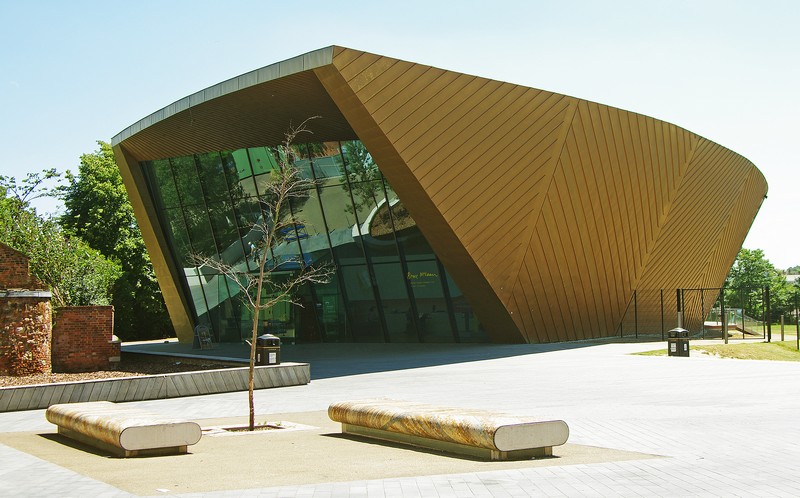
Firstsite, Colchester, photographed on 3 July 2014—not a view of Nalini. Photograph: Jim Osley / Firstsite, Colchester / CC BY-SA 2.0, via Geograph and Wikimedia Commons.Jim Osley · CC BY-SA 2.0
Writing in ArtReview, Mark Rappolt examines how Arpita Shah’s Nalini connects photographs and family keepsakes to histories spanning India, Kenya and Britain. Works drawing on Nairobi and Mombasa explore migration and maternal relationships, while obscured faces complicate the promise of recovering the past. His review appeared on 27 October, after the Firstsite exhibition in Colchester had closed on 4 October 2026.
Writing for Art Report Africa, Nana Poulot examines how Mémoire Matérielle at 193 Gallery in Paris connects artistic materials with memory. Works by Gaëlle Choisne, Joana Choumali, Andile Dyalvane and Carla Gueye use embroidered photographs, ceramics and mixed-media sculpture to explore inheritance, repair and bodily experience. Curated by Azu Nwagbogu and Nkhensani Mkhari, the exhibition runs until 31 October 2026.
Nana Poulot’s Art Report Africa review highlighted four presentations at AKAA 2026 in Paris. Ernest Breleur’s radiographic collages, Aliou Diack’s plant-based materials, Souleimane Barry’s dense painted vegetation and Maya Inès Touam’s staged photographs offered distinct approaches to bodies, memory and place. The account connected Caribbean, Senegalese, Burkinabè and Algerian-diaspora practices through close readings of individual works.
In an Art Report Africa interview with Nana Poulot, AKAA artistic director Sitor Senghor explained the 2026 fair’s pairing of photography and works on paper. He discussed visibility for African photographers, drawing’s expressive independence and differences between the Paris and London markets. Senghor used Ouattara Watts’s drawings to argue that an artist’s ideas need not become large paintings to acquire significance.
In Hyperallergic, Neil Price examines how the Toronto Biennial’s Things Fall Apart connects memory, movement and historical rupture. He highlights Dawoud Bey’s landscapes, Antonio Obá’s participatory installation and Raphaël Barontini’s tribute to Harriet Tubman. While finding individual works compelling, Price questions the exhibition’s cohesion and its assumption of a previously unified world. Allison Glenn curated the biennial, which continues through 20 December 2026.
Writing in ArtReview, Gee Wesley examines Pap Souleye Fall’s exhibition at MIT’s List Visual Arts Center. The Senegalese-American artist combines discarded screens, sculptural scaffolding and illustrated wooden books with the fictional struggle between DEAD PIXEL and THE DATA COLLECTOR. Wesley connects the installation’s recurring peanuts and cowrie shells to West African histories, reading its playful construction as a challenge to digital consumption. The exhibition runs through 29 November 2026.
In ArtReview, Mark Rappolt assesses Ekow Eshun’s British Art Show 10 across Coventry’s galleries. His review discusses how Liz Johnson Artur’s photographs of African-diaspora communities and Ufuoma Essi’s archival video approach collective life through movement, alongside Nnena Kalu’s drawings. Rappolt finds the exhibition’s experiments with identity more compelling when art engages lived experience rather than remaining contained by gallery conventions. The Coventry presentation continues until 10 January 2027.
Turiya Adkins, Timothy Yanick Hunter and Clifford Prince King have been selected for the Studio Museum in Harlem’s 2026–27 residency, Hyperallergic reports. From November 2026 through October 2027, the artists will receive individual studios, material support and professional-development guidance in the museum’s new building. The programme concludes with a group exhibition, continuing the institution’s support for artists of African descent.
In an ART AFRICA interview with Suzette Bell-Roberts, Ranti Bam discusses the five Ifa Ile Oja – Black Ifa sculptures presented at the Arsenale in the 2026 Venice Biennale. She describes a physical, intuitive approach to clay, considering memory, vulnerability and spiritual connection. Rather than prescribing a single interpretation, Bam leaves viewers room to find their own relationships with the forms and their surroundings.
In an Africans Column interview with Sophie Campos, artist and cultural organiser John Cox discussed the institutions and relationships sustaining Bahamian art. He described FUZE as a platform for Caribbean and African artistic exchange, while reflecting on barriers such as shipping costs and limited local collecting markets. Cox also considered the tension between his own studio practice and building opportunities for others, placing community and long-term collaboration at the centre of his approach.
Three works by British-Nigerian artist Okiki Akinfe have been acquired for Abbot Hall in Kendal through the inaugural Dasha Shenkman Focus Fund. Shalom Esene’s Art Report Africa profile examines the painter’s practice following the selection at Frieze London. The acquisition comprises a painting, a lightbox work and a preparatory drawing, placing several aspects of her work in a public collection. The fund supports an acquisition, rather than an unrestricted cash award to the artist.
Hyperallergic’s October 20 newsletter highlights the launch of Mohammad Omer Khalil: Common Ground at New York’s Center for Art, Research and Alliances on October 25. The organisers describe the book, edited by Amina Ahmed and Jenna Hamed, as a collection of essays, studio material and archival records tracing the Sudanese artist’s career between Sudan, Italy and New York. The event will combine readings with conversation involving Khalil and contributors.
Olivier Barlet examines how Jacques Panijel’s Octobre à Paris and Yasmina Adi’s Ici on noie les Algériens approach the repression of Algerian demonstrators in Paris. His review considers testimony, language, reconstruction and archival images. The films feature in an Algerian cinema programme in Paris, while Panijel’s documentary returns to French cinemas on October 21.
In an ART AFRICA interview, Anina Major discusses translating Bahamian palm-plaiting traditions into ceramic sculpture for The Sacred Mangrove at Pérez Art Museum Miami. Drawing on skills inherited from her grandmother, the installation connects family memory, migration and Caribbean ecology. Major describes bottle trees as references to African-diaspora spiritual practices and questions the separation of craft from fine art. The interview considers how inherited techniques change across generations and places.