In a June 2020 statement, Zeitz MOCAA expressed solidarity with Black people confronting racism and police brutality, connecting events in the United States with enduring inequalities in South Africa and Cape Town. The museum said it would continue discussions of solidarity through its exhibitions and public programme, and reaffirmed a commitment to addressing racism and sexism within its work on African and diaspora art.
In an April 2020 ArtThrob review, Dave Mann examined Pebofatso Mokoena’s Internal Probes at David Krut Gallery in Johannesburg. Paintings, prints and collaged drawings combined crowded marks, text and recurring vessels with quieter passages. Mann interpreted these contrasts as an inquiry into information systems and the reduction of human lives to data, connecting the artist’s dense compositions with remembrance, movement and historical catastrophe.
Megan Vermaak’s March 2020 ArtThrob student review considered Helen Nabukenya’s textile installation Abalamu Baseesa Gwaka at the Stellenbosch Triennale. She described fabric offcuts gathered in Kampala and stitched with women from the artist’s community, who could make their own compositional choices. Vermaak interpreted the collaborative process as a source of agency and belonging, connecting the prominent red fabric with energy and the exhibition’s collective theme.
In a March 2020 ArtThrob student review, Nadine Wiese discussed Ghanaian artist Kelvin Haizel’s BirdCall961: Appendix C at the Stellenbosch Triennale. The installation combined charcoal drawings on concrete with lights, text, Braille and video. Wiese connected its aviation references with migration and access, presenting the meanings of particular materials and forms as interpretations rather than confirmed statements of artistic intent.
Tammy Manson’s March 2020 ArtThrob student review examined Patrick Bongoy’s Across the Currents at the Stellenbosch Triennale. The installation combined rubber and hessian strips, an enclosing structure, woven flooring and repeated music. Manson interpreted its barriers and materials through Congolese histories of extraction and displacement, reading the work as an exploration of migration and disrupted connections to home.
In a March 2020 ArtThrob review, Vusumzi Nkomo considered Mawande Ka Zenzile’s Udludlilali at Stevenson in Cape Town through Xhosa cosmology and its dialogue with Sisonkepapu’s poetry. Nkomo described paintings, sculpture and disruptive sound as challenges to dominant ideas of artistic knowledge, while questioning the exhibition’s reliance on English text. The review documents a critical encounter with Black spiritual and aesthetic traditions.
Anke Geldenhuys’s March 2020 ArtThrob student review considered Igshaan Adams’s I Am You at the Stellenbosch Triennale. Describing a maze of translucent fabrics, she connected the installation to the artist’s account of a dream and to Sufi ideas of spiritual unveiling. Her encounter with its layered structure became a reflection on memory and the overlapping personal, social and religious narratives through which identity takes shape.
Writing for ArtThrob in March 2020, Candice Williams examined Kaloki Nyamai’s installation Mwambelelio Mweo at the Stellenbosch Triennale. Her student review connected its dung-lined enclosure, sisal ropes and suspended money boxes to competing experiences of comfort, power and identity. Williams placed her own response within the exhibition’s pan-African ambitions and Stellenbosch’s history, treating discomfort as an invitation to reconsider belonging rather than a universal response.
In her March 2020 ArtThrob student review, Brittney Moolman explored Hellen Nabukenya’s large textile installation at the Stellenbosch Triennale. She considered how collaborative sewing, contrasting fabrics and the work’s placement shaped its social meanings. Reading it beside a neighbouring installation of workers’ overalls, Moolman reflected on textile labour and discarded materials, offering a situated interpretation rather than a verified account of every fabric’s origin.
In a conversation published by ART AFRICA in March 2020, artist Francois Knoetze and curator Oulimata Gueye discussed Core Dump, a four-part sculpture and video project made across Dakar, Kinshasa, Shenzhen and New York. They linked digital technologies to mineral extraction, electronic waste and colonial power, while exploring how African cinema, mythology and speculative storytelling might challenge assumptions about progress and imagine different social relationships.
ART AFRICA’s March 2020 interview by Sean O’Toole revisited Carsten Höller’s Fara Fara and its December 2019 screening in Kinshasa. Höller discussed working with Congolese rumba performers and using deliberately altered subtitles to construct an artwork rather than a straightforward documentary. The exchange records tensions between musical context, artistic invention and the reception of a film before an audience familiar with its language and protagonists.
In a statement published in March 2020, Zeitz MOCAA announced a temporary closure during the COVID-19 crisis and said it was reassessing exhibitions and public programmes with artists and partners. The museum offered refunds or later admission for affected ticket holders and kept staff available online. This historical notice records the institution’s pandemic response; it does not describe the museum’s present opening arrangements.
Reviewing From the Vault for ArtThrob in March 2020, Annabelle Wienand examined how works from Stellenbosch and Fort Hare university collections were brought into dialogue at the Stellenbosch Triennale. She argued that thematic groupings complicated familiar divisions in South African art history, allowing everyday experience, oppression and different artistic languages to coexist. Her review treated this rearrangement of inherited collections as a way to imagine other futures.
In March 2020, ART AFRICA reported that Hello Wolk, Tears Become Rain and PLANTed had received the Social Impact Arts Prize. The proposed projects connected creative practice with water scarcity, communal singing and medicinal-plant knowledge. The report outlined a water-harvesting structure with digital access, a climate-focused choir and a public platform for local plant culture, documenting the programme’s ambitions rather than demonstrating its eventual outcomes.
In a March 2020 ART AFRICA interview, Suzette Bell-Roberts spoke with AKKA Project founder Lidija Kostic Khachatourian about connecting African artists with audiences abroad and across the continent. Khachatourian discussed her galleries, collaboration on Mozambique’s 2019 Venice Biennale pavilion and the Art And About Africa platform. The interview records the platform’s intended role in mapping artists, spaces and events, rather than verifying its present-day services or later expansion plans.
Writing in ART AFRICA in March 2020, Nolan Stevens considered Lumières d’Afriques at Johannesburg’s Standard Bank Gallery. The travelling exhibition brought together artists representing African countries around questions of light, energy and the continent’s representation. Discussing works by Emeka Okereke, Aïda Muluneh, Paa Joe and Athi-Patra Ruga, Stevens traced how photography and sculpture challenged stereotypes while connecting material resources, cultural identity and aspiration.
In a feature published online by ART AFRICA in March 2020, Zahra Abba Omar examined Prête-moi ton rêve, an African-led touring exhibition intended to bring celebrated artists’ work to audiences across the continent. Through the account of foundation director Fihr Kettani, the article explored collaboration, institutional networks and ambitions for a more autonomous art market. Its value lies in those stated aims, not in confirming the proposed itinerary was completed.
Nkgopoleng Moloi’s March 2020 ArtThrob review examined We’ve Come to Take You Home #1 at Michaelis Galleries, an exhibition of acquisitions intended to reshape the University of Cape Town’s art collection. Moloi welcomed greater attention to previously excluded Black artists while questioning the authority and language of institutional inclusion. The review frames collecting as an active negotiation over heritage, belonging and which artistic histories receive recognition.
In a March 2020 ART AFRICA interview with Sasha Gankin, Bonaventure Soh Bejeng Ndikung reflected on the twelfth Rencontres de Bamako. He connected photography with sound, memory and African diasporic movement, while describing efforts to print work locally and distribute exhibitions across the city. The account presented local production and broader access as practical curatorial choices, documenting the ambitions and difficulties of the biennale’s twenty-fifth-anniversary edition.
ART AFRICA·
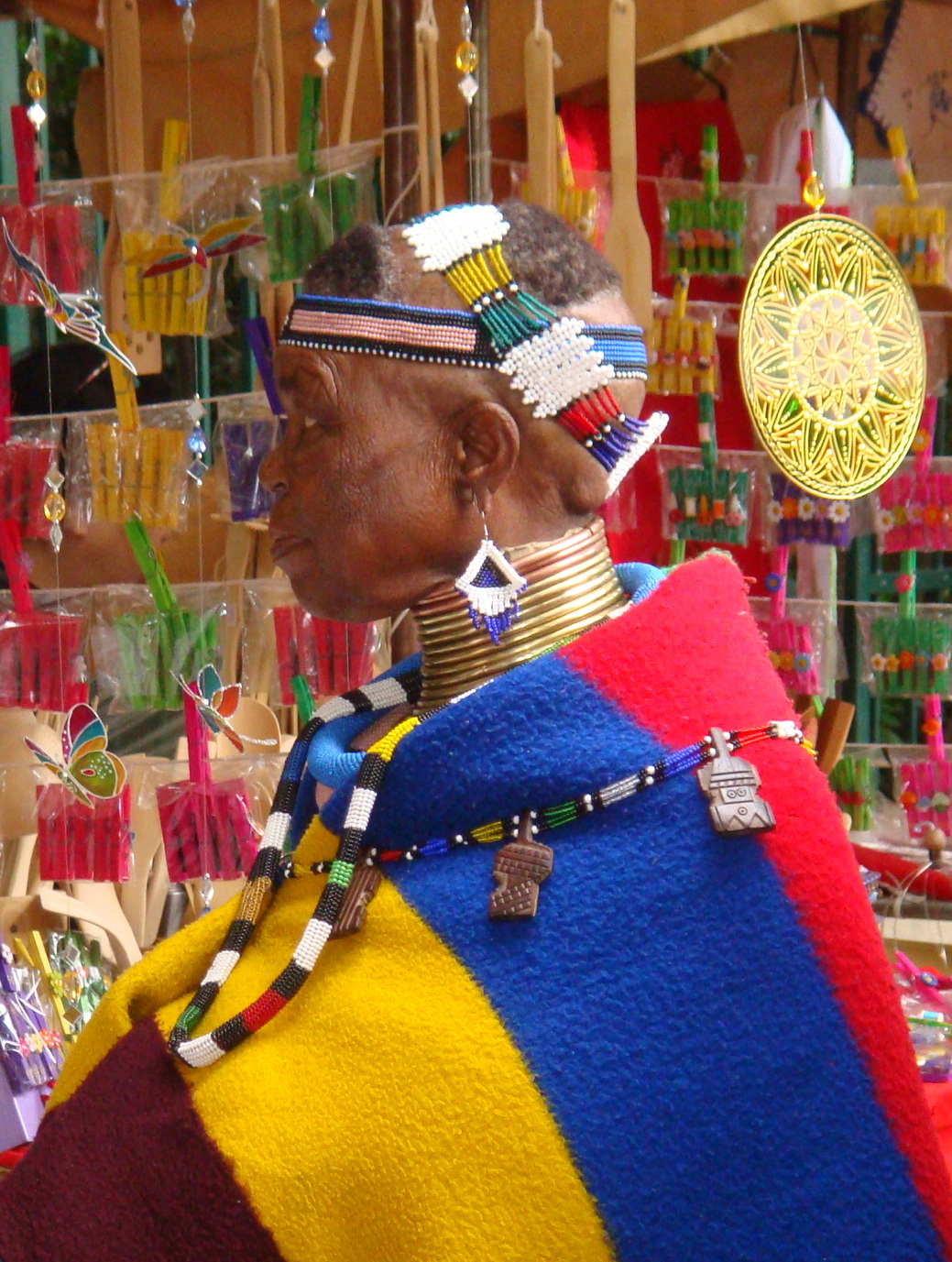
Esther Mahlangu, 2009. Photo: Claudia_midori, CC BY 2.0; cropped by HenriDavel.Claudia_midori · CC BY 2.0 · Cropped
In a March 2020 ART AFRICA essay, Percy Mabandu argued for closer attention to Esther Mahlangu’s individual achievements as a contemporary painter. He questioned interpretations that reduce her work to cultural spectacle, pointing instead to changes in line, colour and form across her practice. The essay situates exhibitions and commercial collaborations within a broader criticism of the language used to describe African artists and their creative agency.