Art Auction East Africa sold 90% of its 68 lots at Circle Art Gallery in Nairobi on 28 October, generating KES 46.3 million, according to Shalom Esene’s report for Art Report Africa. Edward Saidi Tingatinga’s 1971 painting Untitled (Landscape with Lion and Bird) led the sale at KES 7.63 million. Founder Danda Jaroljmek told the publication that more bidders competed for each lot, including collectors buying East African art for the first time.
Art Report Africa·
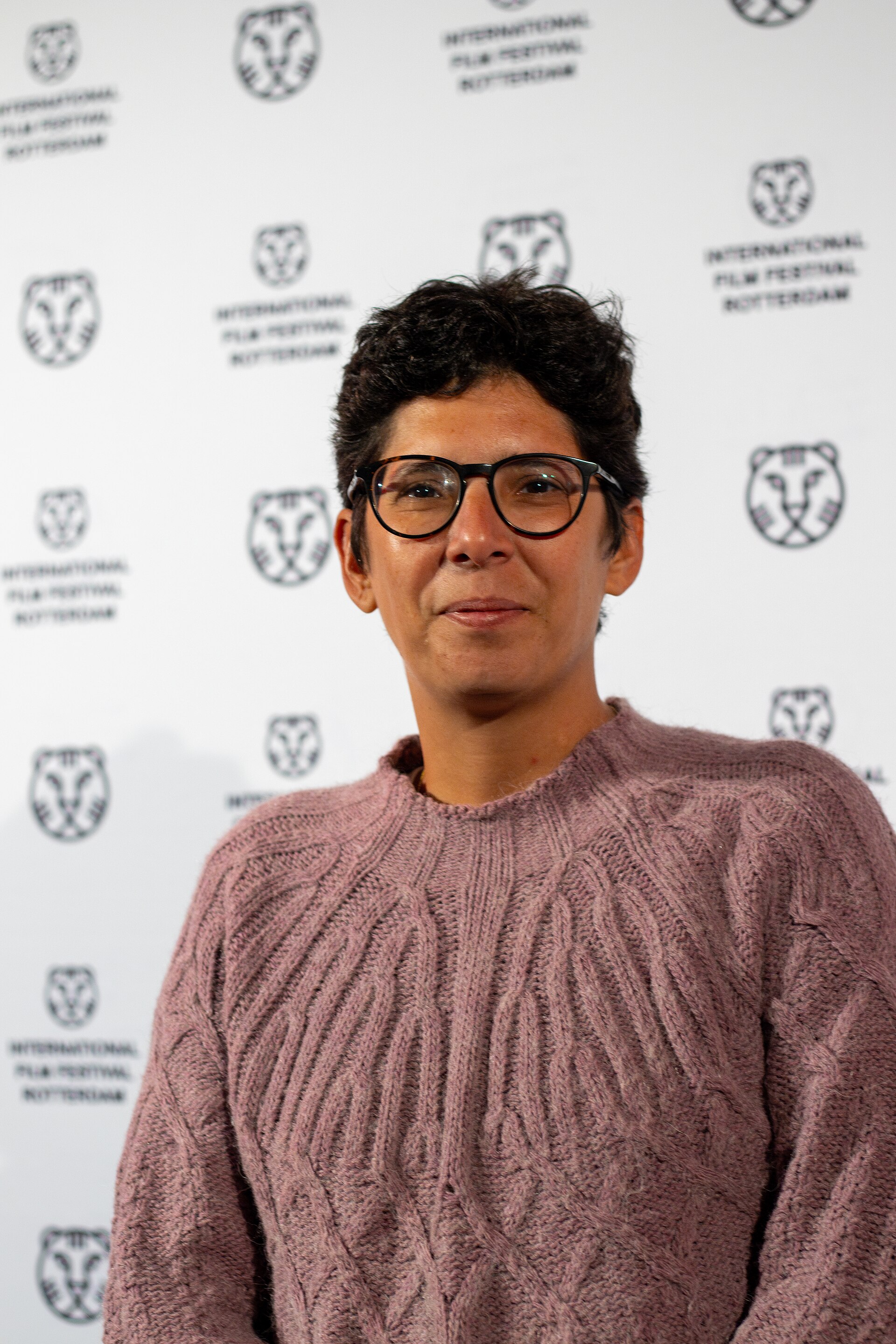
Kamy Lara at the International Film Festival Rotterdam, 3 February 2026. Photo: Vera de Kok / Wikimedia Commons (CC BY-SA 4.0). Contextual portrait, not the Luanda screening or exhibition.Vera de Kok · CC BY-SA 4.0
In an interview with Marta Lança for Buala, filmmaker Kamy Lara discusses documenting Fuckin’Globo, the artist-led exhibitions held in Luanda’s Hotel Globo from 2015. Her 2024 documentary combines interviews, archival material and footage of the event’s final edition. Lara describes artists sharing rooms, resources and ideas, and reflects on how collective working shaped the exhibitions. The conversation accompanied a 30 October screening at FIC Luanda, rather than the launch of a new film.
APS reported on Empreinte 100 ans at Dakar’s Musée des civilisations noires, bringing together fourteen Senegalese visual artists. Associated curator Kalidou Kassé and promoter Jingshi Feng situated the exhibition within a wider cultural programme linking art and sport. Feng described a presentation spanning painting, digital installations and craft, with the Dakar exhibition scheduled to continue until 15 November. The report highlights the artists’ contributions rather than treating the display solely as an Olympic commemoration.
ACP reports that La Croisade Créative, a practical graphic-design workshop, is planned in Kinshasa on 7, 14 and 21 November. Sessions will cover Photoshop, image-making and generative AI, with Congolese textiles, sculpture and Kuba motifs presented as resources for contemporary visual identities. Organisers also encourage documentation and dialogue with craftspeople and custodians of cultural knowledge. The report does not specify a venue, fees or booking arrangements.
Writing in ArtReview, Mark Rappolt assesses the sound-led Busan Biennale, Dissident Chorus. His review gives sustained attention to Drexciya and Abu Qadim Haqq’s visual universe and Julien Creuzet’s Caribbean-inflected installation, connecting them through water, memory and Black Atlantic histories. Rappolt questions whether curated rebellion can escape didactic display, while identifying moments of play and sensory intensity. The exhibition spans three Busan venues and closes on 1 November 2026.
Amina Agueznay and curator Meriem Berrada discuss Asǝṭṭa, Morocco’s Venice Biennale pavilion, in an ART AFRICA interview with Suzette Bell-Roberts. The installation brings wool, raffia and embroidered threads into an architectural environment developed with 166 craftspeople. Their conversation considers weaving as living knowledge, the visibility of collaborators and the threshold as a space of encounter. Both resist treating craft as a fixed inheritance separate from contemporary artistic thought.
Museu Afro Brasil Emanoel Araujo brings childhood and intergenerational memory into focus in Encantário Ibeji — Salve às crianças!, which opened in São Paulo on 31 October. The museum says works from Emanoel Araujo’s collection meet contemporary invited artists, drawing on Ibejis, Erês and other enchanted figures. Curated by Vera Nunes with Camila Tuon and Gabriela de Paula, the exhibition continues into March 2027.
Writing for African Arts with Taj, Tajudeen Sowole examined the tension between environmental themes and visual abundance in Godspower Okoro’s Echoes of Extinction. The critic discussed the work’s Ankara-inspired patterns, seated figure and use of light as expressions of identity and memory. While recognising its visual richness, he questioned whether that density weakened its ecological message.
Organisers of the seventh Prix Lokumu in Kinshasa plan to connect Kuba textiles and motifs with contemporary fashion, design and visual art. Coordinator Onassis Mutombo told ACP that the programme would also provide technical, entrepreneurial and digital training for 50 young Congolese women. The awards evening is planned for 5 December at CCAPAC, with further programme and access details expected from 5 November.
ACP reported that Kinshasa art student Joseph Jessy Dunga received the international Art Humanité prize for La force des fragiles. Made with coffee as a painting material, the work brings together overlapping figures to explore vulnerability, solidarity and mutual support. Dunga linked its development to personal experience and research into the Ngbaka community. The award was presented at the Académie des Beaux-Arts in Kinshasa.
Matt Stromberg’s Hyperallergic guide highlights Black artistic histories and contemporary practice across Los Angeles exhibitions. Its selections include April Bey’s textiles, a survey of the pioneering Brockman Gallery, Todd Gray’s photographic work and Reggie Burrows Hodges’s paintings across three venues. Published on 27 October, the roundup connects archival research with new interpretations of personal and collective histories. Bey’s exhibition opens on 31 October; the other featured presentations are already underway.
Hyperallergic·
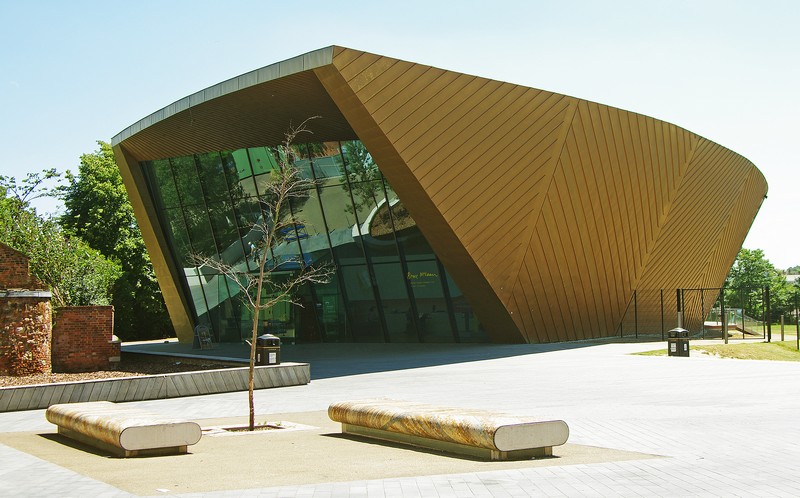
Firstsite, Colchester, photographed on 3 July 2014—not a view of Nalini. Photograph: Jim Osley / Firstsite, Colchester / CC BY-SA 2.0, via Geograph and Wikimedia Commons.Jim Osley · CC BY-SA 2.0
Writing in ArtReview, Mark Rappolt examines how Arpita Shah’s Nalini connects photographs and family keepsakes to histories spanning India, Kenya and Britain. Works drawing on Nairobi and Mombasa explore migration and maternal relationships, while obscured faces complicate the promise of recovering the past. His review appeared on 27 October, after the Firstsite exhibition in Colchester had closed on 4 October 2026.
Writing for Art Report Africa, Nana Poulot examines how Mémoire Matérielle at 193 Gallery in Paris connects artistic materials with memory. Works by Gaëlle Choisne, Joana Choumali, Andile Dyalvane and Carla Gueye use embroidered photographs, ceramics and mixed-media sculpture to explore inheritance, repair and bodily experience. Curated by Azu Nwagbogu and Nkhensani Mkhari, the exhibition runs until 31 October 2026.
CCA Lagos announced Angel-Akua Taiwo and Kwame Crentsil as researchers in the first edition of Archival Constellations. Their work centres on founder Bisi Silva’s curatorial legacy and the institution’s exhibition and administrative records. The centre described the project as a way to examine how cultural histories are preserved, whose contributions remain visible and where gaps persist. The residency forms part of a wider programme exploring institutional memory through contemporary-art archives.
CCA Lagos announced a performance by Jelili Atiku at the National Museum in Lagos on 4 November. Presented with Third Space Art Foundation, Eyes No Dey Forget Wetin Heart See was described as a journey through urban space drawing on Orisha ritual and questions of identity, memory and colonial interpretation. The event forms part of 1922 Revisited: West Africa Edition and the ART X pre-programme.
Nana Poulot’s Art Report Africa review highlighted four presentations at AKAA 2026 in Paris. Ernest Breleur’s radiographic collages, Aliou Diack’s plant-based materials, Souleimane Barry’s dense painted vegetation and Maya Inès Touam’s staged photographs offered distinct approaches to bodies, memory and place. The account connected Caribbean, Senegalese, Burkinabè and Algerian-diaspora practices through close readings of individual works.
In an Art Report Africa interview with Nana Poulot, AKAA artistic director Sitor Senghor explained the 2026 fair’s pairing of photography and works on paper. He discussed visibility for African photographers, drawing’s expressive independence and differences between the Paris and London markets. Senghor used Ouattara Watts’s drawings to argue that an artist’s ideas need not become large paintings to acquire significance.
Reporting from Design Week Lagos for Art Report Africa, Chibuzo Emmanuel examined an exhibition spanning furniture, textiles and visual art alongside a tribute to Demas Nwoko. Discussions involving Mpho Matsipa, Myles Igwebuike, Victor Ekpuk and other practitioners shifted attention from overseas recognition toward local institutions, collecting and preservation. The article situated contemporary design within African histories and the practical structures needed to sustain makers.
The tenth Abuja International Photo Festival is scheduled for 27–30 October at the Exhibition Pavilion in Abuja, with 63 artists taking part. In Shalom Esene’s Art Report Africa interview, founder Osaze Efe discusses how Nigerian photography is changing and what artificial intelligence means for the medium. Alongside the exhibitions, the programme includes workshops, panels and masterclasses, connecting photographic practice with wider questions about how images are made and understood.
ACP reports that performer Maguy Kalomba has welcomed Nadège Mitshindu Bope’s leadership of DR Congo’s national commission for protecting Kuba textiles and motifs. Kalomba called for wider transmission and visibility of this material heritage. The educator’s appointment was made by ministerial order on 1 September 2026; ACP’s 24 October report records a subsequent response, rather than a new appointment or the enactment of new legal protections.