As part of Home Is Where the Art Is, Zeitz MOCAA outlined three late-2020 discussions on the relationship between art and Cape Town’s communities. The panels addressed care after lockdown, exclusion and representation in the arts, and the conditions needed for a more accessible local art environment. Participants included Bonolo Kavula, Haroon Gunn-Salie and Neo Maditla, with contributions from museum educators and curators.
Zeitz MOCAA presented Alfredo Jaar’s The Rwanda Project in November 2020, drawing on work developed after his 1994 visit to Rwanda and neighbouring countries. The museum described the exhibition as an examination of genocide, collective responsibility and the limits of representing trauma. Curated by Koyo Kouoh and Storm Janse van Rensburg, it considered how distant audiences encounter suffering and how images can register, or fail to register, historical violence.
In an August 2020 statement, Zeitz MOCAA said it remained closed because of the pandemic while preparing for a safe return. Koyo Kouoh also announced that the museum’s William Kentridge exhibition, Why Should I Hesitate: Putting Drawings to Work, would travel to Hamburg’s Deichtorhallen that October. Meanwhile, the institution continued online talks, art-making activities and performances while reorganising its exhibition programme.
In a June 2020 statement, Zeitz MOCAA expressed solidarity with Black people confronting racism and police brutality, connecting events in the United States with enduring inequalities in South Africa and Cape Town. The museum said it would continue discussions of solidarity through its exhibitions and public programme, and reaffirmed a commitment to addressing racism and sexism within its work on African and diaspora art.
In a March 2020 ArtThrob review, Vusumzi Nkomo considered Mawande Ka Zenzile’s Udludlilali at Stevenson in Cape Town through Xhosa cosmology and its dialogue with Sisonkepapu’s poetry. Nkomo described paintings, sculpture and disruptive sound as challenges to dominant ideas of artistic knowledge, while questioning the exhibition’s reliance on English text. The review documents a critical encounter with Black spiritual and aesthetic traditions.
Anke Geldenhuys’s March 2020 ArtThrob student review considered Igshaan Adams’s I Am You at the Stellenbosch Triennale. Describing a maze of translucent fabrics, she connected the installation to the artist’s account of a dream and to Sufi ideas of spiritual unveiling. Her encounter with its layered structure became a reflection on memory and the overlapping personal, social and religious narratives through which identity takes shape.
Writing for ArtThrob in March 2020, Candice Williams examined Kaloki Nyamai’s installation Mwambelelio Mweo at the Stellenbosch Triennale. Her student review connected its dung-lined enclosure, sisal ropes and suspended money boxes to competing experiences of comfort, power and identity. Williams placed her own response within the exhibition’s pan-African ambitions and Stellenbosch’s history, treating discomfort as an invitation to reconsider belonging rather than a universal response.
In a statement published in March 2020, Zeitz MOCAA announced a temporary closure during the COVID-19 crisis and said it was reassessing exhibitions and public programmes with artists and partners. The museum offered refunds or later admission for affected ticket holders and kept staff available online. This historical notice records the institution’s pandemic response; it does not describe the museum’s present opening arrangements.
Reviewing From the Vault for ArtThrob in March 2020, Annabelle Wienand examined how works from Stellenbosch and Fort Hare university collections were brought into dialogue at the Stellenbosch Triennale. She argued that thematic groupings complicated familiar divisions in South African art history, allowing everyday experience, oppression and different artistic languages to coexist. Her review treated this rearrangement of inherited collections as a way to imagine other futures.
In March 2020, ART AFRICA reported that Hello Wolk, Tears Become Rain and PLANTed had received the Social Impact Arts Prize. The proposed projects connected creative practice with water scarcity, communal singing and medicinal-plant knowledge. The report outlined a water-harvesting structure with digital access, a climate-focused choir and a public platform for local plant culture, documenting the programme’s ambitions rather than demonstrating its eventual outcomes.
Writing in ART AFRICA in March 2020, Nolan Stevens considered Lumières d’Afriques at Johannesburg’s Standard Bank Gallery. The travelling exhibition brought together artists representing African countries around questions of light, energy and the continent’s representation. Discussing works by Emeka Okereke, Aïda Muluneh, Paa Joe and Athi-Patra Ruga, Stevens traced how photography and sculpture challenged stereotypes while connecting material resources, cultural identity and aspiration.
Nkgopoleng Moloi’s March 2020 ArtThrob review examined We’ve Come to Take You Home #1 at Michaelis Galleries, an exhibition of acquisitions intended to reshape the University of Cape Town’s art collection. Moloi welcomed greater attention to previously excluded Black artists while questioning the authority and language of institutional inclusion. The review frames collecting as an active negotiation over heritage, belonging and which artistic histories receive recognition.
ArtThrob·
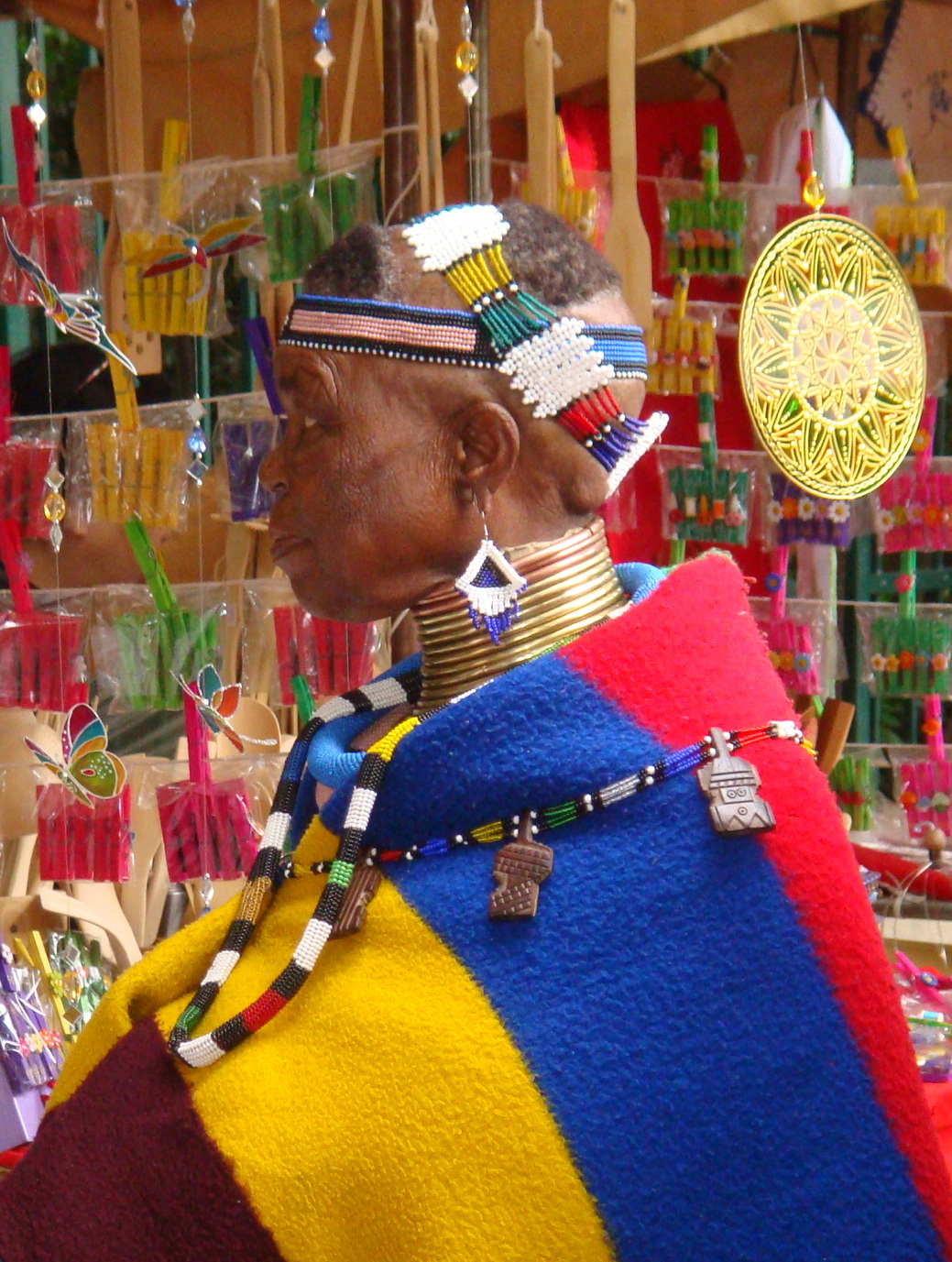
Esther Mahlangu, 2009. Photo: Claudia_midori, CC BY 2.0; cropped by HenriDavel.Claudia_midori · CC BY 2.0 · Cropped
In a March 2020 ART AFRICA essay, Percy Mabandu argued for closer attention to Esther Mahlangu’s individual achievements as a contemporary painter. He questioned interpretations that reduce her work to cultural spectacle, pointing instead to changes in line, colour and form across her practice. The essay situates exhibitions and commercial collaborations within a broader criticism of the language used to describe African artists and their creative agency.
ART AFRICA revisited Voices from the Earth, a 2019 exhibition at Berman Contemporary in Johannesburg curated by Els van Mourik. Natalie Field discussed human relationships with nature through performance and self-portraiture; Ingrid Bolton connected material experiments with coal extraction and ocean systems; Marian Hester described using shadows to consider forests and ecological loss. Their accounts explored how artistic practice might make environmental uncertainty visible and encourage conversation.
ArtThrob published Clive van den Berg’s eulogy for Andrew Verster in February 2020, following the artist’s death and a Durban memorial service. Van den Berg recalled Verster as an exacting teacher and prolific painter whose work extended to writing, performance design and public commissions. The remembrance emphasised his artistic independence and the significance of his frank representation of same-sex desire in South Africa.
ART AFRICA’s February 2020 announcement introduced Slaghuis II, Thembinkosi Hlatshwayo’s first solo exhibition. Developed through the Market Photo Workshop’s Gisèle Wulfsohn Mentorship with John Fleetwood, the photographs examine experiences of violence through the home and tavern where the artist grew up. The article announced a Johannesburg presentation from 28 February to 29 May 2020 and situated the series within Hlatshwayo’s emerging photographic practice.
Reviewing Brett Charles Seiler’s Closet at Goodman Gallery in Johannesburg, ArtThrob considered how paintings, text and an installation evoked queer intimacy, longing and religious exclusion. The critic recognised tenderness in the depicted relationships but questioned the exhibition’s nostalgic focus on familiar white gay cultural figures. The review argued that this framing left insufficient room for Black and brown queer histories and a broader understanding of community.
ArtThrob·
Ibrahim Mahama at Art Basel in Switzerland on 20 June 2025. Mahama participated in the inaugural Stellenbosch Triennale in 2020.Bea Phi · CC BY-SA 4.0
ArtThrob’s review of the inaugural Stellenbosch Triennale examined how contemporary African art engaged a town marked by unequal histories and restricted access. The critic singled out installations by Sethembile Msezane, Bronwyn Katz and Ibrahim Mahama for their attention to land, memory and labour. Alongside praise, the review questioned uneven artistic contributions, visa barriers and the durability of an ambitious noncommercial platform funded by local investors and businesses.
ART AFRICA reported results from Aspire and Piasa’s joint African art auction in Cape Town on 14 February 2020. The sale offered 198 works spanning modern and contemporary practices from the continent and diaspora. Reported prices included R7,055,600 for Marlene Dumas’s Oktober 1973 and R2,503,600 for a William Kentridge work. The article presented the auction houses’ view that cross-border collaboration could broaden collecting networks.
ART AFRICA reported that Haitian-American painter Andy Robert won the Tomorrows/Today prize at the 2020 Investec Cape Town Art Fair. A jury comprising Josh Ginsburg, Bongi Dhlomo-Mautloa and Nana Oforiatta-Ayim selected the artist. Supported by Fondazione Fiera Milano, the award included the planned acquisition of a work for its collection. The report described Robert’s painting as moving between abstraction and recognisable imagery.