ArtThrob’s January 2020 programme announcement outlined talks curated by Tumelo Mosaka for Investec Cape Town Art Fair. Sessions addressed philanthropy, collecting, museums and the sustainability of independent art platforms, alongside conversations with artists. The published roster included Malebona Maphutse, Thenjiwe Niki Nkosi, Kemang wa Lehulere and François-Xavier Gbré. This is a historical account of the announced programme, not a current schedule.
ArtThrob·
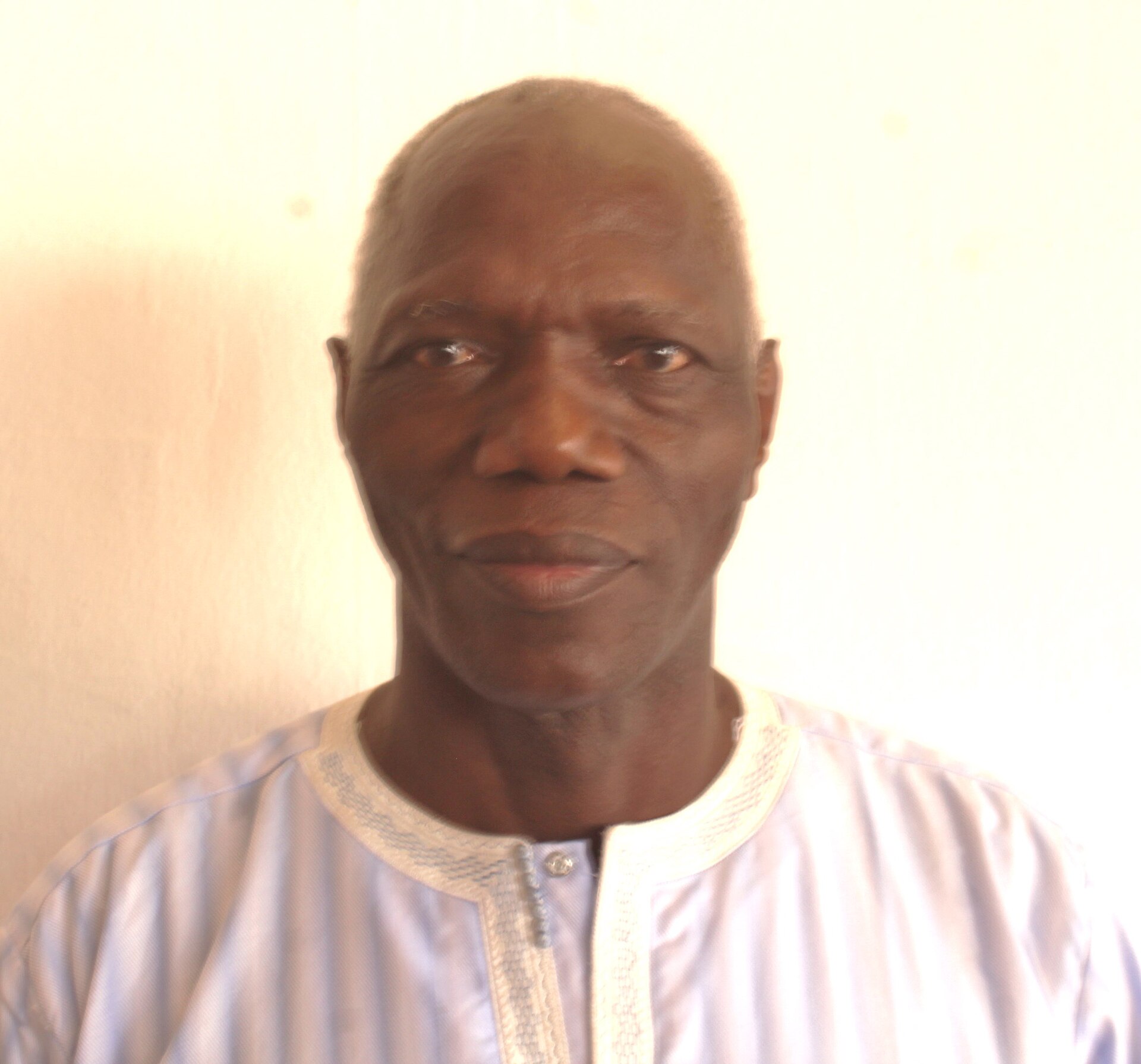
Abdoulaye Konaté, photographed in February 2020. His monumental Zeitz MOCAA commission is not pictured.KAG1LP2MDIAKITE · CC BY-SA 4.0 · Cropped
Zeitz MOCAA announced a monumental textile commission by Malian artist Abdoulaye Konaté for its atrium. Composed of coloured fabric strips and conceived for the museum’s architecture, the work honours Youssouf Tata Cissé and Germaine Dieterlen while drawing on histories of knowledge, writing and symbolism.
ArtThrob’s January 2020 review examined Ruby Swinney’s Hold Still at WHATIFTHEWORLD in Cape Town. The critic read the artist’s monochromatic oil paintings on silk as unsettling encounters between human leisure and environmental damage. Conservatories, pools and faceless figures become settings for questions about consumption, spectatorship and alienation from nature. The review argued that the apparent serenity of the works gives way to discomfort about their depicted world.
ArtThrob’s January 2020 review of Moshekwa Langa’s Tropic of Capricorn at Stevenson in Cape Town considered works built from unstable forms, layered surfaces and unconventional materials. The critic interpreted their fragmentation as a resistance to settled meaning, relating Langa’s practice to experiences of displacement and uncertainty. Rather than treating the exhibition as a single narrative, the review followed its shifting relationships between matter, memory and perception.
Chad Rossouw’s January 2020 review of Soft Architectures at Goodman Gallery Cape Town examined how built forms organize behaviour and preserve unequal histories. Discussing works by Kapwani Kiwanga, Jeremy Wafer, Naama Tsabar and Mateo López, he explored the relationship between materials and the stories viewers bring to them. His assessment praised the exhibition’s coherence, particularly the dialogue between archival references and sculptures that initially appeared abstract or ordinary.
ArtThrob’s review of Cathy Abraham’s A Deeper Kind of Nothing describes how fragile materials became a means of mourning and collective reflection at Glen Carlou Gallery in Klapmuts. A central installation used thousands of painted eggshells, while another incorporated balloons holding the artist’s breath. The critic considers the shared painting sessions as spaces for remembering lives affected by gender-based violence and for confronting the difficulty of recovery.
Gontse Mathabathe reviews the tenth-anniversary presentation of Zanele Muholi’s Faces and Phases at Stevenson in Johannesburg. The exhibition placed earlier portraits beside newer photographs of the same participants, making change over time central to its living archive of Black queer lives. Mathabathe emphasizes the project’s political and personal force while noting that participants’ written testimonies, which often accompany the portraits, were absent from this installation.
Serge Alain Nitegeka’s 2014 exhibition at Stevenson Johannesburg brought geometric paintings, silhouetted figures and charcoal portraits into a sustained exploration of blackness. ArtThrob’s review connected the Burundian artist’s formal language with migration, absence and ancestral memory. Portraits of his grandmothers, presented alongside his own likeness as self-portraits, complicated the relationship between individual identity and family history.
Ian Grose’s 2014 exhibition Some Assumptions at Stevenson Cape Town brought together patterned cloth, reworked religious imagery and repeated views of a studio window. ArtThrob’s reviewer praised his control of paint while describing an elusive, self-questioning practice. References to Renaissance altarpieces, Monet and abstraction became ways of asking how painters translate observation and inherited conventions into images.
Chad Rossouw’s 2014 exhibition The Planet’s Wake at Brundyn+ in Cape Town combined fabricated artefacts, altered historical imagery and science-fiction references. ArtThrob’s review considered how these objects unsettled distinctions between evidence and invention, drawing attention to photography, materials and the authority of historical records. Accompanying fiction by Matthew Blackman offered another route through the exhibition without supplying a single definitive narrative.
A 2014 exhibition at the University of Cape Town presented portraits made by Singarum Moodley at Kitty’s Studio in Pietermaritzburg between 1972 and 1984. Curator Steven Dubin selected 80 photographs from an archive of discarded negatives. ArtThrob’s review explored how clothing, poses and personal accessories offered insight into self-presentation and everyday social life during apartheid.
Kiluanji Kia Henda’s 2014 exhibition at Brundyn+ in Cape Town used photography and video to unsettle familiar narratives of Africa. A fictional African aid organisation reversed the usual geography of humanitarian assistance, while images of monuments and military remnants examined Angola’s changing identities. ArtThrob’s reviewer singled out Concrete Affection – Zopo Lady for connecting urban space, memory and belonging in Luanda.
Trevor Coleman’s 2014 survey at SMAC Gallery in Stellenbosch revisited paintings made between 1960 and 1977. Lloyd Pollak’s ArtThrob review emphasised their shifting colour relationships, geometric structures and optical effects, describing connections between hard-edge abstraction, Op Art and African decorative forms. Alongside its praise, the review noted that ageing and damage had affected some painted surfaces.
Portia Zvavahera’s 2014 exhibition Wayfinding at Stevenson Johannesburg presented paintings of women, prayer and shared emotional experience. Percy Mabandu’s ArtThrob review considered how oil-based printing ink, layered marks and patterned cloth shaped the works’ atmosphere. It read religious references and grouped figures through questions of gender, authority and catharsis, while highlighting the expressive force of the artist’s surfaces.
ART AFRICA’s February 2010 auction preview highlighted South African works by Alexis Preller, Irma Stern, Maggie Laubser, William Kentridge, Colbert Mashile and Helen Sebidi. It also discussed sculptures by the Amadlozi Group and recalled the collective’s 1963 Johannesburg exhibition and Italian tour. The report described collector enthusiasm through auctioneer commentary; its estimates and buying advice belong to that historical sale, not today’s market.
Spier Contemporary 2010 selected 100 artists and 132 works from more than 2,700 submissions gathered through 13 centres across South Africa. The Africa Centre’s national exhibition was scheduled to open at Cape Town City Hall on 14 March 2010. A five-person curatorial team made the final selection, while architect Nabeel Essa developed an installation contrasting contemporary artworks with the Edwardian building’s historic interior.
Zanele Muholi received the Casa Africa prize for best female photographer and a Fondation Blachère award at the 2009 Bamako photography biennial. IRN-Africa also recognised Muholi’s contribution to research on sexuality in Africa with a Fanny Ann Eddy accolade. The announcement noted an Allegheny College residency and group exhibition, followed by Muholi’s planned participation in a Penn State colloquium on Sara Baartman.
A January 2010 ART AFRICA notice introduced a monograph on Cape Town-born painter Marlene Dumas. Its contents combined Dominic van den Boogerd’s survey, Barbara Bloom’s interview, a close reading of a painting of Josephine Baker, and the artist’s own writings. An update by Ilaria Bonacossa considered paintings and drawings made after 1999, placing the publication within Dumas’s developing international career.
TIME included South African artist William Kentridge in its 2009 list of 100 influential people, with a profile written by Lou Reed. Reed focused on Kentridge’s ability to translate interior states into charcoal drawing, animation, theatre and installation. Discussing works including Preparing the Flute, Artist and Model and Stereoscope, the profile presented his practice as an unusually direct expression of emotion, beauty and shared humanity.
ART AFRICA’s January 2010 notice described an official art-poster edition for the South African FIFA World Cup, distributed locally by David Krut Projects. Participating artists included William Kentridge, Marlene Dumas, Julie Mehretu, Hassan Musa, Barthélémy Toguo, Soly Cissé and Kay Hassan. The historical announcement documents a visual-art project around the tournament; it does not establish present-day stock or purchasing availability.