Writing for ArtThrob in March 2020, Candice Williams examined Kaloki Nyamai’s installation Mwambelelio Mweo at the Stellenbosch Triennale. Her student review connected its dung-lined enclosure, sisal ropes and suspended money boxes to competing experiences of comfort, power and identity. Williams placed her own response within the exhibition’s pan-African ambitions and Stellenbosch’s history, treating discomfort as an invitation to reconsider belonging rather than a universal response.
In her March 2020 ArtThrob student review, Brittney Moolman explored Hellen Nabukenya’s large textile installation at the Stellenbosch Triennale. She considered how collaborative sewing, contrasting fabrics and the work’s placement shaped its social meanings. Reading it beside a neighbouring installation of workers’ overalls, Moolman reflected on textile labour and discarded materials, offering a situated interpretation rather than a verified account of every fabric’s origin.
In a conversation published by ART AFRICA in March 2020, artist Francois Knoetze and curator Oulimata Gueye discussed Core Dump, a four-part sculpture and video project made across Dakar, Kinshasa, Shenzhen and New York. They linked digital technologies to mineral extraction, electronic waste and colonial power, while exploring how African cinema, mythology and speculative storytelling might challenge assumptions about progress and imagine different social relationships.
Reviewing From the Vault for ArtThrob in March 2020, Annabelle Wienand examined how works from Stellenbosch and Fort Hare university collections were brought into dialogue at the Stellenbosch Triennale. She argued that thematic groupings complicated familiar divisions in South African art history, allowing everyday experience, oppression and different artistic languages to coexist. Her review treated this rearrangement of inherited collections as a way to imagine other futures.
In March 2020, ART AFRICA reported that Hello Wolk, Tears Become Rain and PLANTed had received the Social Impact Arts Prize. The proposed projects connected creative practice with water scarcity, communal singing and medicinal-plant knowledge. The report outlined a water-harvesting structure with digital access, a climate-focused choir and a public platform for local plant culture, documenting the programme’s ambitions rather than demonstrating its eventual outcomes.
Writing in ART AFRICA in March 2020, Nolan Stevens considered Lumières d’Afriques at Johannesburg’s Standard Bank Gallery. The travelling exhibition brought together artists representing African countries around questions of light, energy and the continent’s representation. Discussing works by Emeka Okereke, Aïda Muluneh, Paa Joe and Athi-Patra Ruga, Stevens traced how photography and sculpture challenged stereotypes while connecting material resources, cultural identity and aspiration.
In a feature published online by ART AFRICA in March 2020, Zahra Abba Omar examined Prête-moi ton rêve, an African-led touring exhibition intended to bring celebrated artists’ work to audiences across the continent. Through the account of foundation director Fihr Kettani, the article explored collaboration, institutional networks and ambitions for a more autonomous art market. Its value lies in those stated aims, not in confirming the proposed itinerary was completed.
Nkgopoleng Moloi’s March 2020 ArtThrob review examined We’ve Come to Take You Home #1 at Michaelis Galleries, an exhibition of acquisitions intended to reshape the University of Cape Town’s art collection. Moloi welcomed greater attention to previously excluded Black artists while questioning the authority and language of institutional inclusion. The review frames collecting as an active negotiation over heritage, belonging and which artistic histories receive recognition.
ArtThrob·
Esther Mahlangu, 2009. Photo: Claudia_midori, CC BY 2.0; cropped by HenriDavel.Claudia_midori · CC BY 2.0 · Cropped
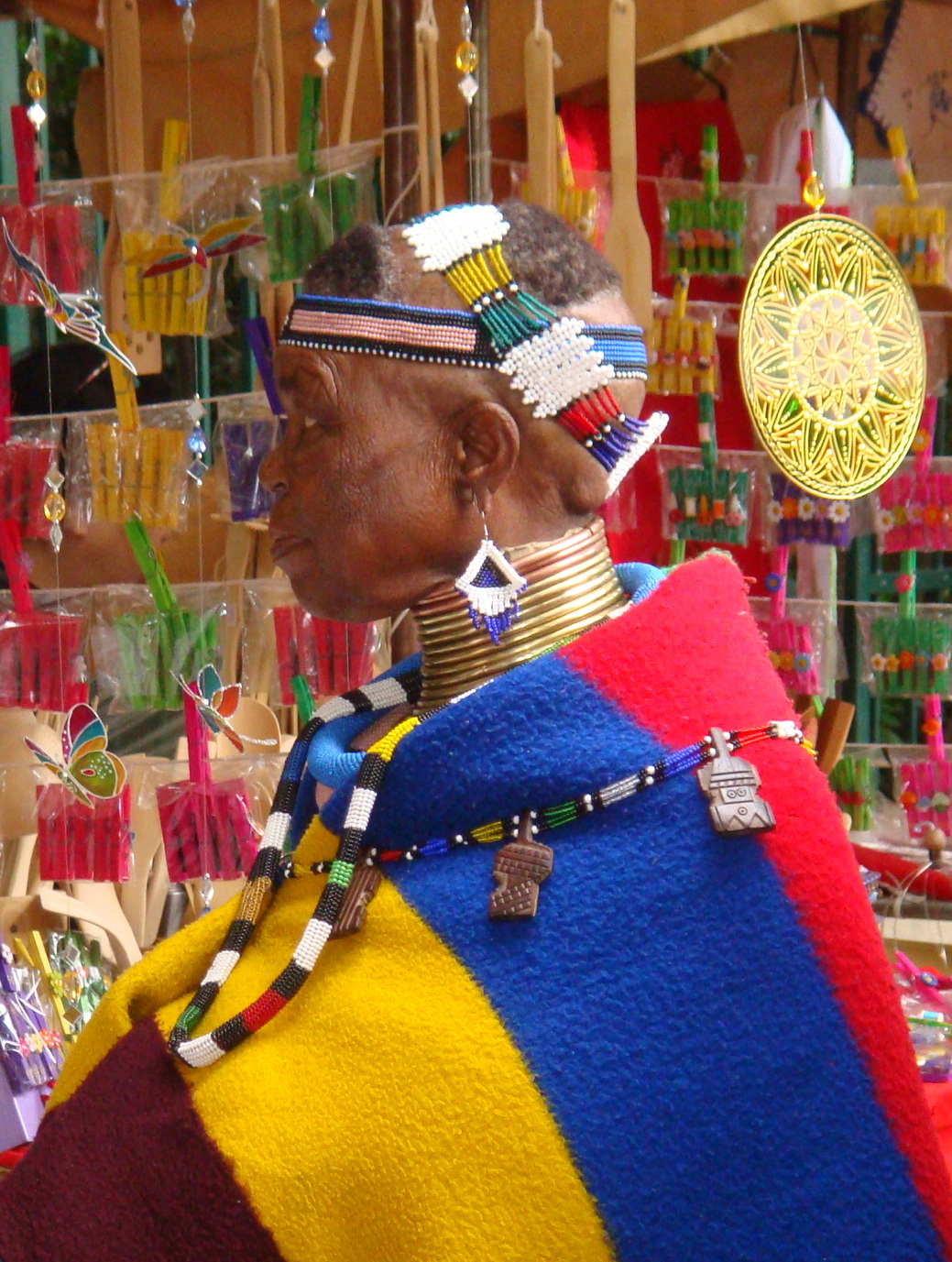
In a March 2020 ART AFRICA essay, Percy Mabandu argued for closer attention to Esther Mahlangu’s individual achievements as a contemporary painter. He questioned interpretations that reduce her work to cultural spectacle, pointing instead to changes in line, colour and form across her practice. The essay situates exhibitions and commercial collaborations within a broader criticism of the language used to describe African artists and their creative agency.
ART AFRICA’s March 2020 feature examined the 21st Sesc_Videobrasil biennial in São Paulo, which included artists and collectives from Africa alongside other regions. Highlighting work by Emo de Medeiros, it described a programme concerned with marginalised communities and belonging beyond national identity. The feature also reproduced catalogue commentary by Sesc São Paulo director Danilo Santos de Miranda, making its institutional perspective explicit.
ART AFRICA·
Esther Mahlangu, 2009. Photo: Claudia_midori, CC BY 2.0; cropped by HenriDavel.Claudia_midori · CC BY 2.0 · Cropped
In their March 2020 ART AFRICA editorial, Suzette and Brendon Bell-Roberts connected the issue’s exhibitions and interviews through questions of home and belonging. Their overview moved from Bamako photography and Ségou’s cultural festival to Esther Mahlangu, Mohamed Melehi and François Knoetze. Rather than a single event report, the editorial recorded a cross-regional conversation about migration, identity and the places where artistic communities gather.
ART AFRICA reported FotoFest’s plans for African Cosmologies in March 2020. Curated by Mark Sealy, the Houston biennial’s central exhibition was announced as a focus on artists from Africa and its diaspora, accompanied by a book, films and public discussion. The announcement framed photography through cultural context, representation and human rights; its advertised dates should not be mistaken for confirmation that the full programme proceeded unchanged.
In a March 2020 ArtThrob review, Lucienne Bestall examined Kevin Beasley’s exhibition at A4 Arts Foundation following his Cape Town residency. She described sculptures made with found clothing, photographs and an audio installation assembled from city recordings. Her reading connected these materials with bodily absence, African-American cultural references and the movement of donated garments into South Africa’s informal economy.
ArtThrob published Clive van den Berg’s eulogy for Andrew Verster in February 2020, following the artist’s death and a Durban memorial service. Van den Berg recalled Verster as an exacting teacher and prolific painter whose work extended to writing, performance design and public commissions. The remembrance emphasised his artistic independence and the significance of his frank representation of same-sex desire in South Africa.
A February 2020 announcement named Soukaina Aboulaoula and Cindy Sissokho as associate curators of the fifth International Biennale of Casablanca, working with artistic director Christine Eyene. Their appointments accompanied an emphasis on professional development and knowledge exchange. The announcement also described a partnership with New Art Exchange involving commissions, internships and a symposium, linking curatorial work in Morocco with wider African and international networks.
ART AFRICA’s February 2020 announcement outlined a March Meeting programme connected to Okwui Enwezor’s conception of Sharjah Biennial 15. Proposed participants included Sammy Baloji, Otobong Nkanga and Chika Okeke-Agulu, with discussions examining exhibition-making and transnational exchange. The gathering was planned for 21–23 March, but Sharjah Art Foundation subsequently announced its indefinite postponement. The original article should therefore be read as a historical announcement, not confirmation that the event occurred.
ART AFRICA’s February 2020 announcement introduced Slaghuis II, Thembinkosi Hlatshwayo’s first solo exhibition. Developed through the Market Photo Workshop’s Gisèle Wulfsohn Mentorship with John Fleetwood, the photographs examine experiences of violence through the home and tavern where the artist grew up. The article announced a Johannesburg presentation from 28 February to 29 May 2020 and situated the series within Hlatshwayo’s emerging photographic practice.
ART AFRICA·
View across the Bou Regreg estuary from the Kasbah of the Udayas in Rabat, photographed on 7 June 2010 (file photograph).Adam Jones, Ph.D. · CC BY-SA 3.0
In a 2020 report credited to The Art Newspaper, ART AFRICA described the transfer of the inaugural African Capital of Culture designation from Marrakech to Rabat. The organising committee announced the change in February without giving a reason in its statement, according to the report. The shift disrupted preparations associated with artist Mahi Binebine and prompted debate about cultural investment and centralisation within Morocco.
ART AFRICA reported results from Aspire and Piasa’s joint African art auction in Cape Town on 14 February 2020. The sale offered 198 works spanning modern and contemporary practices from the continent and diaspora. Reported prices included R7,055,600 for Marlene Dumas’s Oktober 1973 and R2,503,600 for a William Kentridge work. The article presented the auction houses’ view that cross-border collaboration could broaden collecting networks.
ART AFRICA reported that Haitian-American painter Andy Robert won the Tomorrows/Today prize at the 2020 Investec Cape Town Art Fair. A jury comprising Josh Ginsburg, Bongi Dhlomo-Mautloa and Nana Oforiatta-Ayim selected the artist. Supported by Fondazione Fiera Milano, the award included the planned acquisition of a work for its collection. The report described Robert’s painting as moving between abstraction and recognisable imagery.